
Car Repair Shop Equipment: A Buyer's Guide
or complex compliance issues.
clearance and fund security.
With the continuous increase in automobile production and sales,the auto repair market has also grown.According to the forecast research from 2023 - 2028,the value of the auto repair equipment market is approximately $8.12 billion,and it is expected to grow to $11.27 billion by 2028,with a compound annual growth rate of over 4%.This article will explore various types of equipment required by auto repair shops,as well as the factors customers need to consider when purchasing these equipment,and provide the process of the agency export service,offering reference for enterprises interested in exporting auto repair equipment.
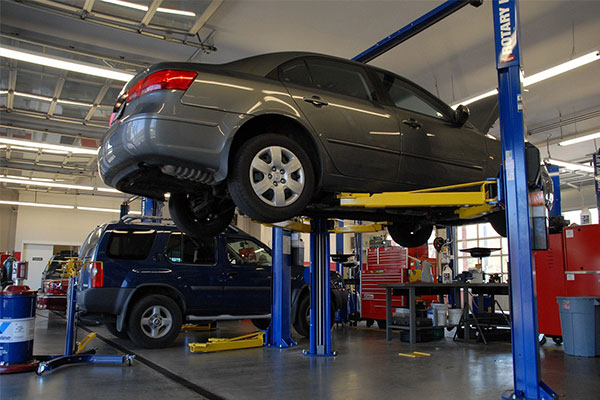
I.Essential Equipment for Auto Repair Shops
Air Compressor: Helps mechanics lift cars and perform heavy - duty work.
Hydraulic Lift: Uses a typical hydraulic mechanism to lift heavy - duty vehicles.
Automatic Transmission Fluid Changer: Used to lubricate the vehicles automatic transmission and fix clutch problems.
Battery Jumper: Charges a dead battery.
Jack Stand: Used to lift a vehicle to repair the wheels.
Shock Absorber Compressor: Used to replace the shock absorbers of the suspension system.
Grease Gun: Used for lubricating auto repair parts.
Tire Aligner and Balancer: Adjusts the tire angle and balances the tire weight.
Fuel Injector Cleaner: Cleans the fuel injectors and reduces blockages.
Engine Analyzer: Used to diagnose engine - related problems.
Cleaning and Polishing Equipment: Used for routine cleaning work to make the vehicle look brand - new.
II.Portable Tools
Wrenches: Including torque wrenches and oil filter wrenches.
Multimeter: Used to measure the resistance,voltage,and current of vehicle batteries and fuses.
Grinder: Used for cutting metal.
Tire Inflator: Checks and adjusts the ideal tire pressure.
Work Light: Provides illumination during complex and long - term work.
Hammer: Used to deal with stuck parts.
Funnel: Avoids spills when refueling or adding liquids to the vehicle.
Pliers: Used to repair brakes,replace hoses,and connectors.
9.Impact Gun: Used to easily remove tire bolts.
10.Screwdriver: Used to handle screws in most vehicle components.
III.Protective Equipment
1.Safety Goggles: Protect the eyes during grinding or welding.
2.Gloves: Used when handling vehicle interior components and performing other heavy - duty work.
3.Safety Shoes: Anti - slip,anti - burn,and anti - cut.
4.Work Clothes: Provide full - body protection for mechanics.
5.Face Mask: Avoid inhaling harmful chemicals and fumes.
6.Hand Cleaner: Remove grease and other chemicals from the skin.
IV.Considerations when purchasing automotive repair shop equipmentWe have obtained the business filing certificate.We are well aware that when importing medical devices,it is necessary to ensure that the products have the corresponding Chinese medical device registration certificates.Even if an enterprise has the business filing,if the product does not have the corresponding registration certificate,it still cannot be legally imported.In addition,the model and specifications of the imported product must be completely consistent with the information on the registration certificate.Any discrepancies may lead to import obstruction.We will ensure that your products meet all registration requirements and smoothly enter the Chinese market.Factors
1.Safety: Choose high - quality automotive repair equipment to provide the best safety.
2.Scope of Use: Select equipment according to the scope of work.
3.Budget: Budget is an important factor in purchasing automotive repair shop equipment.
4.Durability: Look for tools with high durability.
V.Process of Agency Export Service
1.Sign an international sales contract for goods: Customers can directly sign contracts with foreign customers,or sign as the seller through an agency company.
2.Sign a domestic purchase contract: The principal signs a purchase contract with a domestic supplier,or participates as the buyer through an agency company.
3.Remittance process: Foreign customers remit funds to the agency account,and the agency then declares to the bank and.
4.Transfer the remittance: The agency company converts the remittance into RMB and remits it to the domestic factory account.
5.Production and invoice: After the domestic factory completes production,it issues a VAT invoice to the agency company.
6.Shipping arrangement: The principal provides shipping details and packaging information,and the agency company reserves logistics and arranges the transportation of goods.
7.Commodity inspection and transportation: Goods subject to legal inspection need to be arranged for inspection in advance.The logistics company packs and transports them back to the terminal or the yard designated by the customs.
8.And bill of lading: The agency company issues customs declaration documents,and the logistics company is responsible for loading the ship and issuing the bill of lading.
9.Tax refund application and processing: The agency company applies,After the tax refund arrives,transfer it to the customer.
10.Settlement and agency fees: After deducting the fees,the agency company transfers the remaining tax refund to the principals account.
The automotive repair workshop market continues to grow,providing enterprises with the opportunity to purchase essential tools for automotive repair shops and establish long - term business relationships.At the same time,with the agency export service,automotive repair can be effectivelyintroduced to the international market.
Was this helpful? Give us a like!
Contact our experts for compliance audits, precise quotes, and one-stop customs support.
Recent Comments (0) 0
Leave a Reply