
Cross-Border E-Commerce: US & Japan Tighten Regulations
or complex compliance issues.
clearance and fund security.
With the continuous development of the ChineseThe rapid development of Chinas cross-border e-commerce and its growing share in the global market have prompted increased market regulation in some countries.As two major markets,the United States and Japan have recently implemented new measures to strengthen oversight of cross-border e-commerce goods from China.
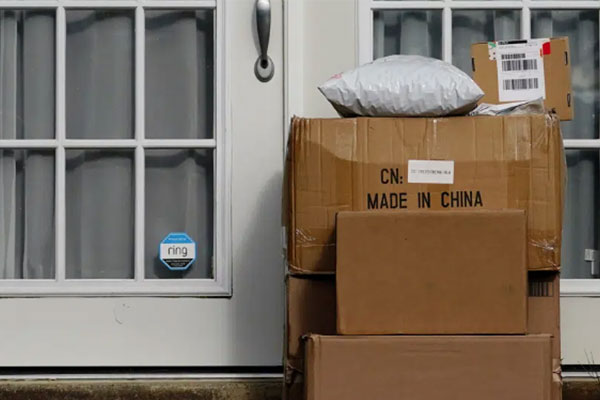
Recently,Mike Gallagher,Chairman of the U.S.House Select Committee on the Strategic Competition Between the United States and the Communist Party of China,voiced criticism over the "alarming surge" in the volume of small-value package imports benefiting from tariff exemptions.Reports indicate that approximately 1.05 billion shipments entered the U.S.duty-free in 2023 under the "de minimis" exemption mechanism,marking a 53% increase year-on-year.This growth was largely driven by small-value packages from China,including products from e-commerce platforms Shein and Temu.
Additionally,U.S.Senators Sherrod Brown and Rick Scott have sent a letter to President Joe Biden,urging the abolition of the "de minimis" exemption mechanism.They argue that this mechanism harms the interests of American manufacturers,workers,and communities while allowing "illegal goods" to enter the U.S.market.
In Japan,the Ministry of Economy,Trade and Industry has also begun to strengthen its supervision of cross-border e-commerce.In response to frequent accidents with overseas online shopping products in recent years,such as mobile power banks catching fire,the Japanese Ministry of Economy,Trade and Industry will require companies that directly sell overseas electronic products to Japanese consumers to appoint responsible persons for safety management and dispute resolution in Japan,and make the information of these responsible persons public.This new regulation aims to increase consumers’ trust in merchants and will be implemented starting from 2025.
METI also plans to submit amendments during the current Diet session,including revisions to four product safety laws such as the Electrical Appliances and Materials Safety Law,to strengthen safety oversight of online products.If sellers fail to take appropriate measures to address incidents,the government will require e-commerce platforms to remove the listed products.
According to statistics,there were 103 major product incidents related to online purchases in 2022,six times the number a decade ago.This move by the Japanese government aims to raise product safety standards and ensure consumer rights are protected.
These new measures in the U.S.and Japan demonstrate that major global markets are intensifying regulation of cross-border e-commerce goods.This presents a new challenge for Chinese cross-border e-commerce businesses,which must pay closer attention to compliance with target market laws and regulations,ensure product quality and consumer safety,and maintain and expand their overseas market share.At the same time,this represents a significant adjustment to the global e-commerce ecosystem,signaling that cross-border e-commerce development will increasingly be influenced and constrained by international regulations.
Was this helpful? Give us a like!
Contact our experts for compliance audits, precise quotes, and one-stop customs support.
Recent Comments (0) 0
Leave a Reply