
US Textile Import Tariffs: A 2025 Guide to Rates by Country
or complex compliance issues.
clearance and fund security.
In international trade,the topic of tariffs is always unavoidable when exporting textiles to the United States.With adjustments in US policy,textile tariffs have become increasingly complex,and different countries face different situations.Today,let’s talk about the actual total tariff situation for major textile exporting countries to help you sort things out and avoid pitfalls.Don’t worry,we’ll analyze it step by step,looking at the big picture while also grasping the practical points.
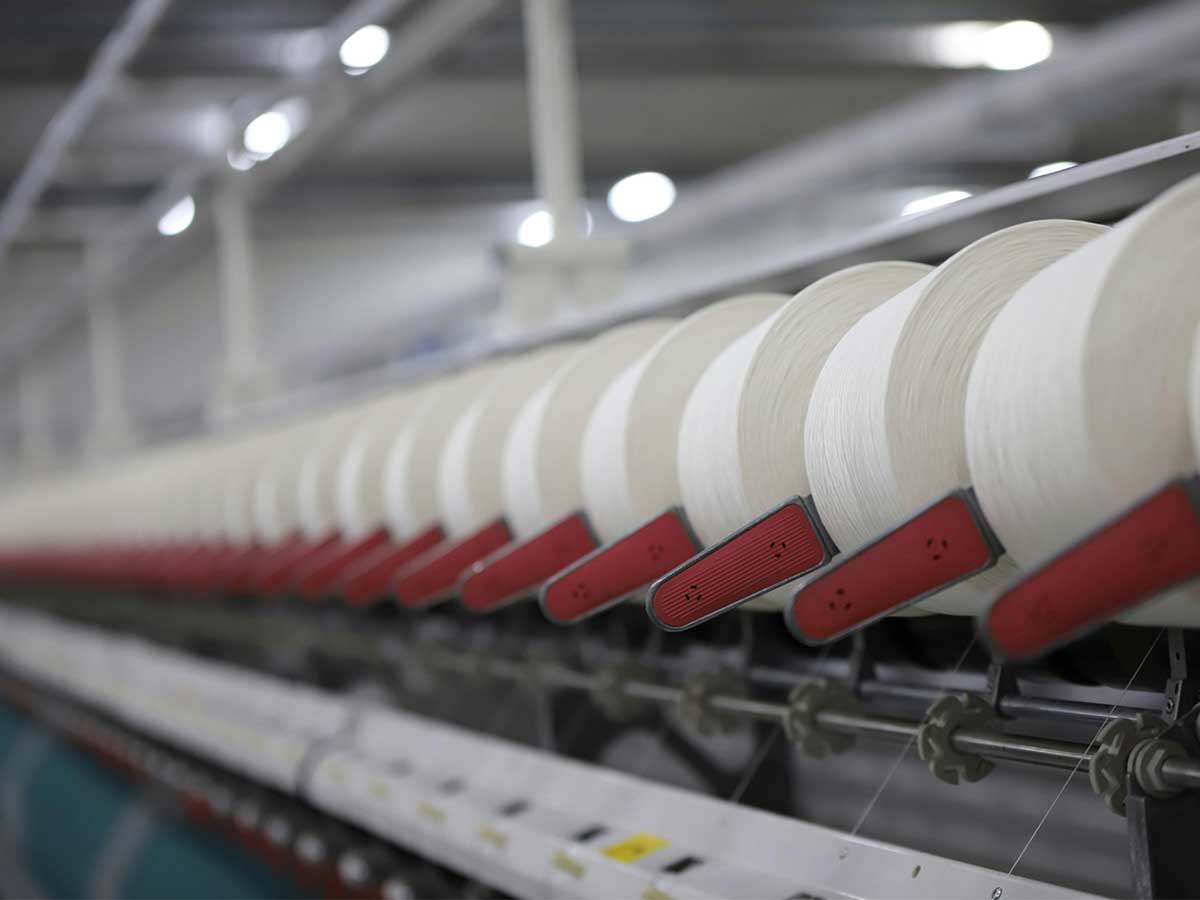
The "combination punch" of US textile tariffs
US textile tariffs are not a single rate,but a "combination" of several parts.Simply put,they include:
- Most-Favored-Nation(MFN)basictariff:ThisistheregulartaxundertheWTOframework,andtheratesfordifferenttextilecategoriesaredifferent.Forexample,wovenclothingisabout13.2%,knittedclothingisabout14.2%,andsomesportsshoescanbeashighas67.2%.
- Additionaltariffs:Regardingspecificcountriesorproducts,forexample,a"minimumtax"of10%onallclothingwillbeimposedfromApril2025,alongwith"reciprocaltariffs"basedontradedeficits.
- Othersurcharges:Occasionally,additionalitemslikethe"fentanyltariff"willpopup.
The final tariff rate is the sum of these,but some countries have simplified the calculation through bilateral agreements,such as a single tariff rate.Transshipped goods (e.g.re-exported through a third country) often face higher tariffs,even 40%.The good news is that if 20% of the product’s value comes from US materials (such as cotton),this portion can be exempt from tariffs,and tax is only levied on the other parts.This provides a little trick for reducing the tax burden.
Policies are always changing.For example,there’s a 90-day grace period for some tariff increases (starting from August 12,2025).Therefore,it’s best to check the latest updates in real time when implementing policies.
Tariff situation for major exporting countries
The following is an overview of the actual total tariffs of several major textile exporting countries (based on data from July-August 2025,approximate values).Each country’s situation is different,and specific details can be found in the policy basis and notes.
| Country/Region | Applicable Tariff Rate (Approximate) | Main Basis | Remarks |
|---|---|---|---|
| China | Approx.30% (suspended) | Base tariffs + additional tariffs.According to the Sino-US economic and trade talks on August 12,2025,the United States suspended the 24% additional tariffs on Chinese goods for 90 days,but maintained the 10% additional tariffs. | The additional part may be adjusted; pay attention to transshipped goods. |
| Vietnam | 20% | The US-Vietnam trade agreement in early July 2025. | The price is that Vietnam has zero tariffs on US goods; transshipped goods (e.g.re-exported from China) may reach 40%. |
| Bangladesh | 35% | Trump announced on July 7,2025. | Partial exemption is available for using US raw materials. |
| Cambodia | 36% | Trump announced on July 7,2025. | – |
| Indonesia | 32% | Trump announced on July 7,2025. | – |
| Mexico | 25% (estimated) | It took effect on August 27,2025 (due to the import of Russian oil). | The previous reciprocal tariff was 26%,and after superposition,some goods reached 50%; the import tariff on cotton is suspended until the end of September to support the textile industry. |
| Thailand | 36% | Trump announced on July 7,2025. | – |
| Japan | 25% | Trump announced on July 7,2025. | – |
| South Korea | 25% | Trump announced on July 7,2025. | – |
| Malaysia | 25% | Trump announced on July 7,2025. | – |
| Laos/Myanmar | 40% | Trump announced on July 7,2025. | – |
| Some African countries (e.g.Lesotho) | 15% | The US lowered the tariff rate to 15%. | Lesotho’s textile industry once lost 13,000 jobs due to high tariffs. |
These tariff rates vary depending on the product’s material,craftsmanship,and value.Transshipment or non-compliant origin may increase the burden.
Risks and tips
Tariff uncertainty is high,and the US may adjust the scope of derivatives three times a year.If transshipment is caught,the tariff rate doubles; if the material source (e.g.Russian aluminum) is not right,the tariff may soar to 200%.Enterprises also have to declare the material content themselves,which is a considerable administrative cost.
Want to reduce risks?Use more US materials to get exemptions; check the US International Trade Commission’s HTS code system to get real-time tariff rates for specific categories.Policies are always changing,so pay attention to the Federal Register in advance to avoid surprises.
Conclusion
Textiles’s tariffs are like a "cat and mouse game," but once you master the situation in each country and the calculation rules,you won’t be so flustered.Choose the right strategy,turn pressure into motivation,and your trade path will be smoother.I hope these shares give you some inspiration and more confidence in your next negotiation!
Was this helpful? Give us a like!
Contact our experts for compliance audits, precise quotes, and one-stop customs support.
Recent Comments (0) 0
Leave a Reply