
Exporting Machinery to Japan: A Compliance Guide
or complex compliance issues.
clearance and fund security.
Related Introduction
A guide to exporting machinery to Japan.Understand import regulations,customs,shipping,documentation,taxes,and duties.Ensure smooth export processes and avoid fees.Learn more here.
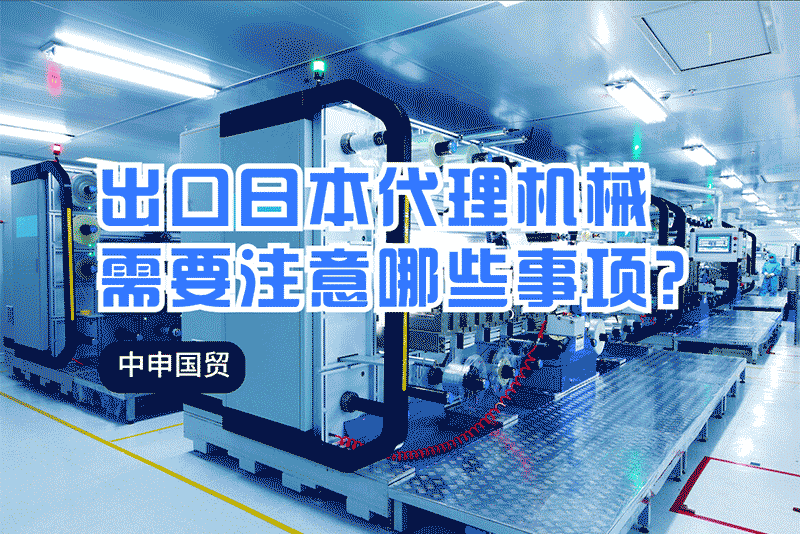
Key considerations for exporting agency machinery to Japan:
Comply with Japanese import regulations: Before exporting machinery,it is essential to understand and adhere to Japanese import regulations.Japan has specific import standards and laws,such as the Food Sanitation Act,Environmental Protection Act,Export Control Act,etc.which must be strictly followed.
Accurate customs declaration: Exporting machinery requires filling out a customs declaration form accurately.The form must include correct information such as product name,quantity,value,and material.Errors may lead to delays and additional costs during customs inspection.
Selection of transportation method: Choose an appropriate transportation method for exporting machinery.Factors to consider include the machinerys weight,volume,value,and required delivery time.Fast but expensive,suitable for high-value machinery with short shelf life;Relatively low cost but longer transit time,suitable for large-volume and heavy machinery.
Packaging and labeling: Proper packaging and labeling are required for exported machinery to prevent damage during transit.Packaging materials and methods must comply with Japanese import standards,and labels must include information such as product name,quantity,origin,net weight,and gross weight.
Selection of customs declaration agents: Due tothe complexity of procedures,it is recommended to choose a qualified customs declaration agency to ensure the accuracy and compliance of customs clearance procedures.
Customs duties and tax rates: When exporting machinery,it is necessary to consider customs duties and tax rates to avoid unnecessary costs.According to Japans tax regulations,the customs duties and tax rates for machinery vary depending on factors such as product category,origin,and quantity.
Was this helpful? Give us a like!
Contact our experts for compliance audits, precise quotes, and one-stop customs support.
Recent Comments (0) 0
Leave a Reply