
Exporting Agricultural Machinery from China: A Manufacturer's Guide to Customs, Tax Rebates & Compliance
or complex compliance issues.
clearance and fund security.
Agricultural machinery made in China is gaining widespread popularity in the global market due to its high cost-performance ratio and increasingly advanced technological standards.For domestic manufacturers,this undoubtedly represents a huge development opportunity.However,successfully selling a combine harvester or a plant protection drone overseas is far more complex than domestic sales,involving a series of rigorous legal,customs,and financial procedures.
Many excellent manufacturers often face a core challenge: the enterprises focus on product R&D and production,but lack the ability to directly sign contracts with overseas customers,receive foreign exchange payments,and handle related financial transactions.The required "The "operating rights" refer to the rights granted by the government to a private entity to operate a public service or infrastructure project,such as a highway,airport,or power plant.These rights typically include the authority to collect fees,maintain facilities,and manage operations,ensuring that the project meets quality standards and operates efficiently.The term "operating rights" emphasizes the responsibility and accountability of the private sector in delivering public services,while ensuring that the project remains sustainable and meets public expectations.
This article aims to provide a professional and rigorous practical guide,systematically explaining the core processes and compliance requirements of agricultural machinery exports,helping enterprises understand the key steps on the path of "going global".
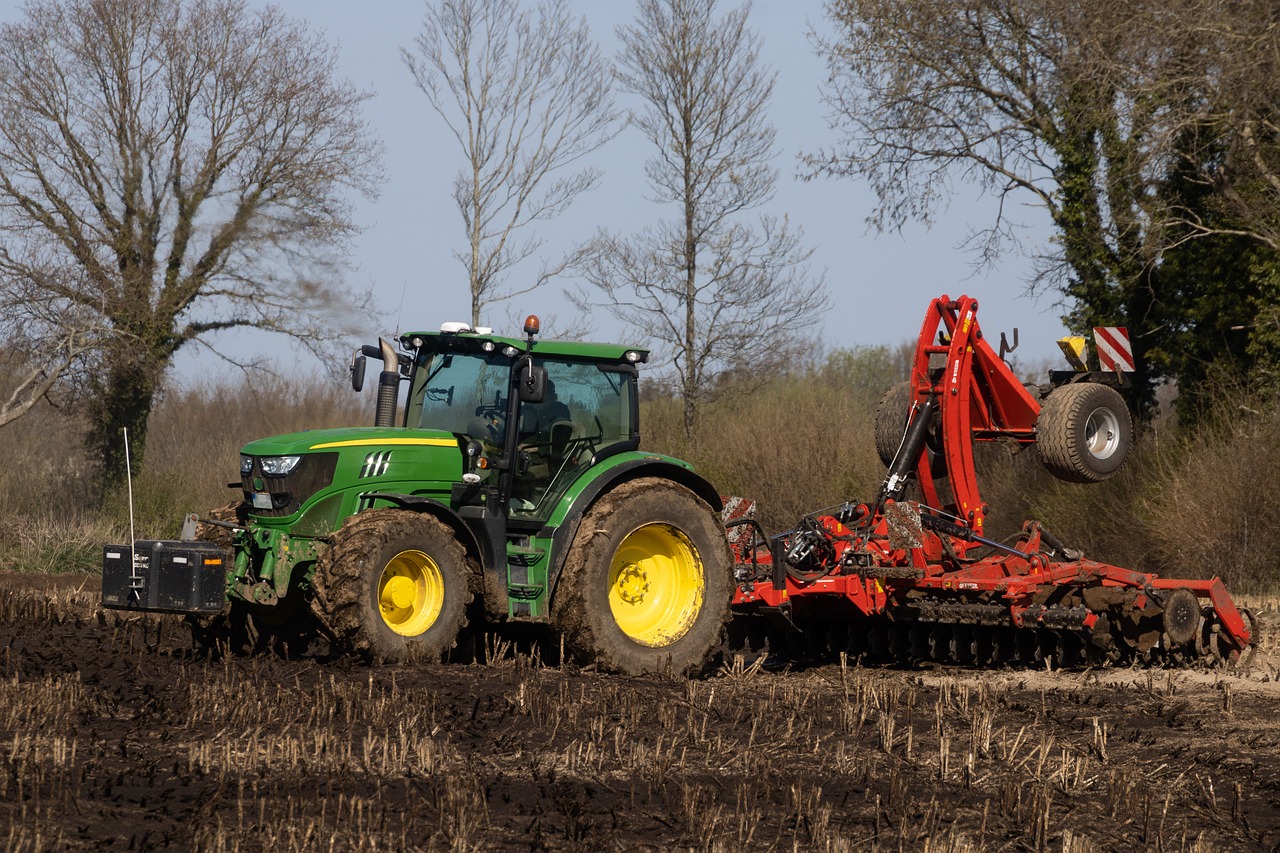
First,the first step of exporting: obtaining the qualification to "go global" Output:
Before conducting any export business,a company must first obtain a legal "identification" from the customs authority.
(I) Standard Procedure: Record-filing of the importer/exporter qualification
Companies need to pass the "On the platform,submit enterprise information online to apply for the qualification registration of "import and export consignee".After being approved by the local customs,the enterprise will receive a ten-digit customs registration code and can subsequently apply for an e-port card.This is a legal prerequisite for enterprises to independently engage in import and export activities.
(II) Alternative Solution: Cooperate with a professional trading partner
For many manufacturing enterprises focused on production,maintaining a complete set of trade,documentation,and finance teams in-house may not be the most optimal choice.In such cases,collaborating with a professional trade service provider that already holds all necessary import and export qualifications and letting them handle all external processes as the "exporter" is an efficient and compliant common practice.
II.The Foundation of Export: Accurate Commodity Classification (HS Code) Output:
Product classification is the core of export declaration,which directly determines the regulatory conditions,export tax rebate rates,and import tariffs of the importing country.The core principle is to "classify according to function and use".
Reference Table for Customs Classification of Common Agricultural Machinery:
| Machine category | Example of product names | Main HS codes (for reference) | Brief analysis of the reasons for the classification |
| Soil tillage machinery | A moldboard plow | 8432.1000 | Item 84.32 specifically lists soil cultivation machinery. |
| Planting and fertilizing machinery | Rice transplanting machine | 8432.31/8432.39 | A specialized planting machine used for transplanting seedlings. |
| Harvesting machinery | Combine harvester | 8433.5100 | A multi-functional machine that can complete multiple harvesting tasks in one go. |
| Plant protection machinery | Agricultural sprayer | 8424.4100 / 8424.4900 | The liquid spraying device is classified under heading 84.24. |
| Aircraft | Plant protection drone | 8806.XXXX | Classify it under Chapter 88 according to the attributes of the unmanned aerial vehicle. |
| Traction vehicle | Wheeled tractor | 8701.XXXX | As traction vehicles are classified under Chapter 87,they must be declared separately even when exported together with agricultural tools. |
III.Core Process: Export Declaration and Document Preparation Output:
Exporters or their agents are required to truthfully declare the detailed information of the exported goods,including product names,HS codes,specifications and models,quantities,prices,etc.to the customs through the "Single Window" platform.The core documents required usually include:
- Exportcontract
- exportinvoices
- Packinglist
IV.Key compliance points: regulatory requirements and export control Output:
(I) General Supervision
According to the customs regulations,the vast majority of agricultural machinery productsIt’s not a product subject to statutory export inspectionThis means that there is no mandatory product inspection required for exports.However,the customs still reserves the right to conduct spot checks and inspections at the port of entry.
(II) Export License Administration
- Regularagriculturalmachinery:InthecurrentCatalogueofGoodsSubjecttoExportLicenseAdministration,thereisnodirectlistingofconventionalagriculturalmachinery.
- Specialcircumstances:Iftheexportedagriculturalmachineryproductscontaincontrolledcomponents,suchasmotorcycleenginesandcarchassis,itisnecessarytocarefullycheckthecatalogtodeterminewhetheranexportlicenseisrequired.
- Dual-useitemsandtechnologies:Thisisatoppriorityforsupervision.Ifagriculturalmachineryproducts(especiallyhigh-techproducts)maybeusedformilitarypurposes,theywillbesubjecttotheRegulationsontheExportControlofDual-UseItemsandTechnologies.
(III) Special Attention: Export Control on Plant-Protection UAVs
Plant protection drones have been a hot export item in recent years,but they are also one of the agricultural machinery products subject to the most stringent export controls.According to the "Export Control List of Dual-Use Items of the People’s Republic of China",if plant protection drones and their key components meet any of the following technical specifications,they must undergo pre-export inspection and approval procedures.It is necessary to apply to the Ministry of Commerce for the "Export License for Dual-Use Items and Technologies".:
- Sprayingsystem:Anefficientspraysystemcapableofatomizingdropletstoavolumemediandiameter(VMD)oflessthan50μmandwithaflowrateexceedingspecificstandards.
- Automaticpilot:Ahigh-performanceautonomousdrivingsystem.
- Flightperformance:Droneswithaflighttimeofmorethan30minutesor1hour,andequippedwithspecificwindresistancecapabilities.
- Communicationskills:Communicationequipmentwithatransmissiondistanceofmorethan50kilometersbeyondthelineofsight.
- Loadcapacity:UAVsthatincludeorarecapableofbeingequippedwithaerosolsprayingsystemswithacapacityofmorethan20liters.
Professional Tip: The definition of dual-use items is highly technical.Before exporting high-performance agricultural drones,companies must carefully compare the product technical parameters with the control list.If there are uncertainties,seeking an evaluation from a professional customs consultant or trade service agency is a necessary step to avoid the risk of serious violations.

Fifth,the core of economic value: export tax rebates Output:
Export tax rebates are an important policy implemented by the state to encourage exports and enhance the international competitiveness of domestic products.
- Basicprinciple:Thebasicprincipleofthismethodistouseacameratocapturetheimageoftheobject,andthenprocesstheimagethroughcomputeralgorithmstoextracttheobject’sthree-dimensionalshapeandpositioninspace.Forgoodsdeclaredforexport,thevalue-addedtaxpaidduringtheirproductionandcirculationinChinawillberefunded.
- Preconditionsforexecution:Onlyenterprisesthathavetherighttoengageinimportandexportbusiness,havecompletedformalexportdeclarations,andsafelyrecoveredforeignexchangeareeligibletoapplyfortaxrebatesfromthetaxauthorities.
For manufacturers that do not have direct export qualifications,they can export their products through professional trading agencies (such asThis is a description of the process of obtaining tax rebates for exports.After the agent company completes all the procedures as the exporter,the tax rebate will be returned to the exporter.This is the only compliant way to achieve this core economic benefit.
Conclusion Output:
Exporting agricultural machinery,especially technologically advanced equipment,is a business that presents both opportunities and challenges.It not only requires companies to have high-quality products,but also demands a thorough understanding of international trade rules,customs regulations,and even national security control regulations.
For the majority of manufacturers,the most effective strategy may be "specialized division of labor": focusing the company’s core resources on product research and development and production,while leaving complex international trade,logistics,finance,and compliance matters to experienced professional partners.This not only helps avoid risks,but also ensures that the company can fully enjoy all the economic benefits brought by exports.
Was this helpful? Give us a like!
Contact our experts for compliance audits, precise quotes, and one-stop customs support.
Recent Comments (0) 0
Leave a Reply