
Three Fatal Pitfalls in Customs Clearance for Machinery Exports—and How to Beat Them
or complex compliance issues.
clearance and fund security.
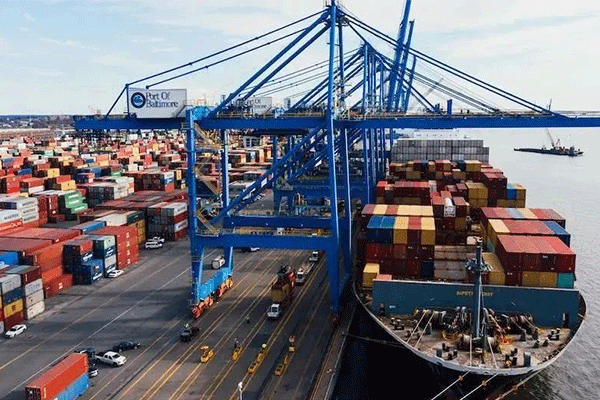
The "Invisible Barriers" Faced by Machinery and Equipment Exports
According to the latest data from the General Administration of Customs in 2025,mechanical and electrical productsThe error rate is as high as 17.3%,with 43% of customs-clearance delays for machinery and mechanical equipment attributed to technical complexity.One construction-machinery manufacturer had an entire batch of tunnel-boring machines—worth USD 3.8 million—held for 76 days after an incorrect HS-code classification,racking up demurrage charges exceeding USD 280,000.This exposes mechanicalThere are three core risk points:
Analysis of Fatal Traps in the Clearance Process
Trap 1: A constantly changing commodity-classification system
- The2025editionoftheCustomsTariffreleasedbytheGeneralAdministrationofCustomsadds23newsub-categoriesformachineryandequipment.
- SeparateClassificationRequirementsforCNCMachineToolControlSystems
- RegulationsforIndependentDeclarationofConstructionMachineryBatteryModules
- Typical case: A laser cutting device was required to pay an additional RMB 920,000 in duties because its optical components were not declared separately.
Pitfall 2: The interlocking documentary-chain requirement
- In2015,theGeneralAdministrationofCustomsissuedNoticeNo.45,whichclearlystipulatesthat:
- Theequipmentstructurediagrammustindicatethematerialsofkeycomponents.
- Theoperationmanualmustincludeenergy-consumptionparameters.
- Theinspectionreportmustincludetraceabilityinformationforcorecomponents.
Pitfall 3: Operational Forbidden Zones in Special Supervision Areas
- Inbondedrepairoperations,thereplacementratioofoldpartsmustnotexceed15%.
- Thecommissioningperiodforequipmentintheexportprocessingzonehasbeenshortenedto28days.
- Channeldeclarationofsingle-unitequipmentexceeding2tonsisprohibited.
Professional agency service value evaluation system
Four core competency models for high-quality customs brokers:
- Technicalanalysiscapability
- In-depthDisassemblyofEquipmentBOMList
- AdvanceClassificationRulingforNon-StandardParts
- Risk Anticipation Capability
- ExportControlEarly-WarningSystem
- DynamicTrackingofRulesofOrigin
Case Study from the Field: A Real-Time Record of Crisis Resolution
Case of a Shield Machine Exported to Germany:
- Initialdeclaration:Classifyunder8430.49asacompletemachine
- Customschallenge:Thehydrauliccontrolsystemshouldbeclassifiedseparately.
- Countermeasures:
- Provideanexplanationoftheequipment’sstructuralprinciples.
- Appliedforadvanceclassificationrulingprocedure
- Submittheinspectioncertificateforcriticalcomponents
- Processing outcome: 17.6% reduction in tariff costs
Key indicators for agency service selection
- VerificationSuccessRate(IndustryAverage82%vs.PremiumAgent95%)
- Customsclearancetimestandarddeviation(generalagent±3daysvs.professionalagent±0.5days)
- DisputeResolutionTimelineforCategorization(StandardProcess28Daysvs.ExpeditedChannel7Days)
When entering into a service agreement,companies are advised to require the agency to provide operational records of industry-specific cases,with particular attention to its experience in handling emerging sectors such as smart devices and new-energy machinery.At the same time,a quantified evaluation system for agency service quality should be established,incorporating key metrics such as customs-clearance timeliness,error rates,and cost-saving ratios into the assessment.
Was this helpful? Give us a like!
Contact our experts for compliance audits, precise quotes, and one-stop customs support.
Recent Comments (0) 0
Leave a Reply