
Textile Machinery Import-Export Guide: HS Codes & Compliance
or complex compliance issues.
clearance and fund security.
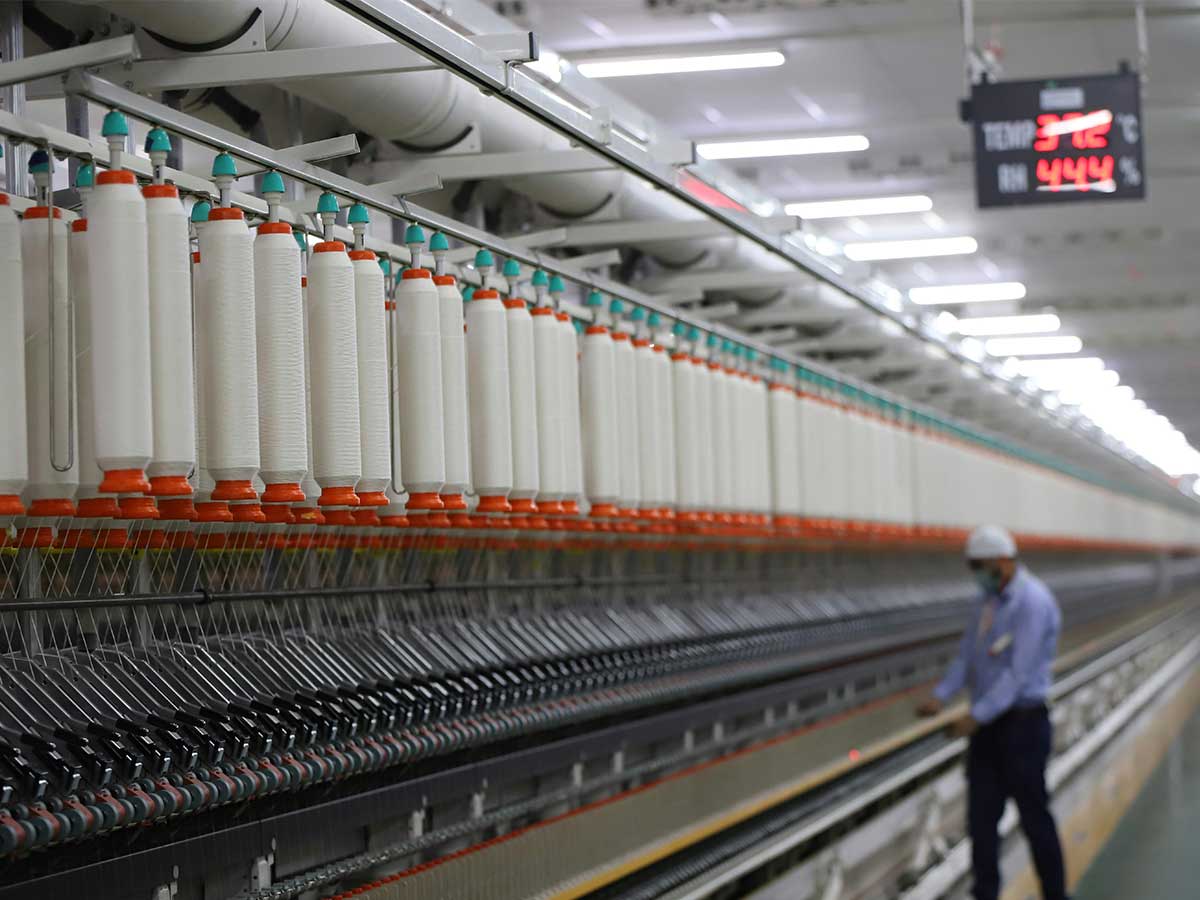
Textile machinery forms the technological foundation of the textile industry,widely used across various stages of textile processing—from natural to synthetic fiber production—all relying on diverse machinery.Textile machinery primarily includes six categories: spinning machinery,chemical fiber machinery,weaving machinery,knitting machinery,nonwoven machinery,and dyeing-finishing machinery.Each type of textile machinery has unique requirements and considerations during import/export.This article provides detailed requirements and precautions for textile machinery import/export,combined with customs HS code classification rules,to help enterprises smoothly complete import/export procedures.I.Classification Guidelines for Textile Machinery
I.Classification Explanation for Textile Machinery
The commodity classification of textile machinery is based on its actual functions,generally divided into three stages: pre-weaving preparation,fabric weaving,and post-weaving dyeing and finishing,classified under HS codes 8444-8451 respectively.
Pre-weaving Preparation Machinery Output:
Pre-weaving preparation includes spinning,fiber forming,pretreatment,etc.mainly involving the following equipment:
- Meltspinningmachine(HSCode:8444.0090):Usedformeltingrawmaterialsandextrudingthemintofibers,akeyequipmentinchemicalfibermanufacturing.
- Automaticwinder(HSCode:8445.4010):Alsoknownasautomaticwinders,usedforfinishingprocessesinspinning,capableofknotting,cleaning,andwindingyarns.
Fabric Weaving Machinery Output:
Fabric weaving equipment includes machinery for weaving yarns into fabrics,such as:
- Water-jetloom(HSCode:8446.3040):Useswaterjettoguideweftyarns,suitableforsmoothchemicalfilamentyarns.
- Raschelwarpknittingmachine(HSCode:8447.2012):Mainlyusedforproducingcomplexstructuredknittedfabricslikelace,curtains,andwomenswearfabrics.
- Spunlacemachine(HSCode:8449.0020):Usedforproducingspunlacenon-wovenfabrics,wherehigh-pressurewaterjetsentanglefiberstoformnon-wovenfabric.
Post-weaving Dyeing and Finishing Machinery Output:
Dyeing and finishing machinery is used for fabric dyeing,printing,drying,and finishing,such as:
- Lasermachineforthetextileindustry(HSCode:8451.8000):Useslaserstoetchfabrics,creatingspecificpatternsorfinishingeffects.
- Fullyautomaticshrinkageratetestingmachine(HSCode:8450.1120):Adrum-typewashingmachinewithheatingandweighingfunctions,usedfortestingtextileshrinkagerates.
- Eisemannclothcuttingscissors(HSCode:8451.5000):Electricfabricshearsforbatchcuttingthickmaterials.

II.Key Considerations for Textile Machinery Import/Export
In textile machinery import/export,ensuring accurate declaration and compliance with various countries requirements is fundamental for smooth customs clearance.Below are key points import/export companies should pay special attention to:
Declaration Elements and Compliance Requirements Output:
When declaring textile machinery,companies must accurately provide detailed information including product name,purpose,model,brand,etc.For example:
- ProductName:Suchas"waterjetloom","automaticwinder","lasermachine",etc.
- Purpose:Specifythespecificpurposeoftheequipment,suchas"foryarnwindingduringthespinningprocess"or"forproducinghydroentanglednonwovenfabric."
- :Ifnecessary,providetechnicalparameters,workingprinciples,etc.tosupportaccurateclassification:Fillintheequipmentsspecificbrandandmodeltoensureaccurateclassification.
- OtherInformation:Includestechnicalparameters,operationmethods,whethernewequipment,etc.
Compliance with Importing Countrys Technical Requirements Output:
Different countries may have varying technical requirements and standards for imported textile machinery.Exporters should ensure equipment complies with target market regulations and standards:
- EUmarket:Hasstrictrequirementsontextilemachinerysmechanicalperformance,safety,andenvironmentalprotection,possiblyinvolvingCEcertificationtoensurecompliancewithEUMachineryDirectiveandenvironmentaldirectives.
- USMarket:MayrequireFCCcertificationorothersafetycertificationstoensureproductsmeetelectromagneticcompatibilitystandardsandsafetyrequirements.
III.Key Points of Export Operation Procedures
To successfully complete textile machinery exports,companies can choose to cooperate withcompanies to ensure every step is effectively executed.The export agents operation procedures include the following points:
- Providinginternationaltradepracticesandquotationservices:Theagencycompanywillprovidereasonablequotationstoenterprisesbasedonmarketconditions,helpingthemgraspmarketdynamics.
- Contractsigninganddocumentpreparation:Theagencycompanysignsexportcontractswithforeignclientsandpreparesproformainvoicesasguidingdocumentsforsubsequentoperations.
- Documentreviewandexportdocumentation:Theagencycompanyreviewsthetermsoftheletterofcredittoensurerisk-freeoperationsandpreparesexportdocumentssuchasinvoicesandpackinglistsbasedonclient-providedinformation.
- Handlingexportapprovalsandfreightarrangements:Theagencycompanyassistsinprocessingexportapprovalproceduresandarrangesfreight,includingbookingshippingspaceandinsurance,ensuringsafedeliveryofgoodstothedestinationport.
- CustomsDeclarationandClearance:Theagencycompanypreparescompletecustomsdeclarationmaterials,handlescustomsclearanceprocedures,assistsenterprisesinsmoothlypassingcustomsinspections,andensureslegalexportofgoods.
- Documentdeliveryand:Theagencycompanydeliversexportdocumentstoclientsorbanksforpaymentsettlementandhandlesforeignexchangesettlementprocedurestoensuresmoothreceiptofpayment.
With the assistance of an export agency company,enterprises can effectively reduce uncertainties in the export process and focus on product research and production.
IV.Summary
The import and export of textile machinery involve multiple steps,from product classification to compliance requirements and specific export operation procedures,each requiring careful planning and execution.Accurate commodity classification,detailed declaration information,and a comprehensive understanding of target market requirements are key to successfully completing textile machinery exports.Collaborating with professional export agency companies can help enterprises effectively reduce risks,ensure each step complies with international trade practices and standards,and thus more efficiently expand overseas markets.
Was this helpful? Give us a like!
Contact our experts for compliance audits, precise quotes, and one-stop customs support.
Recent Comments (0) 0
Leave a Reply