Home»Food & Beverages» The Complete Guide to Importing Australian Red Wine, Juice, and Coffee: Key Milestones from Documentation to Logistics
Pain Points and Breakthroughs in Customs Clearance Amid Australia’s Food & Beverage Import Boom
In recent years, as domestic consumption has upgraded, demand for imported Australian red wine, juice, coffee and other food & beverages has kept climbing. Customs data show that China-Australia food trade value rose 18 % year-on-year in Jan-Oct 2023, with red wine, ready-to-drink juice and roasted coffee beans accounting for over 60 % of import volume. Yet behind the apparent boom, importers often face mismatched documents, logistics delays,Convert foreign exchange into RMBObstacles and other challenges. This article will focus on the entire import process for Australian food and beverages (red wine/juice/coffee), combiningZhong Shen International Trade Co., Ltd.With hands-on experience in document processing, logistics coordination, and multi-market adaptation, we provide businesses with actionable customs-clearance guidance.
Document processing: the "invisible lifeline" of import customs clearance
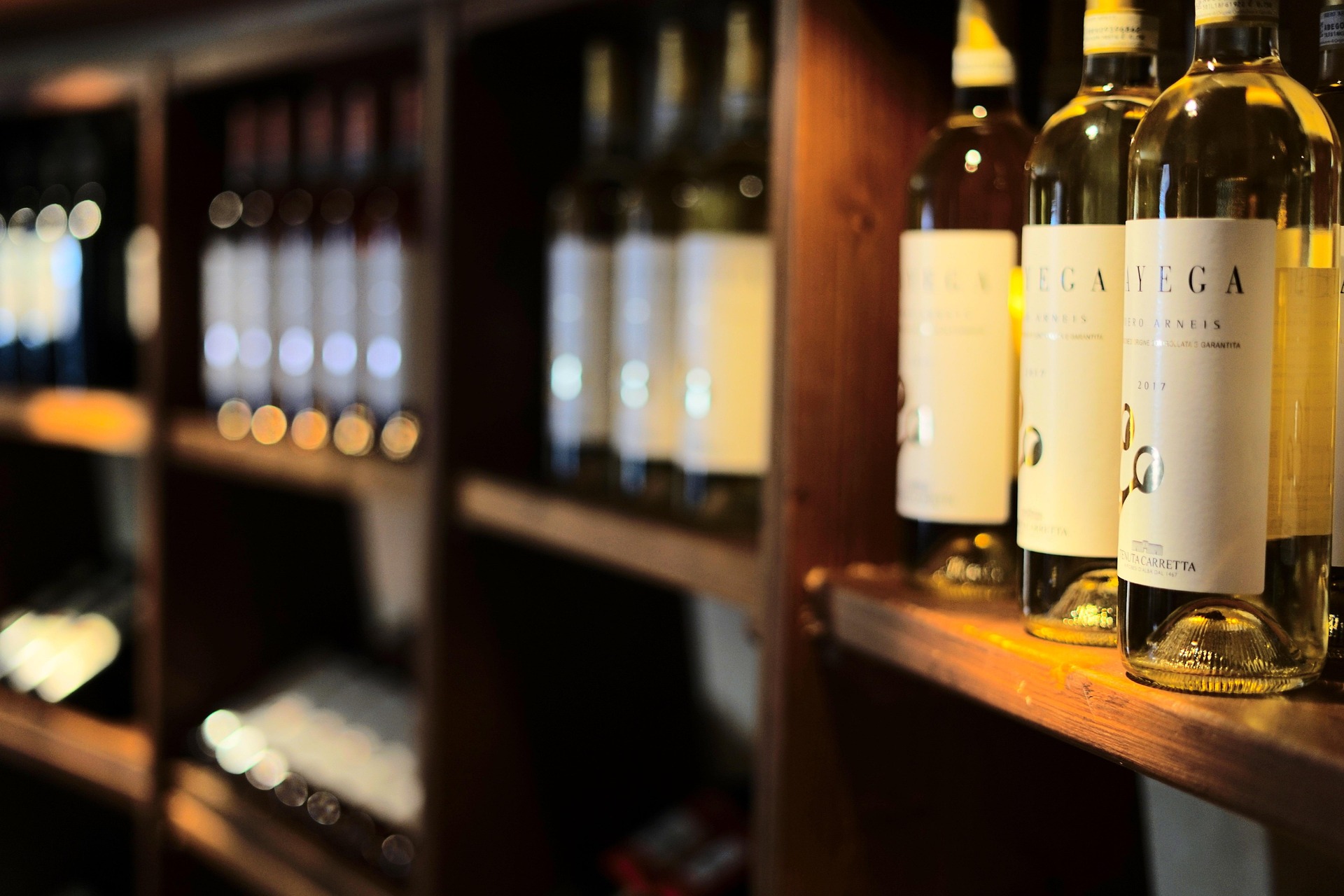
In food and beverage imports, document compliance is the core factor that determines whether customs clearance can proceed smoothly. Taking Australian red wine as an example, the basic documents to be prepared include: commercial invoice (must state FOB/CIF price terms), packing list (listing the capacity of each carton and the total number of packages),Origin Certificate(Form F, eligible for 0–5% tariff concession under the China–Australia Free Trade Agreement), sanitary certificate (issued by AUS-FDA and must state “complies with China’s food-import standards”), and compositional analysis report (covering alcoholic strength and additive types). If the wine is certified organic, an additional certificate from the Australian organic certifier ACO is required.
The “Triple-Check Principle” summarized by Zhongshen International Trade’s documentation team is worth emulating:
1. Check document completeness—verify that every document bears the exporter’s official seal and that all dates precede the shipment date;
2. Check information consistency—ensure the description (e.g., “Shiraz red wine”), HS code (2204 21 00) on the bill of lading, invoice, and certificate of origin are identical;
3. Check special requirements—for juice products, scrutinize whether the pesticide-residue test report covers the 300+ items listed in China’s “Maximum Residue Limits for Pesticides in Food” (GB 2763).
In 2023, a client importing Australian cold-pressed juice failed to state “no preservatives added” on the health certificate; the shipment was held at Shanghai Port for 15 days and was only released after Zhongshen’s team helped furnish a supplementary statement.
Logistics Arrangement: End-to-End Optimization from Australian Ports to Chinese Warehouses
Australia’s food and beverage exports are shipped mainly through the ports of Sydney, Melbourne, and Brisbane; red wine, in particular, is usually trucked from Adelaide in South Australia and trans-shipped via Melbourne. Logistics plans must be tailored to product characteristics: red wine requires temperature-controlled containers held at 12–15 °C; juice, because of its sugar content, is prone to fermentation, so vessels under five years old are recommended and “short-shipment insurance” should be purchased; coffee beans, being dry cargo, can be consolidated to cut costs, but must be segregated from odorous goods such as chemicals.
Zhongshen International Trade has established long-term partnerships with carriers such as Maersk and CMA CGM, giving priority allocation of reefer slots for food cargo. Take the Melbourne–Shanghai route: a standard container transit time is about 14 days, while reefers incur an extra “temperature-monitoring fee” of USD 200–300 per unit. After arrival, customs-clearance speed is critical—food shipments at Shanghai or Guangzhou ports normally require 3–5 working days (including inspection). Zhongshen’s “pre-declaration + electronic supporting documents” model cuts the average clearance to 2.5 days. In September 2023, a client’s 1,000-carton shipment of Australian concentrated juice faced a supermarket promotion deadline after vessel delay; Zhongshen arranged “advance declaration” with customs and secured priority inspection, completing clearance in 48 hours and averting a RMB 200,000 breach-of-contract loss.
Russia and the Southeast Asian Market: Tailored Solutions for Diverse Demands
Importers who are simultaneously targeting both the Russian and Southeast Asian markets need to pay special attention to regional policy differences:
Russian Market: The Unique Advantages of VTB's Foreign Exchange Settlement
Due to international settlement restrictions, Russia often experiences delays in traditional T/T payments (averaging 7–10 days) and exchange-rate losses. Zhongshen International Trade and Russiaforeign tradeVTB Bank has set up a dedicated FX-settlement corridor that enables direct “RMB-to-Ruble” clearing, delivering: ① faster credit within 2–3 business days; ② locked-in FX rate (the settlement rate is fixed at order placement); ③ streamlined paperwork (only three documents required: contract, customs declaration, and logistics slip). For example, when a client exported Australian wine to Russia, it converted USD 500,000 through VTB’s corridor, saving 3% in FX costs versus traditional channels and receiving payment seven days earlier.
Southeast Asian Market: Streamlined Processes under the RCEP Framework
Southeast Asia is a key re-export hub for Australian food products. Thanks to the RCEP agreement, goods shipped from Australia via Vietnam/Thailand to China can benefit from the cumulative rules of origin: if Australian raw materials plus Southeast Asian processing add up to a 40 % value increase, the product is deemed RCEP-originating. Zhongshen’s “two-step” roadmap for the Southeast Asian market: Step 1—before export, we help clients apply to Australian Customs for a “back-to-back certificate of origin” (for re-export); Step 2—after arrival, declare to China Customs with a FORM E certificate and enjoy tariff cuts. In 2023 one client re-exported Australian green-bean coffee through Thailand; by leveraging RCEP rules the tariff dropped from 8 % to 3 %, saving RMB 12,000 per container.
The Landscape of International Trade: Challenges and Opportunities Coexist
The imported-food sector is currently grappling with two major challenges: first, supply-chain volatility—congestion in the Suez Canal in 2023 stretched shipping times from Australia to China by 5–7 days and pushed reefer-container leasing rates up 15 percent; second, tightening compliance requirements—China’s 2023 Implementation Rules for the Registration Administration of Overseas Food Manufacturers for Import stipulate that Australian exporters must complete registration in China (subject to CAIQ audit).
Yet the opportunities are equally striking: after the upgrade of the China–Australia Free-Trade Agreement, 99 % of Australian food will enter China duty-free; China–Russia trade exceeded US $200 billion in 2023, with food rising to 12 % of the total; RCEP members in Southeast Asia are increasing their food imports from China by 20 % a year. Through its “l(fā)ive policy database + client training” model, Zhongshen International Trade updates each country’s customs rules every month and, in 2023 alone, helped more than 50 clients avoid clearance risks triggered by policy shifts.
Certification Assistance: The “Last-Mile” Service under Information Transparency
Imports of Australian food and beverages into China must meet mandatory certification requirements: red wine must comply with GB 2758 (Hygienic Standard for Fermented Alcoholic Beverages), fruit juices must pass GB 19297 (Hygienic Standard for Fruit and Vegetable Juice Beverages), and coffee must complete “Registration of Overseas Food Manufacturers for Import” (the approved company list is available on the General Administration of Customs website). Although Zhongshen International Trade does not handle certifications directly, it provides a “Three-Lists” service: ① Mandatory Certification List (e.g., CIQ access, SGS testing); ② Optional Certification List (e.g., organic, halal); ③ Document Preparation List (e.g., sample quantities for testing, translation requirements for foreign documents). In 2023, a client planning to import Australian organic coffee was advised in advance by Zhongshen’s team to submit both the ACO organic certificate and the CNCA organic product import certificate, preventing any certification omission.
Conclusion
Importing Australian red wine, juice, and coffee is, at its core, a customs battle where “details decide success or failure.” Every single line on a document must be scrutinized, every container and carton orchestrated, and every market’s regulations precisely matched—each step demands a deeply engaged professional team. With the mission of “making import simpler,” Zhongshen International Trade leverages a decade-built document library (covering 2,000+ food HS codes), a logistics network (partnering with 20+ shipping lines), and a regional-policy database (updated in real time for Russia, Southeast Asia, and Australia) to safeguard the entire journey from purchase order to customs clearance. Driven by both consumer upgrading and shifting global-trade patterns, mastering professional customs expertise may well be the key that unlocks the Australian food-import market.









 簡體中文
簡體中文  English
  Русский
  日本語
日本語  Espa?ol de México
  ???
???