
Consignment Note vs. Shipping Instruction: Key Differences & Importance
or complex compliance issues.
clearance and fund security.
The cargo consignment note is a transportation entrustment submitted by the consignor to the carrier.Its main functions are to serve as proof of the transportation contract and to describe and confirm the goods.The consignment letter is similar to the cargo consignment note,but it is a more formal document,usually used to entrust an agency company to perform certain specific tasks,such as customs declaration,cargo transportation,etc.The export commodity details list mainly describes the specific information of the export commodities.
The consignment letter should be provided by the entrusting party.Usually,when a company or individual needs to entrust another company or individual to complete a certain task or provide a certain service,the entrusting party will provide the consignment letter.For example,when an export company needs to entrust a customs declaration company to complete the customs declaration procedures for goods,the export company,as the entrusting party,will provide the consignment letter to the customs declaration company.
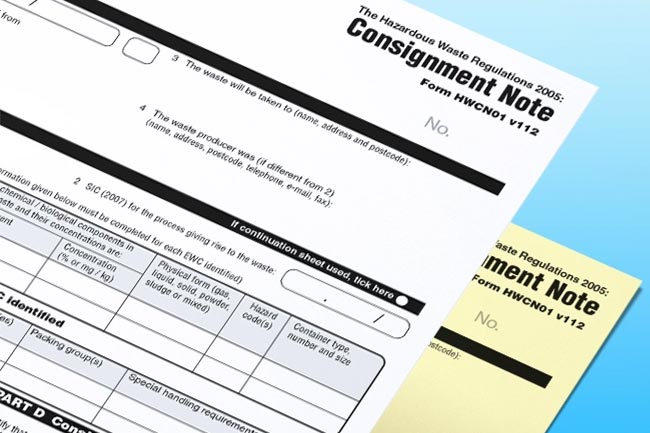
Functions of the Consignment Letter:
Nature of Proof: The consignment letter provides written proof of the entrustment relationship between the entrusting party and the entrusted party.
Clarification of Rights and Responsibilities: It lists in detail the rights and obligations of both parties to ensure clear responsibilities during the execution process.
Operational Guidelines: It provides the entrusted party with detailed operational guidelines and requirements.
Legal Basis: In case of disputes,the consignment letter can be used as the basis for legal litigation or arbitration.
The data on the consignment letter mainly include:
Basic information of the entrusting party and the entrusted party: Including name,address,contact information,etc.
Entrusted content: Specifically describe the task or service that the entrusting party hopes the entrusted party to complete.
Detailed information of the goods or services: Such as the name,quantity,value,destination,mode of transportation,etc.of the goods.
Rights and obligations: The rights and obligations of both parties during the execution of the entrusted task.
Fees and payment methods: Specify the fees that the entrusted party should receive for completing the entrusted task,as well as the payment method and time limit.
Other specific terms: Such as confidentiality clauses,dispute resolution methods,contract validity period,etc.
Generally speaking,the consignment letter is a very formal document,which provides a clear,detailed and legally binding framework for the entrustment relationship between the two parties.In actual operation,both parties should strictly follow the content of the consignment letter to ensure the smooth completion of the entrusted task.
Was this helpful? Give us a like!
Contact our experts for compliance audits, precise quotes, and one-stop customs support.
Recent Comments (0) 0
Leave a Reply