
Export Best Practices: Small Orders vs. Large Shipments
or complex compliance issues.
clearance and fund security.
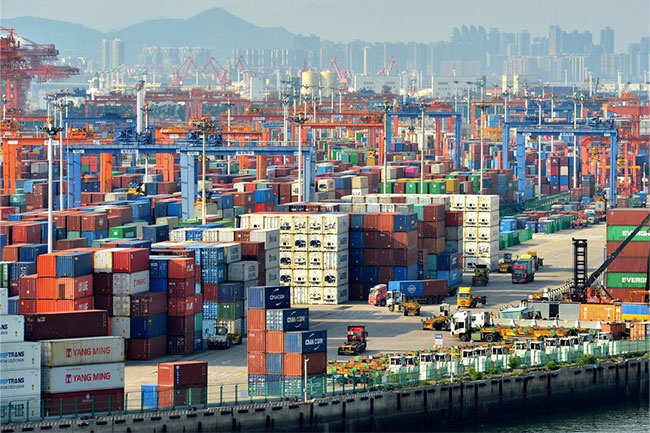
Common export misconceptions: Differences between sample orders and bulk shipments
In foreign trade practice,many enterprises tend to directly apply sample order procedures to bulk exports.Indeed,when the value is below $800,using express company invoices for shipment is common and convenient.However,this approach may lead to potential issues when dealing with bulk exports.
First and foremost,its essential to clarify thatbulk exports and sample orders are fundamentally different in terms of customs supervision.According to international trade regulations,when the value exceeds a certain amount,formal customs declaration procedures are required regardless of the shipping method.This not only affects export enterprises tax rebate rights but also impacts importing countries tariff collection.
Three core considerations for bulk exports
When handling bulk exports,three key factors require special attention:
- :Formalcustomsdeclarationisaprerequisiteforenterprisestoobtainexporttaxrebates
- Importcountrycustomsclearance:Invoiceheadersmayaffectclientscustomsclearanceprocesses
- Logisticscosts:Costdifferencesarisingfromdifferentoperationmethods
Tax rebates and customs declaration: An inseparable relationship
Tax rebates constitute one of the important profit sources for foreign trade enterprises,and to obtain them smoothly,one fundamental condition must be met: Conduct operations under the enterprises own name.This means:
- Customsdeclarationdocumentsmustbepreparedusingtheenterprisesownheader
- Completecustomsclearancedocumentsmustbeprepared,includingcommercialinvoices,packinglists,etc.
- Thedeclaredcustomsvaluemustmatchtheactualtransactionamount.
In practice,some companies continue to use the courier companys letterhead for convenience.While this approach may simplify the shipping process,it completely cuts off the companys path to obtaining tax refunds.In the long run,the losses outweigh the gains.
Client-side customs clearance considerations
From the clients perspective,invoice letterhead issues may have two impacts:
- Certaincountrieshavespecificrequirementsfortheletterheadofimportedgoodsinvoices.
- Ifspecialcertificationsorpermitsareinvolved,theinvoiceletterheadmustmatchthecertificationdocuments.
We recommend that foreign trade companies fully communicate with clients before shipment to understand the specific requirements of the importing country.If the client has no special requirements,from the companys own interests,using the original invoice letterhead for customs declaration and exportis the most prudent approach.
Balancing logistics costs and operational convenience
Indeed,using the original invoice letterhead for customs declaration and export may increase certain logistics costs,mainly reflected in:
- Relativelycomplexcustomsproceduresmayrequireadditionalcustomsclearanceservicefees.
- Somelogisticscompanieschargehigherratesforformalcustomsdeclarations.
However,these additional costs can often be offset by tax refund benefits.Foreign trade companies shouldCost - benefit analysisweigh the relationship between short-term convenience and long-term benefits.
Professional advice: Best practices for bulk cargo exports
Based on years of practical experience in foreign trade,we recommend the following operational methods for bulk cargo exports:
- Persistinusingthecompanysownletterheadforformalcustomsdeclaration.
- Chooseprofessionalcustomsclearanceserviceproviders(suchasOneTouch)tohandlecustomsmatters.
- Communicateinvoiceletterheadissueswithclientsinadvancetoavoidcustomsclearanceobstacles.
- Includetaxrefundbenefitsinoverallcostaccounting.
Remember,foreign trade exports are not one-time transactions,Standardized Operationthey not only relate to the smooth progress of individual transactions but also form the foundation for long-term business development.In the current international trade environment,compliance is increasingly valued by customs authorities worldwide,making it crucial for companies to establish standardized export procedures.
Finally,it should be noted that policies may varybetween different countries and product categories.We recommend that foreign trade companies fully understand the specific requirements of target markets before conducting business,and seek assistance from professional customs brokers or trade consultants when necessary to ensure smooth transactions.
Was this helpful? Give us a like!
Contact our experts for compliance audits, precise quotes, and one-stop customs support.
Recent Comments (0) 0
Leave a Reply