
FOB to CIF: Flexible Freight Payment in International Trade
or complex compliance issues.
clearance and fund security.
In international trade,freight settlement issues often spark discussions: If a contract is signed with FOB terms,can the freight payer be changed in actual operations?Today we will thoroughly examine this issue,analyzing whyflexible adjustments are completely feasible,and how to maximize the benefits brought by such flexibility.
Can the FOB terms in the contract be changed to CIF during operation?
The answer is affirmative.The trade terms agreed in the contract,such as FOB (Free On Board) or CIF (Cost,Insurance and Freight),do not preclude subsequent operational flexibility.Contract signed as FOB,customs declaration as FOB,but operationally changed to CIFSuch situations are quite common in foreign trade.These adjustments can be made based on actual circumstances without rigid adherence to initial contract terms.Flexible modifications not only accommodate practical operational needs but also optimize costs and enhance efficiency according to market conditions.In global trade,adaptability constitutes a key competitive advantage,enabling both exporters and importers to better respond to changes.
In practice,the rationale behind such adjustments is to maximize benefits for all transaction parties.For instance,when sellers have access to lower freight channels,switching from FOB to CIF—even if originally contracted as FOB—can reduce costs for buyers,creating mutual benefits.Thus,flexible term adjustments serve not merely as payment party changes but as strategic responses to market dynamics that enhance trade efficiency.
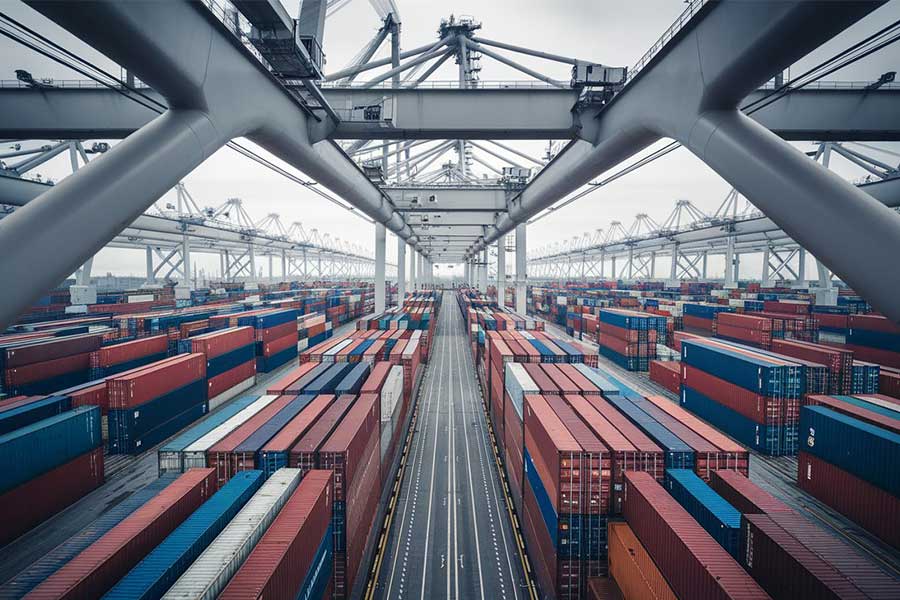
Changing the freight payer: Mid-process adjustments are feasible
The selection of freight payers and forwarder replacements can also be handled flexibly.Even after shipment,forwarders or freight payers may be changed.The key in foreign trade operations is maintaining clear communication to ensure each adjustment delivers optimal solutions for both clients and suppliers.In other words,original contract terms arent immutable if both parties agree to modifications.
This flexibility proves particularlycritical in complex and volatile scenarios.Given the unpredictability of international logistics—such as capacity shortages,freight fluctuations,or service quality changes—companies can adjust freight payers or forwarders as needed to meet new requirements.Such adaptations often improve supply chain responsiveness.Even mid-shipment,reevaluating logistics arrangements for more economical solutions is possible.Therefore,contract modifications arent risks but effective risk-management tools.
Moreover,changing freight payers can optimize cash flow under varying market conditions.For example,suppliers facing temporary financial pressure may negotiate with buyers to shift freight responsibilities,maintaining cargo flow while improving financial flexibility and management efficiency.
Regarding foreign exchange declaration: Minor discrepancies from flexible adjustments
Some may worry about implications forminor discrepancies between foreign exchange declarations and actual receipts,but experienced trade finance professionals can handle these through proper adjustments without compromising compliance.
Notably,such discrepancies rarely significantly impact overall finances.Coordination with banks and regulators ensures operations stay compliant.For instance,while customs declarations might use FOB values,CIF-based actual receipts can be reconciled through financial documentation.Clear records and transparent communication with all stakeholders prevent misunderstandings in settlements.
Foreign trade inherently involves navigating uncertainties.Whether adjusting freight payers or forwarders,flexibility—paired with client communication—ensures optimal solutions.This adaptability not only smoothens operations but also enhances client satisfaction and collaboration efficiency.
Summary: Adaptability in foreign trade operations
Adaptability is a cornerstone of successful international trade.Fixed contract terms often fail to cover all scenarios in volatile markets.Timely adjustments help companies respond to external changes like freight fluctuations or logistics issues,ensuring operational continuity.Ultimately,this capability strengthens competitive positioning by optimizing costs and fostering long-term partnerships.
Foreign trade
Here is the information regarding ".As a one-stop importservice provider,we can offer customizedsolutions for various industries.If you need foreign trade import and export agency services,welcome to contact our company for business consultation.The consultation hotline is 139 - 1787 - 2118.
Was this helpful? Give us a like!
Contact our experts for compliance audits, precise quotes, and one-stop customs support.
Recent Comments (0) 0
Leave a Reply