
Graphite Import/Export Classification Guide
or complex compliance issues.
clearance and fund security.
Amidst the wave of modern industrial development,graphite—a seemingly ordinary material often referred to as "black gold"—is quietly playing a crucial role.The unique properties of graphite make it indispensable inplay an indispensable role in many fields such as electronics,metallurgy,and machinery.With the continuous progress of science and technology,the types and uses of graphite and its products are increasing day by day,which puts forward higher requirements for their classification andHere is a detailed interpretation of the import and export classification of graphite and its products.
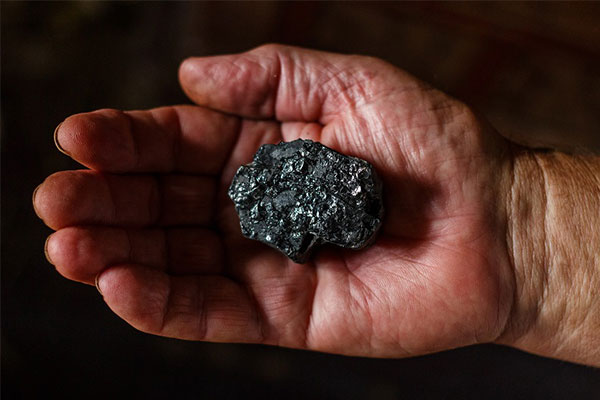
I.Types and Basic Classification of Graphite
Graphite,as an allotrope of carbon,is widely used in various fields due to its unique physical and chemical properties.According to the Import and Export Tariff Regulations of the Peoples Republic of China (2023),graphite and its products are mainly classified into the following categories:
Natural graphite
Natural graphite,that is,graphite collected from nature,is mainly classified according to its form and degree of processing,and can be divided into flake,powder,and dense block forms,etc.Specifically,flake natural graphite is classified under tariff number 25041010,powder natural graphite is classified under 25041099,and dense block natural graphite is classified under tariff number 25049000.
Spheroidized graphite
Spheroidized graphite is a product obtained by specially processing natural flake graphite.According to whether it has been surface - treated,non - surface - treated spheroidized graphite is classified under tariff number 25041091,and surface - treated spheroidized graphite is classified under tariff number 38019010.
Expandable graphite
Graphite that can expand rapidly at high temperatures after being treated with an acidic oxidant is classified as expandable graphite and expanded graphite,and is uniformly classified under tariff number 38249999.
Artificial graphite
Artificial graphite prepared through a specific process,due to its low impurity content and diverse forms,is classified under tariff number 38011000.
II.Customs Classification and Clearance Process of Graphite
For the import and export of graphite and its products,accurate classification is the crucial first step.It not only involves the calculation of tariffs but also relates to the compliance review of goods.Therefore,when enterprises import and export graphite and its products,they must understand in detail and accurately declare the following elements:
Product name and source:
Clearly indicate the type of graphite and its source,whether it is natural graphite or artificial graphite.
Composition content and morphology:
Provide the purity of graphite,its specific form (such as powder,flake,etc.) and processing method.
Purpose:
Specify the specific application fields of graphite and its products,such as battery manufacturing,lubricating materials,etc.
Technical parameters:
For graphite products with special purposes,relevant technical parameters and performance indicators need to be provided.
After completing the above declarations,the customs will review the submitted materials based on the Tariff Regulations (2023) to ensure the accuracy of classification.For some special graphite and its products,additional technical documents or test reports may be required to prove their characteristics.
III.Detection Technology for Graphite Classification
With the increasing variety of graphite and its products,relying solely on traditional classification methods is no longer sufficient to meet the needs.Therefore,the adoption of advanced detection technologies such as X - ray fluorescence spectroscopy,X - ray diffraction,and ultra - depth - of - field microscopy has become an important auxiliary means in the classification process.These technologies can provide detailed information on the material composition and structure of graphite,providing a scientific basis for the classification of complex graphite and its products.
In conclusion,the classification of graphite and its products is a complex process involving knowledge in many aspects.Only through in - depth understanding of graphite,combined with advanced detection technologies and rigorous classification principles,can the smooth progress of import and export trade be ensured,and at the same time,it provides support for the healthy development of Chinas graphite industry.
Was this helpful? Give us a like!
Contact our experts for compliance audits, precise quotes, and one-stop customs support.
Recent Comments (0) 0
Leave a Reply