
Singapore Equipment Import: A Guide to Customs & Tariffs
or complex compliance issues.
clearance and fund security.
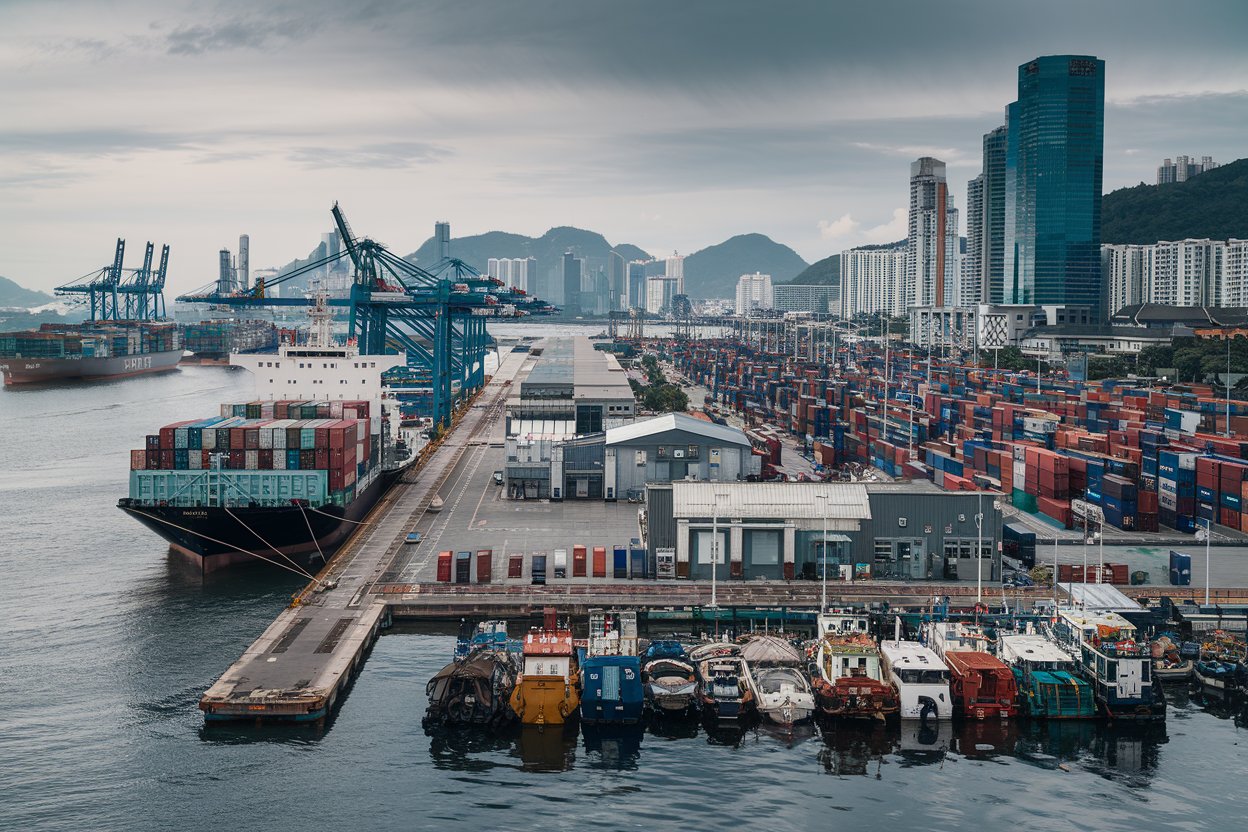
Under the Lion Citys trade hubNew dynamics
As the third-largest financial center in the world,Singapore’s mechanical equipment imports are expected to exceed S$42 billion by 2025.Under strict trade control frameworks,the value of professional customs declaration agents’ services is becoming increasingly prominent.Local customs data shows that enterprises using professional agents can reduce their average customs clearance time by 3.2 working days and lower their violation penalty rate by 72%.
Three core challenges in equipment import clearance
First challenge: The dynamically changing import control list requires companies to maintain policy sensitivity.Singapore Customs updates the Strategic Goods Control List quarterly,with 18 product categories including precision machine tools and testing equipment requiring strategic goods licenses.
Second challenge: Complex HS code classification directly impacts tariff costs.Taking industrial robot systems as an example,the main body falls under 8462.21 while the control system is classified under 8537.10,with tariff rate differences of 3%-7% between different components.
Third challenge: Strict quarantine inspection procedures may cause port detention risks.According to Singapore AVA regulations,equipment with hydraulic systems must provide lubricant MSDS reports,and explosion-proof equipment requires TüV certification documents.
Key competency matrix for professional agency services
- Regulatoryinterpretationcapability
- SynchronizeupdateswithrevisedclausesofSingaporesCustomsAct
- Accuratematchingofproductcharacteristicswithcontrolcatalogs
- Document management system
- Pre-reviewcommercialinvoiceandpackinglistcompliance
- PreparetaxdocumentscompliantwithGSTrequirements
- Logistics coordination network
- ConnectwithPSAportareapriorityinspectionchannel
- Coordinatestorageindedicatedhazardousgoodswarehouses
- Emergency response mechanism
- Documentcorrectioncompletedwithin48hours
- Professionallegalsupportfordisputedeclarations
Comparative cost-benefit analysis
Actual case from a precision instrument manufacturer shows:
- Self-declarationgroup:Took23days,incurredportdemurragefeesofSGD8,200,andpaidadditionaltaxesofSGD12,500duetoHScodeerrors
- Agentservicegroup:Customsclearancecompletedin9days,agentfeesofSGD4,800,withtariffoptimizationsavingsofSGD9,700
Four dimensions for selecting agent services
- Industryexperience:Focusonthenumberofsuccessfulcaseswheretheagenthandledsimilarequipment
- Servicenetwork:Verifywhetherithasspecialhandlingcapabilitiessuchashazardousmaterialtransportationandconstant-temperaturewarehousing
- Pricingmodel:Becautiousofpackagequotescontaininghiddenfees,prioritizesegmentedpricingschemes
- Value-addedservices:EvaluatethevalueofextendedservicessuchascustomstrainingandAEOcertificationguidance
Risk warnings in typical cases
In 2024,a certain technology company commissioned a non-professional agent to import semiconductor equipment:
- Failedtoidentifytheequipmentcontainedcontrolled-levellasercomponents
- Incorrectdeclarationresultedin2-monthcargodetention
- UltimatelyincurredSGD280,000incompliancerectificationcosts
Comparative case: A manufacturing enterprise using professional agents:
- Proactivelyidentifiedtheequipmentrequiredstrategicmateriallicenseapplication
- Splitdeclarationtoreducetariffbase
- UtilizeFTApreferentialtaxratestosave11.2%costs
Suggestions for Coping with New Customs Clearance Regulations in 2025
For Singapore Customs upcoming mandatory electronic declaration verification system,it is recommended to choose agency service providers with the following qualifications:
- TradeNetsystemLevel3operationpermissions
- Certifiedelectronicsignaturecertificate
- APIdirectconnectioninterfacewithCustomsDataCenter
Was this helpful? Give us a like!
Contact our experts for compliance audits, precise quotes, and one-stop customs support.
Recent Comments (0) 0
Leave a Reply