
Medical Device Storage and Distribution Management: Compliance, Safety, and End-to-End Control
or complex compliance issues.
clearance and fund security.
The professional requirements and key points of warehousing Output:
Medical devices are highly sensitive in warehouse management,with standards for temperature and humidity control,environmental cleanliness,and batch traceability far exceeding those of ordinary goods.To ensure safety and quality during the circulation process,a strict and systematic management system has gradually been established for medical device warehousing.From a supply chain perspective,warehousing is not just a storage space for products,but also a core node for regulatory compliance,quality management,and risk control.
In Shanghai,the distribution efficiency of medical devices is high and the concentration of resources is strong.Enterprises usually meet the diverse storage and distribution needs through compliant warehouse operations.
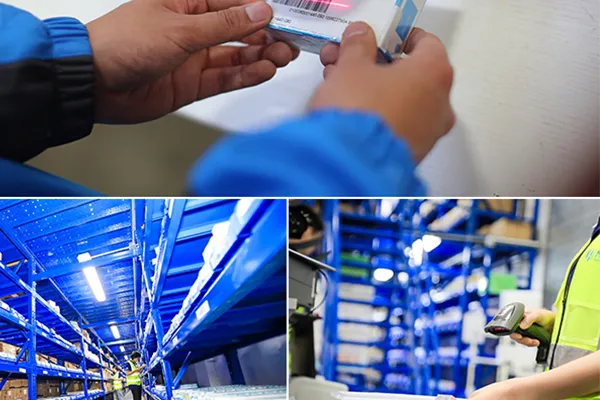
I.GSP Medical Warehousing: A Fundamental Link in Ensuring Quality
The storage management of medical devices must comply with the requirements of the "Regulations on the Supervision and Management of Medical Devices" and the "Quality Management Standards for the Operation of Medical Devices (GSP)".The key points include:
1.Environment and temperature and humidity control
It is necessary to maintain a suitable environment through a real-time monitoring system and ensure that equipment (such as temperature and humidity recorders,alarm systems) continues to operate,so that we can deal with abnormal situations quickly when they occur.
Reference: Medical Device Business Quality Management Regulations of the National Medical Products Administration of China (NMPA)
2.Batch management and traceability
For each batch of medical devices,a complete record must be established from storage to dispatch,including supplier information,batch number,serial number,expiration date,etc.to ensure that subsequent inquiries and recall operations have sufficient basis.
3.Requirements for dustproofness,moistureproofness,and pollution prevention
The warehouse interior needs to maintain a clean environment,with separate areas for storing different types of equipment (such as passive,active,and disposable supplies).At the same time,regular maintenance and disinfection are required to prevent external contamination from affecting product safety.
These key points form the foundation of compliant operations for medical device storage and serve as the first line of defense for overall supply chain safety.
II.Medical logistics transportation: Prioritize both timeliness and compliance
The transportation process of medical devices often involves sensitive equipment,high-value devices,or urgent needs.Therefore,the transportation system needs to meet the following requirements simultaneously:TimelinesswithComplianceFor products that require the addition of inhibitors or stabilizers,relevant instructions should be provided to ensure the stability of the chemical products during transportation and storage.
1.Transportation vehicle qualifications and equipment
Transportation vehicles are usually equipped with positioning systems,shockproof devices,and cold chain equipment (if involving temperature-controlled instruments),etc.to ensure that the transportation process can be monitored and queried.
2.Shipping requirements and handover process
The loading and unloading of transportation must be carried out in accordance with the characteristics of the equipment,such as avoiding light,preventing shock,preventing moisture,and maintaining temperature.The handover process needs to be strictly recorded to ensure traceability throughout the entire supply chain.
3.Inter-city and regional distribution
In areas with concentrated medical resources,such as Shanghai,the transportation network needs to cover hospitals,distributors,third-party logistics cooperation points,etc.so that goods can be delivered quickly and supply chain efficiency can be improved.
III.Medical e-commerce logistics: fine-grained processing of online orders
With the development of medical device e-commerce,whether it’s B2B or B2C,e-commerce logistics has become one of the key businesses.Its core tasks include:
1.Fast picking and handling of small items
E-commerce orders are usually fragmented and frequent,so warehouses need to set up a picking model suitable for small medical devices to avoid losses and improve efficiency.
2.Compliant packaging
Before the goods are dispatched,they need to be repackaged according to the characteristics of medical devices to ensure that they are not subject to compression,contamination,or temperature fluctuations during transportation.
3.Return and Exchange Management
Medical e-commerce logistics also involves return quality inspection and review,which requires strict enforcement of regulations to ensure that all returned devices meet the requirements before they can be re-stocked.
The e-commerce model has improved the circulation speed of medical devices and also set higher standards for process management for warehousing enterprises.
IV.Cold chain insulation equipment: It is the fundamental capability of ensuring the stability of temperature control for medical devices
Some medical devices (such as in vitro diagnostic reagents,test kits,and cold chain supplies) need to be stored and transported within a specific temperature range.Cold chain insulation equipment is the key to maintaining their stability:
1.Cold chain packaging and insulated boxes
We often use professional-grade cold chain transit boxes,vacuum insulation materials,ice packs,and phase-change materials to ensure temperature control throughout the entire process.
2.Temperature recording system
It is used to record temperature changes during the cold chain storage and transportation process,making it easy to trace and audit.
3.Emergency response plan
When equipment malfunctions or temperatures become abnormal,it is necessary to formulate and implement emergency operations,such as quickly replacing the insulated box or transferring to a backup cold storage facility.
Good cold chain capabilities can ensure that temperature-sensitive medical devices maintain their stability and effectiveness throughout the entire storage and transportation process.
Summary
Medical device storage is not just a space for product storage,but also bears responsibilities for regulatory compliance,quality assurance,and supply chain coordination.GSP medical warehousing ensures basic compliance,medical logistics transportation enhances turnover efficiency,medical e-commerce logistics expands channel services,and cold chain insulation equipment provides safety assurance for temperature-controlled products.By establishing rigorous systems and scientific processes,we can provide safe and stable logistics services for medical institutions,distributors,and end users.Based on these capabilities,the company has established a professional medical device warehouse in Shanghai,which can provide stable storage and management support for related enterprises in a compliant environment.
How to determine whether the storage of medical devices meets the GSP requirements?
Check whether it has core features such as temperature and humidity monitoring,batch traceability,environmental management,warehouse entry and exit records,personnel qualifications,and standardized operating procedures.
What are the most overlooked risks in the temperature-controlled transportation of medical devices?
Temperature fluctuations,improper cold chain packaging,exceeded transportation time limits,vehicles not being monitored in real time,and incomplete handover records,etc.
What new requirements does the e-commerce model impose on the storage process of medical devices?
Emphasize fast picking of small items,high-frequency order processing,standardized packaging,return quality inspection procedures,and real-time inventory updates.
Was this helpful? Give us a like!
Contact our experts for compliance audits, precise quotes, and one-stop customs support.
Recent Comments (0) 0
Leave a Reply