
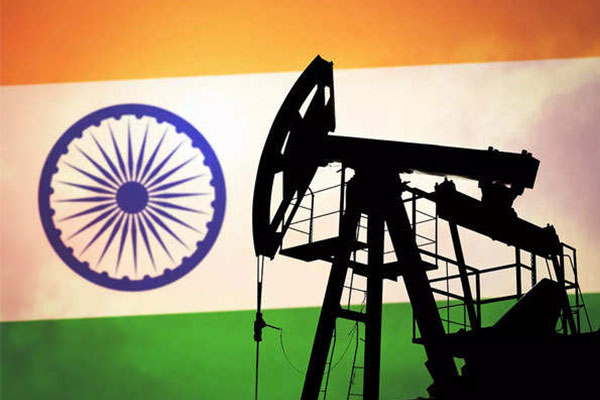
India's Bold Move: Rupee Oil Payments Challenge Dollar Dominance
or complex compliance issues.
clearance and fund security.
However,this policy seems to have encountered initial obstacles.According to three state - owned oil refinery executives,although Indian Oil Corporation (IOC),Bharat Petroleum Corporation Limited (BPCL),and Hindustan Petroleum Corporation Limited (HPCL) have started negotiating with suppliers on this matter,they have been rejected by the suppliers.The suppliers are worried that accepting rupee payments will increase exchange rate risks and conversion costs.
The Reserve Bank of India has asked these three state - owned oil refiners to bear part of the foreign exchange transaction costs to facilitate transactions settled in rupees.However,it is reported that the refiners are resistant to this,believing that it will cut their corporate profits.
Analysts point out that the Indian governments attempt is part of seeking greater autonomy in the global economic turmoil and the US - dollar - dominated international trade system.By promoting the use of the rupee to pay for import costs,India can not only enhance the international status of its local currency but also potentially ease the currency depreciation pressure caused by large - scale imports.
In addition,this strategy also reflects Indias hope to deepen trade relations with major oil - producing countries,especially those in the Persian Gulf.However,to successfully implement this strategy,India not only needs to persuade suppliers to accept rupee payments but also needs to address the issues of exchange rate risks and transaction costs.
At present,it is unclear how the Indian government will overcome these challenges or whether it will adjust the policy to ensure its feasibility.In the coming months,how the Reserve Bank of India and state - owned oil refiners coordinate their positions and whether they can find an effective way to attract suppliers to accept rupee payments will be the focus of attention of observers of the international energy market and monetary policy.
Impact of Central Asian Trade Routes on Global Sanctions after the Russia - Ukraine Conflict
Indias Oil Imports
Was this helpful? Give us a like!
Contact our experts for compliance audits, precise quotes, and one-stop customs support.
Recent Comments (0) 0
Leave a Reply