
EU Cuts Russian Gas Imports: LNG & Energy Shift
or complex compliance issues.
clearance and fund security.
In 2023,the volume of Russian natural gas imported by the European Union through its extensive former - Soviet - era gas pipeline system decreased significantly by five times.This change marks a major shift in the EUs energy import sources.At the same time,the EU significantly increased its procurement of liquefied natural gas (LNG) to supplement the reduced Russian natural gas supply.Aleksandr Novak,the Deputy Prime Minister of Russia,pointed out in an interview with the magazine Ekspert that the proportion of Russian natural gas and LNG in the total European imports last year had dropped to 15%,a significant decrease compared to 45% in 2021.
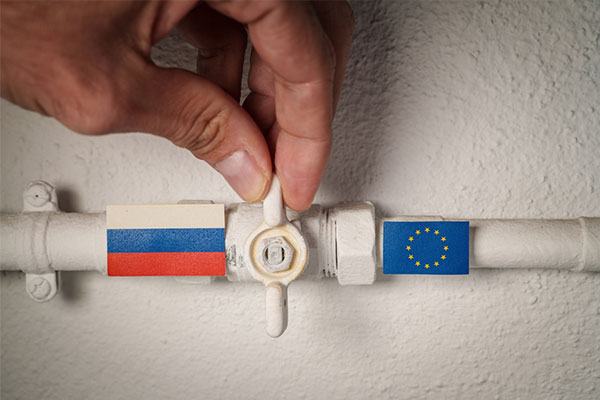
Although the import volume of Russian pipeline natural gas has decreased significantly,the volume of Russian LNG exports to Europe has increased,exceeding 15 million tons,an increase of 38% compared to the 2021 level.This shows that despite sanctions and political pressure,Russia remains an important LNG supplier to Europe.
While Brussels follows the sanctions policy against Russia,the EU is also actively seeking to accelerate decarbonization and energy transition.This strategy aims to reduce dependence on hydrocarbons,especially oil and gas from Russia.In 2023,the share of Russian oil exports to the EU dropped to 4%,a significant decrease compared to 27% in 2021.The import share of oil products also experienced a similar decline,from 50% in 2021 to 9% last year.
Novak emphasized that rejecting Russian natural gas has led to a reduction in consumption and may result in Europe experiencing "unprecedented deindustrialization." This situation highlights the challenges Europe faces in reducing its dependence on Russian energy,including rising energy costs and supply security concerns.
This strategic shift of the EU has had a profound impact not only on Russia but also on the global energy market.To reduce dependence on a single energy supplier,the EU is accelerating the diversification of energy supplies and increasing the proportion of renewable energy.This includes increasing LNG imports from the United States,Qatar,and other countries,as well as investing in wind energy,and other renewable energy projects.
Was this helpful? Give us a like!
Contact our experts for compliance audits, precise quotes, and one-stop customs support.
Recent Comments (0) 0
Leave a Reply