
EU Tariffs on Chinese EVs: Impact and Industry Reaction
or complex compliance issues.
clearance and fund security.
On October 29 local time,the European Commission announced the conclusion of its countervailing investigation into battery electric vehicles (BEVs) imported from China and decided to impose a five-year definitive countervailing duty on related products.The decision is expected to be officially published in the EU Official Journal on October 30,with the duties taking effect from October 31.This move marks an important step for the EU in addressing global electric vehicle market competition but has also drawn strong opposition from the German automotive industry.
According to the European Commissions decision,the following Chinese electric vehicle manufacturers will face varying levels of countervailing duties:
- BYD:17.0%
- Geely:18.8%
- :Thehighestcountervailingdutyrateof37.6%.CoversSAICGroupanditssubsidiaries,suchasSAICVolkswagenAutomotiveCo.Ltd.SAIC-GM-WulingAutomobileCo.Ltd.etc.:35.3%
Additionally,other cooperating companies will be subject to a 20.7% duty.Following individual review requests,Teslawill face a 7.8% duty,while all other non-cooperating companies will be subject to a duty as high as 35.3%.This means Chinese electric vehicles entering the EU market will face significant price increases,further intensifying market competition.
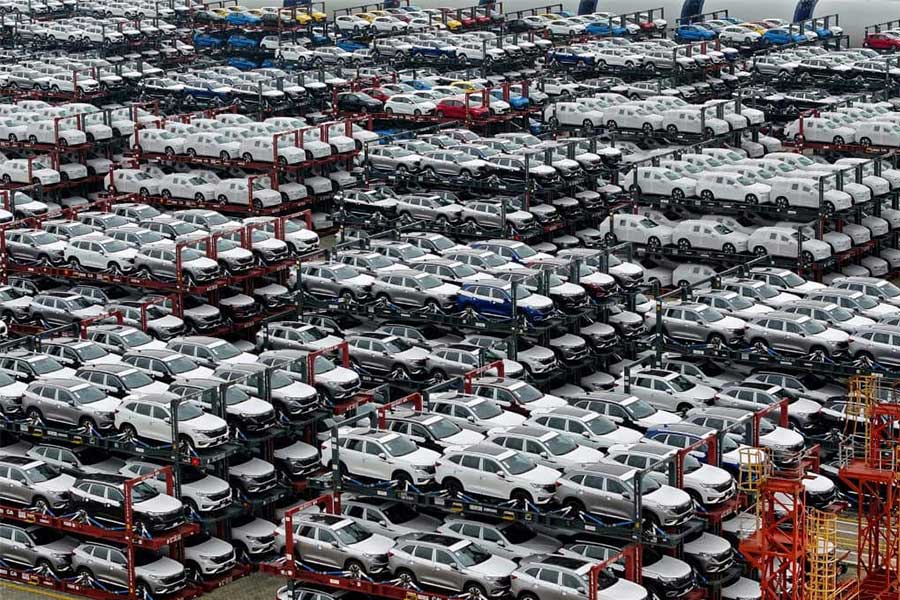
It’s worth noting that the temporary tariffs imposed on electric vehicles imported from China on July 4,2024,will no longer apply.This means that the newly implemented anti-subsidy tariffs will replace the previous temporary measures and become the long-term tariff burden for Chinese electric vehicles in the EU market.
In response,Hildegard Müller,President of the German Association of the Automotive Industry (VDA),issued a statement on October 29 strongly condemning the EUs decision.Müller described the move as a step backward for global free trade and warned it would negatively impact Europes economic prosperity,employment,and overall growth.She further cautioned that this could escalate trade conflicts,ultimately harming the healthy development of the automotive industry.
Müller emphasized that trade disputes should be resolved through dialogue and negotiation rather than unilateral tariff measures.She called on the German government to take proactive steps to enhance Germanys international competitiveness as a global production and export hub,promote market diversification,and encourage technological innovation to maintain its leading position in global markets.Müller noted that the EUs tariffs would directly increase consumer costs,potentially hindering the widespread adoption of electric vehicles.
The VDA also urged all parties to remain open to negotiations and seek solutions to eliminate additional tariffs through dialogue within the World Trade Organization (WTO) framework.Müller stated that only cooperation and dialogue could effectively resolve trade disputes and avoid further disruptive impacts on the global automotive market.
The EUs decision reflects intensifying global competition in the electric vehicle market and the fierce battle for market share.As one of the worlds largest electric vehicle producers,Chinas competitiveness has been closely watched.These tariffs will significantly impact Chinese electric vehicle sales in the EU,potentially forcing Chinese companies to adjust their strategies and seek new growth opportunities and partnerships.
Meanwhile,European electric vehicle manufacturers also face significant market pressure.While the EU aims to protect local industries and reduce reliance on Chinese electric vehicles,analysts warn that high tariffs may drive European consumers toward more competitive brands,affecting the sales and market share of EU-based manufacturers.
Additionally,the EUs tariff reduction policy on critical manufacturing products such as steel and aluminum from China has drawn attention this week.Canada recently launched a tariff relief program allowing businesses to apply for exemptions on tariffs for electric vehicles,steel,and aluminum imported from China,supporting local companies in adjusting supply chains.This policy shift highlights how major economies are using tools to mitigate operational pressures amid rising trade barriers and protectionism.
However,experts warn that the EUs decision may trigger chain reactions globally,prompting other regions to adopt similar measures to protect local industries.This could further increase uncertainty in global trade,creating more challenges for multinational companies.
Against this backdrop,the international trade environment is becoming increasingly complex,with frequent trade frictions and tariff measures.Businesses need more flexible and diversified strategies to adapt.Financial tools such as container freight index futures are also providing effective risk management solutions,helping companies navigate volatile shipping markets.
Overall,the EUs decision will have far-reaching implications for EU-China trade relations and pose new challenges to the global electric vehicle industry and free trade principles.Balancing local industry protection with global free trade will be a critical issue for governments and businesses alike.
Ruth Brand,President of the German Federal Statistical Office (Destatis),stated at a press conference that despite current trade and economic challenges,the German economy continues to strive for growth.She emphasized,We are doing everything possible through policy measures to support key industries and ensure sustained healthy economic growth.
As the global electric vehicle market rapidly expands and energy transitions progress,the stability and development of this industry are crucial for economies worldwide.Trade policy adjustments between the EU and China will have profound impacts,requiring cooperation and dialogue to promote sustainable growth in the global electric vehicle sector.
Was this helpful? Give us a like!
Contact our experts for compliance audits, precise quotes, and one-stop customs support.
Recent Comments (0) 0
Leave a Reply