
Shipping Rates Surge: Asia Freight Costs Rise Sharply
or complex compliance issues.
clearance and fund security.
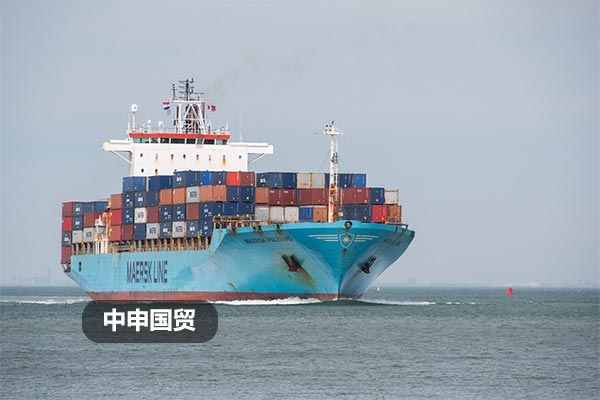
Recently,many globally renowned shipping companies,including Hapag - Lloyd,Hyundai Merchant Marine (HMM),and Maersk,have successively issued new freight rate adjustment plans and notices of collecting peak - season surcharges to cope with the imbalance between market supply and demand.These adjustments mainly involve several important routes,aiming to ease the pressure brought by insufficient shipping capacity and ensure the stability and sustainability of transportation services.
MSC Adjusts Freight Rates from the Far East to Europe,the Mediterranean,North Africa,etc.
Mediterranean Shipping Company (MSC) recently issued the latest announcement on adjusting the freight rate standards from the Far East to Europe,the Mediterranean and North Africa routes.According to the announcement,MSC will implement new freight rates from November 15,2024.These adjustments will apply to goods departing from all Asian ports (covering Japan,South Korea and Southeast Asia).Specifically,for goods exported to Europe,MSC has introduced a new Diamond Tariff (DT).From November 15,2024 to November 30,2024 (unless otherwise specified),the freight for a 20 - foot standard container shipped from Asian ports to Northern Europe will be adjusted to $3350,while the freight for a 40 - foot and high - cube container will be adjusted to $5500.
MSC (Mediterranean Shipping Company) recently announced an update regarding the adjustment of freight rates for routes from Far East to Europe,the Mediterranean,and North Africa.According to the announcement,MSC will implement new freight rates starting from November 15,2024,which will apply to goods departing from all Asian ports (including Japan,South Korea,and Southeast Asia).Specifically,for exports to Europe,MSC has introduced a new Diamond Tariff (DT).From November 15,2024 to November 30,2024 (unless otherwise specified),the freight rates for 20-foot standard containers from Asian ports to Northern Europe will be adjusted to USD 3,350,while those for 40-foot and high-cube containers will be adjusted to USD 5,500.
At the same time,MSC also announced new freight rates (FAK rates) for exports from Asia to the Mediterranean.Similarly,from November 15,2024 to November 30,2024 (unless otherwise stated),the maximum freight rates for 20-foot standard containers shipped from various Asian ports to the Mediterranean will be set at $5,000,while those for 40-foot and high-cube containers will be set at $7,500.These freight adjustments are priced in US dollars and will take effect from the specified date,aiming to respond to market changes and ensure the stability and sustainability of transportation services.
CMA adjusts FAK rates for Asia to Mediterranean and North Africa
On October 31,CMA (CMA CGM) officially announced that it would adjust the FAK (freight all kinds) rates for routes from Asia to the Mediterranean and North Africa.The adjustment will take effect from November 15,2024 (loading date) and will continue until further notice.According to the announcement,goods departing from Asia to the Mediterranean and North Africa regions will be subject to new FAK rates.Specifically,the maximum freight rate for a 20-foot standard container will be set at $5,100,while the maximum freight rate for 40-foot and high-cube containers will be set at $7,900.
CMA reminds all relevant customers to pay close attention to this freight adjustment and recommends planning freight arrangements in advance to cope with possible freight changes.At the same time,CMA will also continue to monitor market dynamics and adjust the freight policy in a timely manner according to the actual situation.
Hapag - Lloyd raises FAK rate from the Far East to Europe
On October 30,Hapag-Lloyd announced that it would increase the FAK rate for the Far East to Europe route.The rate adjustment applies to 20-foot and 40-foot dry containers and refrigerated container shipments,including high-cube types.The announcement specifically stated that the new rate will take effect officially from November 15,2024.This adjustment reflects Hapag-Lloyd’s response to the growing demand for Far East routes and rising operating costs,aiming to maintain service quality and shipping efficiency.
Maersk levies peak - season surcharge
Maersk recently announced that it will impose a peak season surcharge (PSS) on routes to Australia,Papua New Guinea,and the Solomon Islands.The specific scope includes: China,Hong Kong,Japan,South Korea,Mongolia,Brunei,Indonesia,Malaysia,the Philippines,Singapore,East Timor,Cambodia,Laos,Myanmar,Thailand,and Vietnam to Australia,Papua New Guinea,and the Solomon Islands,with an effective date of November 15,2024.Meanwhile,for routes from Taiwan to Australia,Papua New Guinea,and the Solomon Islands,the surcharge will take effect on November 30,2024.
Maersk also announced that it will levy a peak - season surcharge on routes to Africa to cope with the continuous tight situation in the global shipping market.These surcharges apply to all 20 - foot,40 - foot,and 45 - foot high - cube dry containers,aiming to relieve the pressure brought by the surging transportation demand in the peak season and ensure that goods can be transported to the destination in a timely and safe manner.
HMM implements GRI for US-Canada-Mexico routes
South Korea’s Hyundai Merchant Marine (HMM) issued a customer notice stating that from December 1,2024,it will implement a General Rate Increase (GRI) for all services departing from South Korea to the United States,Canada,and Mexico.Specifically,the freight rates for 20-foot containers will be adjusted to $2,700,40-foot containers to $3,000,40-foot high-cube containers to $3,375,and 45-foot containers to $3,798.This adjustment reflects HMM’s response to rising transportation costs and tight demand in the North American market.The aim is to maintain the stability and sustainability of shipping services by adjusting freight rates appropriately.
The global supply chain faces new challenges
With the tight shipping space and rising freight rates on many major routes,the global supply chain is facing new pressures and challenges.Especially on the West Coast and East Coast routes of the US,due to factors such as the strike at the ports on the west coast of Canada,the transportation capacity has been seriously affected,resulting in longer transportation times and higher costs.Similar problems on the South American and Southeast Asian routes have also exacerbated the tense situation in the global freight market.
Many shipping companies are trying to balance the supply - demand relationship and ensure the normal operation of shipping business by adjusting freight rates and levying surcharges.However,these adjustments will undoubtedly increase the transportation costs of enterprises,thus affecting the efficiency and cost structure of global trade activities.Especially for the manufacturing and retail industries that rely on the transnational supply chain,the increase in transportation costs will be directly passed on to product prices,which may further push up the global price level and increase the operating pressure on enterprises.
Industry experts call for strengthened cooperation and innovation
Facing the increasingly complex shipping market environment,industry experts call on governments and enterprises of various countries to strengthen cooperation,promote the innovation and development of the shipping industry,and cope with various challenges that may arise in the future.Strengthening port infrastructure construction,improving shipping efficiency,optimizing supply - chain management,and promoting the application of green shipping technologies will be the keys to alleviating the current problems of tight shipping space and rising freight rates.
In addition,the active trading of financial instruments such as container freight index futures provides enterprises with effective risk - management means,helping them operate steadily in the volatile shipping market.Through financial derivatives,enterprises can lock in freight prices,reduce the uncertainty of transportation costs,and thus better plan and manage the supply chain.
Was this helpful? Give us a like!
Contact our experts for compliance audits, precise quotes, and one-stop customs support.
Recent Comments (0) 0
Leave a Reply