
Trump Tariffs: US Businesses Brace for Impact
or complex compliance issues.
clearance and fund security.
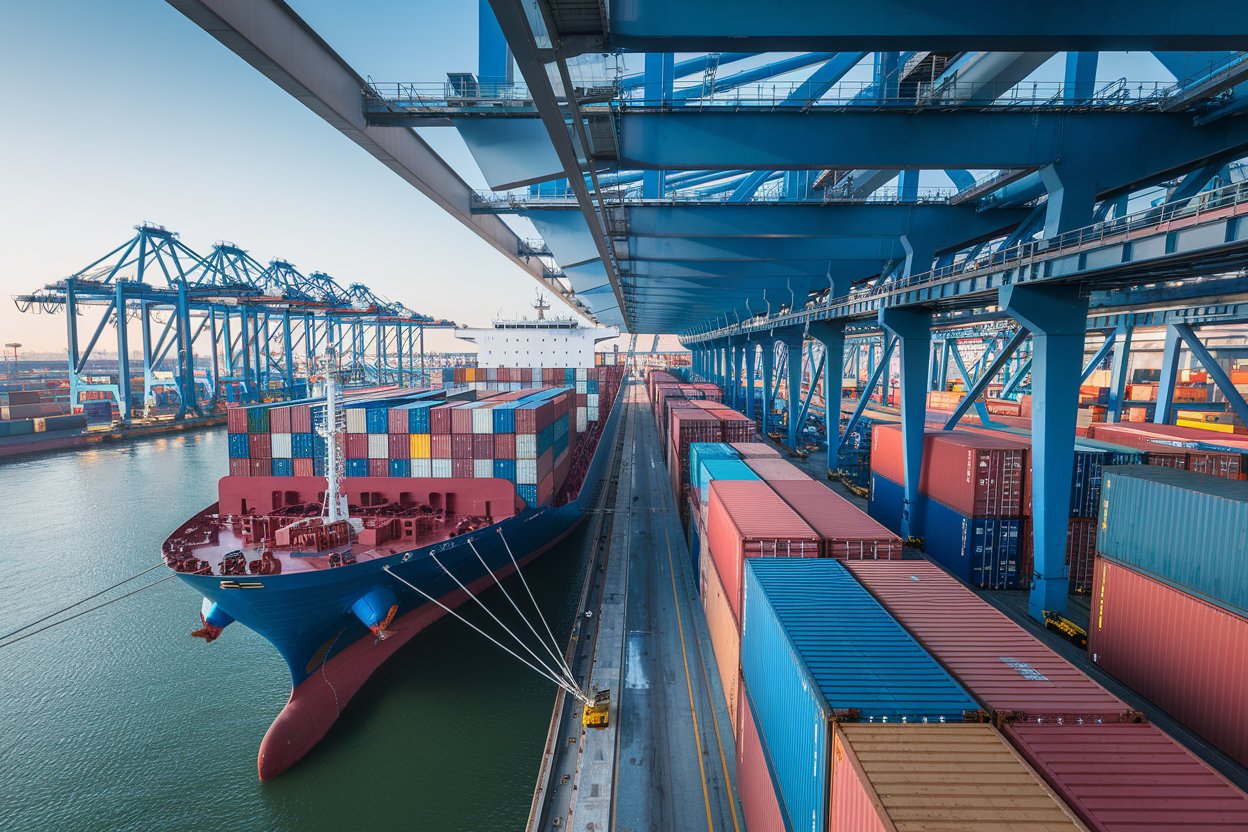
With former US President Donald Trump winning the 2024 presidential election with 312 electoral votes,the market’s attention to the tariff policies he proposed during his campaign has rapidly increased.During the election,Trump advocated for imposing tariffs of 10% to 20% on all imported goods,particularly on Chinese goods,with tariffs as high as 60%.This proposal sparked widespread discussions and concerns,and businesses and consumers have taken action by purchasing goods in advance to mitigate the potential risk of price increases.
Typically,tariff costs are borne by importers,who often pass these costs on to consumers to maintain profit margins.Faced with Trumps potential high-tariff policies,U.S.businesses and consumers have already begun advance purchasing.Many U.S.businesses,including small enterprises and large multinational corporations,are taking measures to stockpile raw materials and goods to avoid cost increases from tariffs.
According to a report by the U.S.news website Business Insider,Barba,the owner of a small business producing eco-friendly cups,stated that most of her raw materials are imported.To cope with potential tariff hikes,she is considering purchasing a years worth of inventory in advance,along with additional storage space costs,which could amount to up to $200,000,approximately RMB 1.446 million.Additionally,Los Angeles-based home appliance company Yedi told CBS in an interview that many of their products are manufactured overseas.Over the past six months,they have been preparing for a potential Trump victory and are now rushing to import appliances from overseas while they can still afford to do so.
Its not just small businesses; executives of large corporations have also expressed concerns about tariff policies during earnings calls,stating that they will have to pass tariff costs on to consumers.AutoZone CEO Daniel told analysts during a September earnings call that tariff policies have fluctuated over the years,and the company has gained experience in raising prices in advance.Columbia Sportswears CEO told the media in October that if tariffs are imposed,the company is prepared to raise prices,admitting that keeping prices affordable for U.S.consumers will become very difficult.
Meanwhile,a study by the nonpartisan Peterson Institute for International Economics suggests that Trumps proposed tariff policies could cost middle-income U.S.households over $2,600 annually.This finding has further heightened market concerns about tariff policies,leading not only businesses but also some U.S.consumers to start stockpiling goods.On some U.S.social media platforms,videos teaching people how to stockpile goods have gone viral,recommending that consumers stock up on items including clothing,appliances,and food.These videos have received tens of thousands of likes and sparked panic in the comments section.Experts analyze that the stockpiling trend by businesses and consumers is expected to lead to a surge in U.S.activity before the end of the year.As more businesses and consumers make advance purchases,export and import activities will increase significantly,which could impact the Federal Reserves pace of interest rate cuts.Sam Stovall,Chief Investment Strategist at CFRA Research,said,We may see stronger-than-expected U.S.activity,with robust foreign trade in December and November,possibly slowing down by early 2025.However,active foreign trade at year-end could give the Fed a reason to pause or at least slow the pace of rate cuts.
However,analysis also points out that the specifics of Trumps tariff policies and the exact tariff rates remain to be seen after January next year.Many analysts believe that Trumps campaign tariff proposals were more of a negotiation tactic and may not be fully implemented,with rates unlikely to reach the levels promised during the campaign.Analysts generally agree that Trumps tariff proposals may serve more as a starting point for trade negotiations with other countries rather than fully implemented policies.Although the specifics of tariff policy implementation remain unclear,its potential economic impact has drawn widespread global attention.Data from credit rating agency Morningstar DBRS shows that Europes pharmaceutical,automotive,and chemical industries may be the most affected,as these sectors account for a significant share of Europes exports to the U.S.European automakers,including Mercedes-Benz,BMW,and Volkswagen,saw their stock prices drop by 4% to 7% following Trumps election victory.Analysis suggests that in the long term,more international manufacturers may choose to set up factories in the U.S.to counter Trumps potential trade protectionist policies.The activity is stronger than expected.Both the foreign trade activities in December and November have been quite robust.However,they might gradually slow down by early 2025.Nevertheless,the active foreign trade activities at the end of the year might give the Federal Reserve a reason to pause its rate-cutting actions,or at least slow down the pace of rate cuts."
For Southeast Asian countries,the implementation of tariff policies could also have significant impacts.These countries are mostly export-oriented economies,heavily reliant on the U.S.as a primary export market.Analysis suggests that Southeast Asian economies are highly dependent on exports,with the U.S.as one of the worlds largest economies being a key destination.Therefore,if tariff policies are implemented,export-oriented economies in the region could be impacted.Data from Singapore-based nonprofit organization The Hinrich Foundation shows that trade accounts for an average of 90% of GDP in ASEAN countries,twice the global average.Among them,Vietnam has a large trade surplus with the U.S.reaching $90 billion from January to September this year.However,with Trump entering the White House,Vietnam and other Southeast Asian countries may face new uncertainties and potential instability.
The International Monetary Fund (IMF) previously stated that it is still unable to assess the specifics of Trumps trade policies but believes that severe trade decoupling and large-scale tariffs could lead to a global GDP loss of nearly 7%,equivalent to the combined economies of France and Germany.This IMF forecast further highlights the profound impact tariff policies could have on the global economy,especially in todays highly interconnected global supply chains,where any major policy adjustment in one country could quickly ripple through global markets.
Faced with Trumps proposed tariff policies,the advance purchasing behavior of U.S.businesses and consumers demonstrates the markets high sensitivity to policy changes and the rapidity of response measures.However,the actual implementation and extent of tariff policies remain highly uncertain,pending Trumps specific actions after entering the White House.During this period,businesses and consumers must remain vigilant and flexibly adjust procurement and operational strategies to cope with potential market changes and policy adjustments.
In summary,while Trumps tariff policy proposals aim to protect U.S.domestic industries and reduce trade deficits,their potential economic impact and the complexity of global trade relations cannot be ignored.The advance purchasing behavior of businesses and consumers reflects expectations of cost increases and price hikes due to tariff policies.At the same time,policy uncertainty and potential retaliatory measures could exacerbate global trade tensions,affecting the stability and efficiency of international supply chains.In todays highly globalized world,changes in U.S.tariff policies will not only impact the domestic economy but also have far-reaching effects on the global economic landscape and international trade relations.
ASML Reaffirms 2030 Fiscal Year Targets as AI Drives Surge in Semiconductor Equipment Demand
Trumps Election Victory Triggers Stockpiling by U.S.Businesses: What Are the Impacts of Tariff Policies?
With the continuous development of global trade,export agency by foreign trade companies has become an important part of Chinas foreign trade.This article will provide a detailed analysis of the export agency process of foreign trade companies and visually present each step through a flowchart to help you better understand the entire export process.
Was this helpful? Give us a like!
Contact our experts for compliance audits, precise quotes, and one-stop customs support.
Recent Comments (0) 0
Leave a Reply