
US Export Curbs: China Chip Firms Face New Restrictions
or complex compliance issues.
clearance and fund security.
According to a Reuters report on November 22,the U.S.Chamber of Commerce sent an email to its members on the 21st,announcing that the Biden administration plans to announce new export restrictions on China as early as next week.This news has triggered widespread attention and discussion in the industry,especially against the backdrop of a tight global semiconductor supply chain.This move could have a profound impact on the Sino - U.S.technological competition.
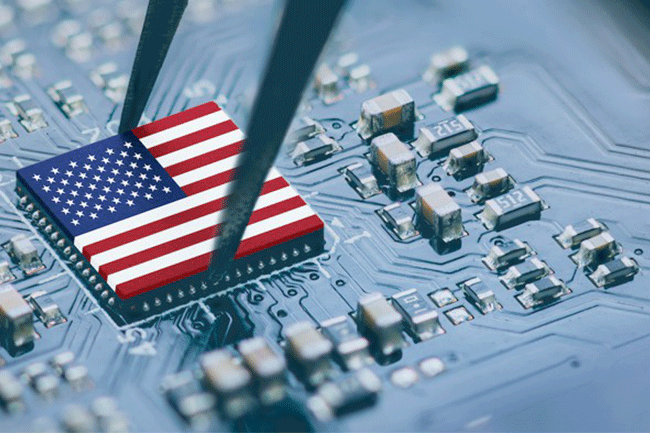
The U.S.Chamber of Commerce revealed in its email that the new regulations may place up to 200 Chinese chip companies on the trade restriction list,prohibiting most U.S.suppliers from shipping goods to these targeted companies.The email pointed out that the Commerce Department,which oversees U.S.export policies,plans to officially announce these new regulations before the Thanksgiving holiday on November 28.Although Republican candidate Trump is about to start his second term in January next year,the Biden administration still seems to be actively promoting the plan to restrict Chinas access to advanced semiconductor technology.
The exposure of this news indicates that the U.S.s determination in its technology - containment policy towards China has not weakened due to Trumps re - election.In fact,the Biden administration seems to be building on the foundation laid during the Trump administration and continuing to deepen export controls on Chinas high - tech industries,especially in the semiconductor field.This policy trend not only reflects the U.S.s strategic layout in the global technological competition but also shows its firm stance in safeguarding national security and economic interests.
The email also revealed that another set of regulations restricting the export of high - bandwidth memory chips to China is expected to be announced next month,which is part of a broader artificial intelligence (AI) package.In addition,informed sources said that the first - round regulatory regulations are likely to include restrictions on the export of chip - making tools to China.These measures will further increase the pressure on Chinese high - tech companies,limit their access to key manufacturing equipment and technologies,and hinder their competitiveness in the global semiconductor market.
As early as July this year,Reuters reported that the U.S.planned to introduce a new package of export control measures against China,covering about 120 Chinese entities.These measures aim to curb Chinas rapid development in the semiconductor and other high - tech fields and prevent it from obtaining advanced technologies that could be used for military or other sensitive purposes.This new round of export restrictions will undoubtedly further intensify the Sino - U.S.technological competition and affect the stability and efficiency of the global supply chain.
Industry analysts pointed out that the Biden administrations move may have a significant impact on the global semiconductor industry chain.As one of the largest chip production and consumption markets in the world,Chinas chip - making enterprises occupy an important position in the international market.Restricting these enterprises from accessing U.S.high - end manufacturing equipment and technologies may lead to a global shortage of chips,further drive up chip prices,and affect the development of downstream industries.In addition,this may also prompt China to accelerate the pace of independent research and development and production of advanced semiconductor equipment,reducing its dependence on U.S.technology.
On the other hand,U.S.companies will face new challenges and opportunities.Chinese chip companies on the sanctions list will have to find alternative suppliers or accelerate the process of technological autonomy,which may provide more market opportunities for chip manufacturers in other countries.At the same time,U.S.domestic semiconductor equipment manufacturers may benefit from the increase in demand but also have to face competition pressure from companies in other countries.
It is worth noting that the Biden administrations policy trend is not limited to the semiconductor field but also involves a broader range of high - tech industries.With the rapid development of AI technology,the U.S.hopes to restrict Chinas technological progress in this key field through export control measures and maintain its leading position in the global technological competition.This strategy has obvious inheritance and continuity with the trade protectionist policies of the Trump administration,showing the consistency and persistence of the U.S.in its policy towards China.
Overall,the new export control measures on China to be announced by the Biden administration mark a new phase in the U.S.-China technology competition.This policy will not only impact the development of high-tech industries in both countries but also have profound implications for the global semiconductor supply chain and international trade landscape.Governments and enterprises worldwide need to closely monitor this development and adjust their strategies promptly to address potential challenges and opportunities.Moving forward,as U.S.-China tech competition intensifies,the restructuring and realignment of the global high-tech industrial chain will become an inevitable trend.All parties must work together to seek a balance between cooperation and development,thereby advancing global technological progress and economic prosperity.
Was this helpful? Give us a like!
Contact our experts for compliance audits, precise quotes, and one-stop customs support.
Recent Comments (0) 0
Leave a Reply