
Europe's Growing Reliance on Russian Gas: Key Trends
or complex compliance issues.
clearance and fund security.
Over the past year,European countries have become increasingly dependent on Russian natural gas,despite ongoing geopolitical tensions and concerns about energy security.According to the latest report from the International Energy Agency (IEA),the import of Russian natural gas via gas pipeline systems increased by 25% in the 2023-2024 winter compared to the previous year,while European imports of Russian liquefied natural gas (LNG) have also been on the rise.
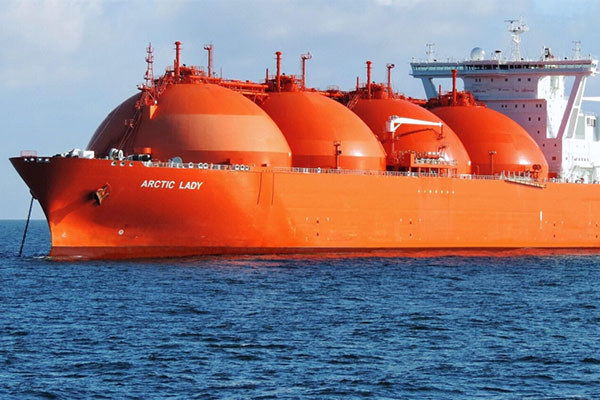
According to IEA experts,this increase is partly due to Russia’s technological modernization and capacity expansion of its natural gas plants in the Far East and Siberia’s Sakhalin region.The upgrading and expansion projects of these plants have made Russia’s LNG exports expected to continue to grow in 2024.The IEA pointed out in its "Gas Market Report - Second Quarter 2024" that compared with the 2022-2023 heating season,Russia’s LNG exports to Europe increased by 1%.
It is worth noting that although Belgium,France,and Spain are the main export destinations of Russias LNG,and these three countries together absorb 80% of Russias LNG exports to the Old Continent,the IEA warns that if European countries decide to abandon Russian LNG for political reasons,Russian producers may still not encounter market problems.This is because the demand for LNG in African and Southeast Asian countries continues to grow,which may compensate for the reduction in the European market.
In addition,the IEA’s report also mentioned that although the import volume of Russian pipeline gas across the European Union increased by 9% year-on-year in the 2023-2024 winter,after the terrorist attack on the "Nord Stream" gas pipeline and some controversial political decisions made by Brussels,the total demand for Russian gas has dropped to less than 10% of Europe’s total.Alexander Novak,Russia’s Deputy Prime Minister responsible for energy affairs,pointed out that due to various factors,Russia’s gas exports via pipelines are expected to decrease by 29.9% to 99.6 billion cubic meters in 2023.
Despite facing many challenges,including international sanctions and the politicization of the market,Russia is still striving to maintain its position as a major global energy supplier.However,the degree of European countries dependence on Russian energy has attracted widespread attention,especially in the current geopolitical context.While reducing their dependence on Russian energy,European countries are also actively seeking alternative energy sources and enhancing energy security to cope with possible future supply disruptions or political risks.
Was this helpful? Give us a like!
Contact our experts for compliance audits, precise quotes, and one-stop customs support.
Recent Comments (0) 0
Leave a Reply