
US Import Surge: Tariffs & Red Sea Crisis Impact
or complex compliance issues.
clearance and fund security.
Urgent Demand: Red Sea Crisis and High Freight Costs
Due to the Red Sea crisis causing a shortage in shipping capacity,which has driven up freight rates,the peak season at U.S.West Coast ports has arrived earlier than usual.Matt Priest,President of the Footwear Distributors and Retailers of America,pointed out that current freight rates are even higher than they were over two years ago.He explained that although some of the new tariffs imposed by the Biden administration will not directly impact the footwear manufacturing industry,"shipping capacity has already begun to tighten as companies rush to bring in products before the tariffs take effect on August 1."
Tariff Uncertainties and Early Stockpiling
Priest added that whether former U.S.President Donald Trump wins the November election is another reason importers are stockpiling early.Trump’s campaign has proposed higher tariffs,prompting many FDRA members to consider shipping goods to the U.S.before potential hikes.
During a briefing addressing the turbulence in global shipping lanes and tariff uncertainties,Port of Los Angeles Executive Director Gene Seroka stated: "If Trump wins and imposes a 10% tariff on imports across the board,and a 60% tariff on Chinese imports,it could reshape the landscape and future of the Port of Los Angeles." He added that since Trump first imposed tariffs in 2018,the Port of Los Angeles has demonstrated considerable adaptability,consistently securing cargo from external sources.
Election Impacts Import Decisions
Roger,a seasoned professional in the California shipping industry specializing in U.S.trade routes,noted that the upcoming U.S.election is currently a significant factor influencing importers’ inventory replenishment."If Trump is elected,he may impose additional tariffs on Chinese goods.While it’s unlikely to reach 60%,there’s a high probability of further increases.These tariffs would directly impact U.S.retail prices,especially amid the current high inflation.Raising tariffs recklessly could lead to higher retail prices.Therefore,importers might stock up in advance to prepare for potential tariff changes," Roger explained.
Strong Growth in U.S.West Coast Trade Volume
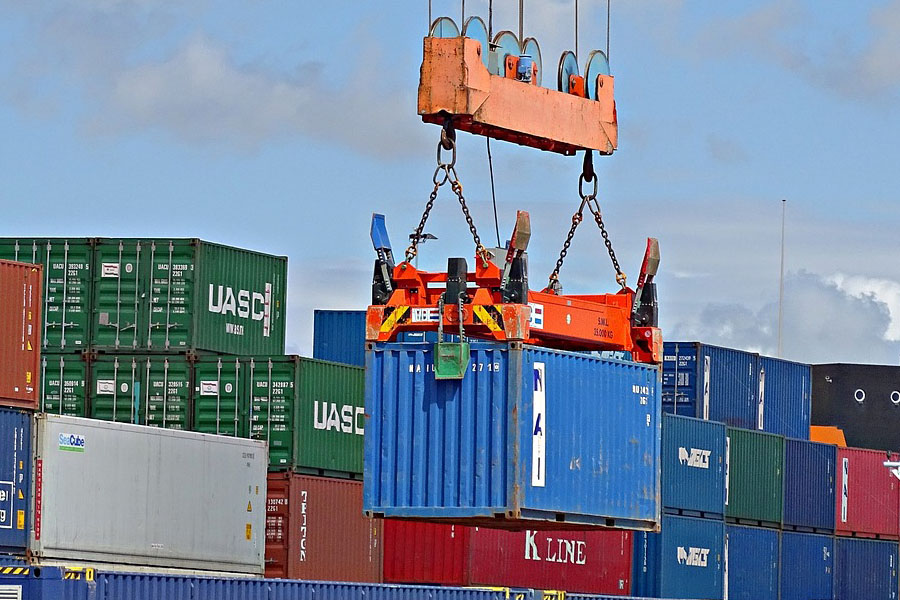
In the first half of this year,the trade volume at ports on the west coast of the United States increased significantly.According to the latest data released by the Port of Los Angeles,in the first half of 2024,the Port of Los Angeles in California,USA,handled 4.7 million 20-foot containers (TEU),an increase of 14.4% compared with the same period last year.
Seroka noted that declining inflation,rising wages,and a strong job market have stimulated consumer spending,leading to stable freight volumes."I believe that as we move into the third quarter,we will see this pattern continue."
The total throughput at the nearby Long Beach Port in June also set a new all-time record,with inbound container throughput reaching its highest level since mid-2022.In the first half of 2024,the total container volume at Long Beach Port increased by 15% compared to the same period last year.Mario Cordero,CEO of Long Beach Port,said,"We are regaining market share.With the arrival of the shipping peak season,consumer spending is driving goods to our docks.I believe there will be moderate growth in the second half of 2024."
Context of the Early Peak Season
Traditionally not peak season before September,the West Coast has seen an early arrival of peak season this year due to concerns about additional U.S.tariffs on Chinese goods and the impact of dockworker strikes at East Coast and Gulf Coast ports.On May 14,the U.S.released the four-year review results of Section 301 tariffs on China,announcing increased tariffs on Chinese imports including electric vehicles,lithium batteries,batteries,critical minerals,semiconductors,as well as steel,aluminum,port cranes,personal protective equipment and other products.The new tariffs will take effect on August 1.
In response to the U.S.release of the four-year review results of Section 301 tariffs on China,a spokesperson for Chinas Ministry of Commerce stated that China firmly opposes and has lodged solemn representations.The spokesperson said the U.S.is abusing the Section 301 tariff review process for domestic political considerations,politicizing and instrumentalizing economic and trade issues,which is typical political manipulation.China expresses strong dissatisfaction.The WTO has long ruled that Section 301 tariffs violate WTO rules,but instead of correcting them,the U.S.persists in its course.
Tariff Concerns Loom Over Europe
Currently,importers are also concerned about the tariff plan proposed by Trump.In a recent interview,Trump stated he would impose a blanket 10% tariff on goods imported from other countries,complaining that foreign nations arent buying enough American products.He specifically mentioned Europe,believing its reluctance to import U.S.cars and agricultural products is the main reason for the over $200 billion trade deficit between the two sides.
During a campaign speech in March this year,Trump even suggested imposing 100% tariffs on every imported car.Although he didnt specify the targets,this has drawn widespread market attention.Cui Hongjian,Director of the EU and Regional Development Research Center at Beijing Foreign Studies University,believes Europe may adopt a bargaining strategy,proposing a comprehensive plan to mitigate the tariff impact while potentially redirecting the conflict toward China as a shield against Trumps tariff hikes.
Was this helpful? Give us a like!
Contact our experts for compliance audits, precise quotes, and one-stop customs support.
Recent Comments (0) 0
Leave a Reply