
Become a Leading Lithium Battery Exporter: A Comprehensive Guide
or complex compliance issues.
clearance and fund security.
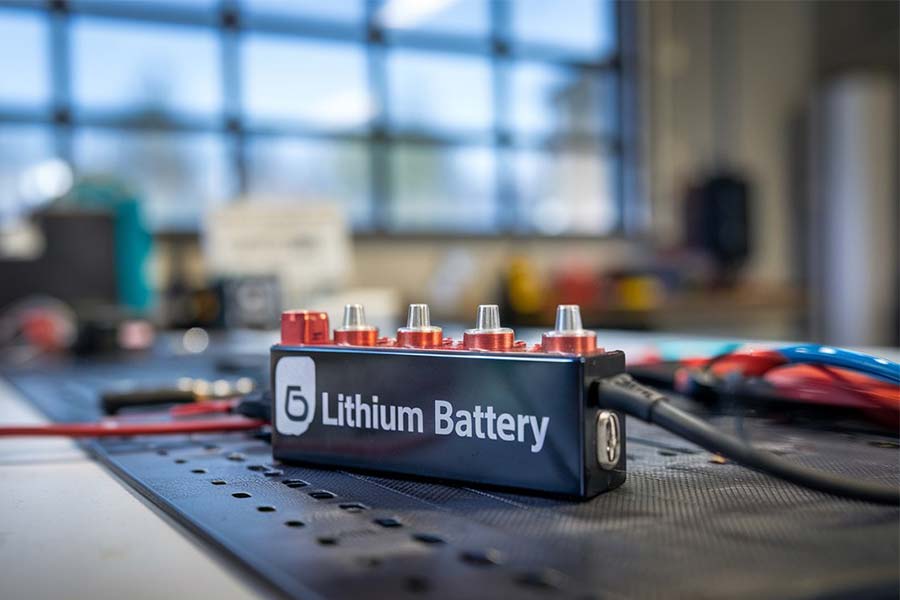
This article details methods and techniques to become a successful and competitive agent for lithium battery export businesses!Covering industry trend insights,operational process breakdowns,practical after-sales service tips,and the importance of international trade rules—helping you smoothly step onto the global stage!
1.Industry Overview
According to market research data,the global lithium battery market has shown rapid growth in recent years,a trend expected to continue in the coming years.The rising demand in electric vehicles,energy storage systems,and other fields is a key driver of this growth.
In lithium battery exports,China is one of the worlds largest producers and exporters.Chinese lithium battery exports are primarily concentrated in Asia,Europe,and North America.With increasing global demand for clean energy,the prospects for lithium battery exports are very promising.
II.Operation Process
1.Finding a suitable lithium battery export business: First,identify a suitable lithium battery export business as an agency partner.Potential partners can be found through online searches,trade shows,or industry associations.When selecting a partner,consider factors like reputation,product quality,production capacity,and pricing.
2.Sign an Agency Contract: After selecting a partner,sign an agency contract.The contract should outline rights and obligations,scope of agency,pricing,payment terms,delivery schedules,and other key details.
3.Handling Relevant Procedures: After signing the agency contract,relevant procedures such as customs declaration,commodity inspection,and transportation need to be completed.These procedures must be carried out in accordance with the requirements of different countries and regions.It is important to note that policies and regulations may vary across countries and regions,so it is necessary to carefully understand the relevant regulations when handling these procedures.
4.Develop the market: After completing the relevant procedures,it is necessary to explore the market and identify potential customers.Market exploration can be done through online marketing,participating in trade shows,visiting clients,etc.During market exploration,it is important to understand customer needs and market trends to better meet customer demands.
5.After-Sales Service: After selling lithium battery products,it is necessary to provide after-sales services to meet customer needs.After-sales services include product repairs,replacements,and returns.When providing after-sales services,it is important to respond promptly to customer needs and offer professional services.
III.Contract Considerations
1.Clarity of Contract Terms: When signing an agency contract,it is essential to ensure the clarity of the contract terms.The contract terms should include the rights and obligations of both parties,the scope of agency,pricing,payment methods,delivery time,quality guarantees,liability for breach of contract,dispute resolution,etc.The contract terms should be as detailed as possible to avoid disputes.
2.Quality Guarantee Clause: In the agency contract,the exporting companys responsibility for product quality should be clearly stated.The exporting company must ensure that the provided lithium battery products meet relevant standards and quality requirements and bear all liabilities arising from product quality issues.
3.Pricing Clause: In the agency contract,the method of calculating prices and payment terms should be clearly stated.The price should include the product cost,freight,insurance,and other fees.Payment methods should include advance payment,payment upon delivery,etc.
4.Delivery Time Clause: In the agency contract,the method of calculating the delivery time and the delivery location should be clearly stated.The delivery time should be as specific as possible to avoid delays.The delivery location should be selected based on the actual situation to better meet customer needs.
5.Liability for Breach of Contract Clause: In the agency contract,the liabilities for breach of contract by both parties should be clearly stated.If either party violates the contract terms,they shall bear the corresponding liabilities for breach of contract,including penalties and compensation.
6.Dispute Resolution Clause: In the agency contract,the method of dispute resolution should be clearly stated.Dispute resolution methods should include friendly negotiation,arbitration,and litigation.Both parties should choose the appropriate dispute resolution method based on the actual situation.
IV.Related Content
1.Understand international trade rules: When acting as an agent for lithium battery export businesses,it is necessary to understand international trade rules,such as regulations on tariffs,commodity inspection,and transportation.Understanding these rules can help companies better conduct international trade.
2.Selecting the Appropriate Trade Method: When acting as an agent for lithium battery export businesses,it is necessary to select the appropriate trade method,such as general trade,processing trade,or bonded trade.Different trade methods have different characteristics and applications,and companies should choose the appropriate method based on the actual situation.
3.Managing Foreign Exchange Risks: When acting as an agent for lithium battery export businesses,it is important to manage foreign exchange risks.Foreign exchange risks refer to losses caused by exchange rate fluctuations.Companies should take effective measures to mitigate these risks,such as signing forward foreign exchange contracts or using foreign exchange hedging.
4.Establish good customer relationships: When acting as an agent for lithium battery export enterprises,it is essential to establish strong customer relationships.Good customer relationships can help businesses better expand their market presence and increase sales.Enterprises should build these relationships by offering high-quality products and services.
V.Summary
Acting as an agent for lithium battery export enterprises is a challenging task that requires specialized knowledge and experience.When engaging in this role,it is necessary to understand industry conditions,operational procedures,contract considerations,and relevant foreign trade aspects.Enterprises should continuously learn and practice to enhance their professional expertise and business capabilities,enabling them to conduct agency operations more effectively.
Was this helpful? Give us a like!
Contact our experts for compliance audits, precise quotes, and one-stop customs support.
Recent Comments (0) 0
Leave a Reply