
Lithium Battery Export: Quality & Safety Requirements
or complex compliance issues.
clearance and fund security.
Lithium battery export is a major test of technology and compliance.In todays rapidly developingfield,enabling lithium batteries to circulate freely in global markets has become key to enterprise success.Facing complex quality standards,transportation requirements and international regulations,many enterprises struggle.Dont worry,below we detail lithium battery export requirements.Our professional agency services will provide full support,helping your lithium batteries easily reach the world!
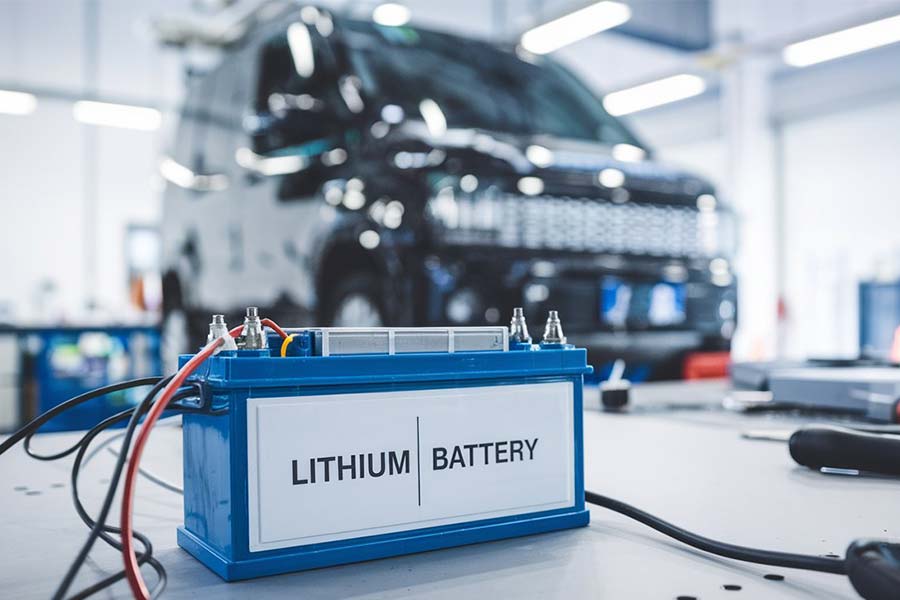
I.Lithium battery product quality standard requirements
Lithium batteries have wide applications,including consumer electronics,automotive power systems and industrial energy storage equipment.Depending on usage,lithium batteries must meet specific international quality and safety standards:
- Consumerlithiumbatteries:MustcomplywithinternationalstandardssuchasIEC(InternationalElectrotechnicalCommission)62133toensuresafetyperformance.
- Commercialandindustrialenergystoragebatteries:MustcomplywithstandardssuchasIEC62619andIEC63056tomeethighersafetyandreliabilityrequirements.
- Automotivepowerbatteries:MustcomplywithregulationssuchasECE(EconomicCommissionforEurope)R100andECER136toensurecompliancewithstringentsafetystandardsforautomotivepowersystems.
Additionally,manufacturers must possess strong technical capabilities and production capacity to ensure battery products undergo rigorous testing such as short-circuit,overcharge,and thermal abuse,enabling long-term stable operation.
II.Lithium battery transportation safety requirements
Lithium batteries are classified as dangerous goods due to their high energy density and flammability.Export requires compliance with relevant international transport regulations,including:
- :CompliancewiththeTechnicalInstructionsfortheSafeTransportofDangerousGoodsbyAir(ICAO-TI).
- :CompliancewiththeInternationalMaritimeDangerousGoodsCode(IMDGCode).
- Roadtransportation:CompliancewiththeAgreementconcerningtheInternationalCarriageofDangerousGoodsbyRoad(ADR).
- :ComplywiththeRegulationsConcerningtheInternationalCarriageofDangerousGoodsbyRail(RID).:Enterprisesneedtoadjustthepackaging,declarationandtestingprocessesaccordingtothespecificmodeoftransportation.
According to the Law of the Peoples Republic of China on Commodity Inspection,lithium - ion batteries for export need to use packaging containers that have passed performance inspection: The Commodity Inspection Law stipulates that lithium batteries for export must pass the use appraisal of dangerous goods packaging by the local customs.Only battery products that obtain the "Certificate of Appraisal for the Use of Transport Packaging of Export Dangerous Goods" (commonly known as the "Dangerous Goods Packaging Certificate" or "Dangerous Packing Certificate") can be exported.When applying for the "Dangerous Goods Packaging Certificate," the following documents must be submitted:
- Factoryinspectionreport.
- InspectionResultCertificateforPackagingPerformanceofImportandExportGoods.
- Materialssuchasthedangerouscharacteristicsclassificationidentificationreport.
III.Conditions for lithium battery exemption from dangerous goods packaging certification,
Although most lithium batteries require a "Dangerous Goods Packaging Certificate," the following two scenarios are exempt:
- Lithiumbatteriesinstalledinequipment:SuchaslithiumbatterieswithUN3171(installedinelectricvehicles,electricbicycles,etc.),whichareexemptfromdangerousgoodspackagingrequirements.
- Lithiumbatteriesthatcomplywithspecialregulations:SuchasSpecialProvision188intheInternationalMaritimeDangerousGoodsCode:
- Lithiummetalorlithiumalloybatterieswithalithiumcontentnotexceeding1g.
- Lithium-ionbatterieswithawatt-hourrationotexceeding20Wh.
- Lithiumbatterypackswithatotallithiumcontentnotexceeding2gorawatt-hourrationotexceeding100Wh.
IV.Export precautions
As regulations on new energy batteries are updated rapidly in various countries,export requirements may vary depending on the product type and destination country.The following points require special attention:
- RegulatoryUpdates:Regulatoryrequirementsindestinationcountriesandregionsmaychangeperiodicallyandmustbemonitoredclosely.
- Compliancecommunication:Maintainclosecommunicationwithcustoms,certificationbodies,andrelevantdepartmentsinthedestinationcountrytoensurecompliancewithallnecessaryrequirements.
- providedbytheoverseasmanufacturerandprepareinadvance:Producttesting,packagingappraisal,andothercomplianceprocessesmaytakealongtimeandshouldbeplannedinadvance.
Summary
Lithium battery export is a complex but promising business.Enterprises must be fully prepared in terms of product quality,transport safety,and international regulatory compliance.Lithium battery export is not just an international trade transaction but also a competition of capabilities and compliance.Throughour agency services,you can not only solve complex regulatory challenges but also easily explore global markets.In this era where new energy leads the future,let us work together to promote the green transformation of energy and the globalization of enterprises!We look forward to collaborating with you to achieve more possibilities!
Was this helpful? Give us a like!
Contact our experts for compliance audits, precise quotes, and one-stop customs support.
Recent Comments (0) 0
Leave a Reply