
Photovoltaic Module Export Guide: HS Codes, Declaration Requirements, Tariff and Rebate Adjustments
or complex compliance issues.
clearance and fund security.
ExportComponents are a promising trade activity,especially in the context of the accelerating global energy transition.Combined with the latest international trade information in 2025 (such as HS code confirmation,Adjustments,tariff developments,and quality-standard requirements),we have compiled a practical guide.It is designed to help you conduct business more smoothly and reduce potential issues.Please note that trade policies can change at any time; we recommend consulting local customs or a professional body for the most accurate guidance before taking action.
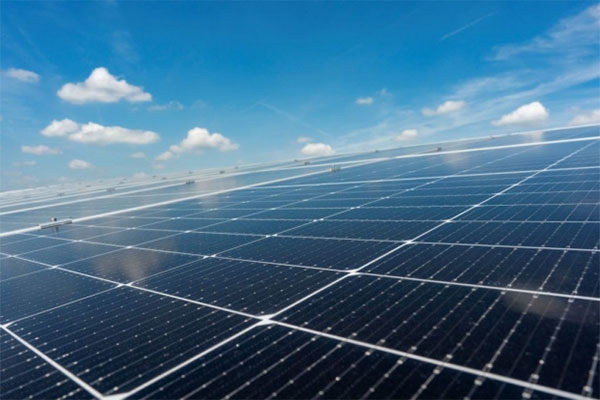
I.Understanding the Core Classification Rules for Photovoltaic Modules
The classification of photovoltaic modules is the basis for export declaration,primarily based on the International Harmonized System of Product Classification and Coding (HS Code).According to the latest information in 2025,photovoltaic products are mainly classified under Chapter 85,which is consistent with the description in the materials.However,attention should be paid to the specific subdivisions of HS 2022 (the 2027 version will be updated soon,but the 2022 version is currently applicable).
- Heading85.01:Photovoltaicequipmentthathasalreadybeenassembledintoaself-containedfunctionalunitAlreadyassembledandfittedwithsimplecontrolelements(suchasdiodes)Power-generationsystemsthatcansupplyelectricitydirectlywithoutfurtherprocessing.Internationally,theyareusuallyclassifiedunderthe8501series.
- Heading85.41:Solarphotovoltaicpanels(solarcells)Includingsilicon-barrier-layerphotovoltaiccells,solarcellsmountedincomponentsorassembledintoblocks.Subheading8541.40(photosensitivesemiconductordevices,includingphotovoltaiccellswhetherornotassembledintomodulesormadeupintopanels).However,thelatestHSbreakdownshowsunassembledphotovoltaiccellsunder8541.42andthoseassembledintomodulesunder8541.43.China’sexportcodeusuallycorrespondsto8541430000.
- Heading85.04:PhotovoltaicinvertersClassifiedasstaticconverters,subheading8504.40.
- Heading73.08:Solarmountingsystems(iron,completeknock-downsets)Composedofcolumns,beams,andotherelements,itexhibitsthecharacteristicsofastructuralsystem.
- Heading72.16:Profilesectionsforscaffolding,presentedseparatelySuchassteelprofilesthatareonlydrilled,notinsets.
- Othercomponents:Storagebatteries(85.07),controlapparatus(85.37),partsnotspecificallylisted(85.03).
Note potential pitfalls: Different statuses (e.g.complete sets vs.single items) may affect the tax refund rate.It is recommended to declare using the latest 2025 Customs Statistical Commodity Catalog.
II.Key Elements of Standardized Declaration
Accurate declaration is the key to successful customs clearance.According to the Customs of the People’s Republic of ChinaThe "Product Tax Declaration Catalogue" (2025 Edition) requires clear information to be prepared during the declaration process.Based on international practices,it is recommended to focus on the following key elements:
- ProductName:Provideadetaileddescription,e.g.“solarphotovoltaicpanel”or“PVinverter.”
- Purpose:Indicate"ForSolarPowerGenerationUse".
- Brand:ProvideabrandnameinChineseoraforeignlanguage.
- Model:Specificproductmodel.
- Compositioncontent:Keymaterialsfordeclaration,suchassiliconcontent.
- WorkingPrinciple:suchas"lightenergyisdirectlyconvertedintoelectricalenergy".
- Function:Describethespecificfunctionality.
Special reminder: Declare according to the actual status of the goods and attach product manuals,installation drawings,and other relevant documents.Using the “Single Window” platform can improve efficiency.Internationally,when exporting to the United States or the EU,the local HTS code must also be matched.
III.Pay attention to tariff preferences and free-trade agreements in international markets
In 2025,China’s photovoltaic exports face challenges,such as US tariffs as high as 60% (including anti-dumping,anti-subsidy,and Section 301 tariffs),but opportunities are provided by countries along the "Belt and Road" and RCEP members.China’s photovoltaic exports are strong,with solar cell exports increasing by 73% in the first half of the year.
- ExamplesofAgreementsinForce:
- RegionalComprehensiveEconomicPartnership(RCEP):Covering15countries,graduallyreducingtariffsonphotovoltaicproductstoboostexports.
- China-ASEANFreeTradeAgreement:Supportingphotovoltaictrade,withexportvolumescontinuingtogrow.
- Others:IntheChina–U.S.tradetalks,Chinaagreedtoissuegeneralexportlicensesforrareearthsandotherproductsandtoresumeagriculturalpurchases,butphotovoltaictariffsremainhigh.
To enjoy the discount,applyBooks are essential.Checking the destination country’s tariff rates through the official platform can help optimize costs.Note: the U.S.also imposes high tariffs on Southeast Asian re-exported PV modules (up to 3,500%).The EU has no new tariffs,but it is watching for import surges and may push localization policies.
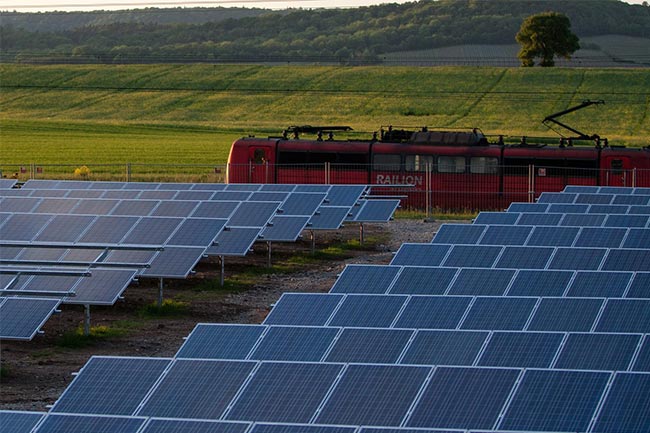
IV.Emphasize quality,safety,and compliance requirements
Quality compliance is the core of exporting photovoltaic modules,especially international standards.In 2025,global requirements will become stricter,so it is recommended to control quality at the source to enhance competitiveness.
- KeyStandards:IEC61215(DesignQualificationandTypeApprovalforCrystallineSiliconTerrestrialPhotovoltaicModules),IEC61730(PhotovoltaicModuleSafetyQualification).TheUnitedStatesrequiresUL1703(ElectricalandFireSafety).TheEuropeanUnionmandatestheCEmarkandenergy-efficiencyrequirements.WithinChina,GB/T46340-2025(GreenProductAssessment—PhotovoltaicModulesandInverters)applies.
- Practicaladvice:Establishaqualitytraceabilitysystemandconductthird-partytesting(e.g.TüVorULcertification).Focusonend-to-endmanagement,includingtheeco-friendlydisposalofend-of-lifePVpanels(25–30-yearlifespan).Thissatisfiesdestination-countryaccessstandardsandstrengthensmarkettrust.
- ExportLicense:Photovoltaicmodulesthemselvesgenerallydonotrequireanexportlicense,butiftheyinvolveenergystoragecomponentssuchaslithium-ionbatteries,itisnecessarytocheckthe"ExportLicenseManagementGoodsCatalog(2025)".In2025,Chinaintroducednewexportcontrolsforrareearthsandbatterytechnologies,whichcameintoeffectonNovember8.Confirmwhethertheproductscontaincontrolledmaterials.
V.Other Export Reminders
- Exporttaxrebate:Therefundrateforphotovoltaicmodules(HS8541.40/8541.43)hasbeenreducedfrom13%to9%,effectivefromDecember1,2024.Theremaybedifferencesfordifferentclassifications(suchasbrackets),soitisrecommendedtoverifythelatestrates.Currently,therearenoexporttariffs.
- Markettrends:In2025,China’sphotovoltaicexportordersrecovered,withsolarcellexportsincreasingby73%.However,inthefaceofglobaltradefrictions,itisrecommendedtodiversifymarketsandpayattentiontosustainabledevelopmentandlocalsupplychains.
- Riskprevention:InthefaceofhightariffsintheUnitedStatesandpotentialrestrictionsfromtheEuropeanUnion,evaluatetherisksofre-export.Cooperatewithsupplierstoensurestableproductquality.ContinuetomonitorannouncementsfromtheGeneralAdministrationofCustoms,suchasthe2024No.195CommodityClassificationDecision.
Was this helpful? Give us a like!
Contact our experts for compliance audits, precise quotes, and one-stop customs support.
Recent Comments (0) 0
Leave a Reply