
2026 I/E Agency Selection Checklist | From Ranking Data to Risk Avoidance | 6 Hardcore Practices
or complex compliance issues.
clearance and fund security.
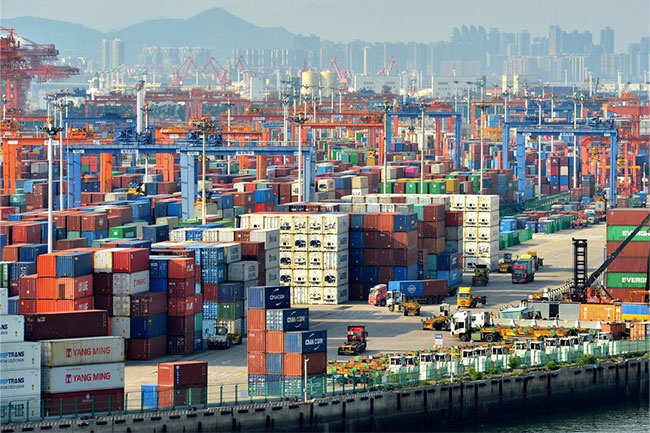
From January to May 2026,China’sThe total value reached 16.76 trillion yuan,with a year-on-year increase of 5.8% (data from the General Administration of Customs).However,92% of small and medium-sized foreign trade enterprises are still trapped in the cognitive trap of "choosing a top-tier agency for safety" when selecting an agent company—qualification fraud,reduced services,and hidden fees are becoming new industry pain points.
The 3 Decision-making Traps Behind the Ranking Data and the Realities of the Industry
InThe company’s "rankings" are often simplified to a pile of "registered capital + number of customers",but what really determines the cooperation risk is.The authenticity of qualifications,transparency of costs,and timeliness of service responsesThree core dimensions.We analyzed over 100 cooperation dispute cases and found that companies often fall into the following pitfalls:
| Common Misunderstandings | The truth of the industry | Verification tools/methods |
|---|---|---|
| Misconception 1: The higher the registered capital,the stronger the company’s strength | Truth: The paid-in capital and industry accumulation are more crucial | National Enterprise Credit Information Publicity System + Service Cases in the Past Three Years |
| Misconception 2: Low-price agents = Cost advantage | Truth: Hidden fees (such as document fees/inspection fees) account for more than 30% of the total fees. | It is required to provide a detailed breakdown of the "lump-sum price" and a comparison of costs with those of competitors. |
| Misconception 3: Full qualifications equal full service coverage | Truth: The timeliness of service response (such as the timeliness of customs declaration) determines the fulfillment capacity | Simulate sudden demand tests (such as emergency customs declaration on weekends) |
6-step Practice: SOP from ranking selection to risk closed-loop
Step 1: Establish a requirement matrix Output:
Identify the core needs of the enterprise: Categories (such as dangerous goods/general cargo),ports (coastal/inland),and settlement methods (/TT),compliance requirements (AEO certification/certificate of origin)For example,doingFor exporting enterprises,it is necessary to pay special attention to the agent’s experience in declaring customs under the 9710/9810 system.
Step 2: Qualification penetration verification Output:
- Verifyagents(CustomsBrokerRegistrationCertificate);
- Itisrequiredtoprovideinformationforthepastyear.NoViolationCertificate(Requestfromlocalcustoms);
- Verification(SOEcooperationcasesaremoreindicative).
Step 3: Break down the cost structure Output:
Output:
Require the agent to provide "Service Package Cost Table”,comparing the following items:
- Basicservicefee(customsdeclaration/inspection/documentation)
- Surcharges(inspectionassistance/emergencyordermodification/foreignexchangecancellation)
- Hiddencosts(suchastheadvancepaymentperiodfordemurragecharges/interestonadvancepaymentoftariffs)
Step 4: Test the response time of the service Output:
Send the simulation requirements (such as "complete the task at Huangpu Port before 3 PM").”),recording:
- Responsetime(responseratewithin10minutes)
- Outputtimeframeofthesolution(providetheoperationpathwithin2hours)
- Anomalyhandlingplan(suchasresponsemeasuresforaninspectionrateexceeding30%)
Step 5: Negotiate the contract risk control clauses Output:
Key agreements:
- Compensationmechanism(e.g.bearingdemurrage/finesduetoagenterror);
- ServiceefficiencyKPI(Declarationtimeliness≤24hours,errorrate≤1%);
- Dataconfidentialityclauses(preventingclientinfoleakagetopeers).
Step 6: Dynamic Assessment Mechanism Output:
Quarterly Review:
- Thestatisticalagent’sErrorrate(e.g.numberofdeclarationerrors);
- EvaluationCostfluctuations(deviationratefromcontractprice);
- VerificationEmergencyResponse(e.g.notificationtimelinessforpolicychanges).
90% of enterprises overlook the hidden pitfalls of agency cooperation
1.Tax Compliance Traps: Some agents adopt the practice of "paying for customs clearance" to reduce costs,which results in enterprises facing various problems.Falsely issuing VAT invoicesRisk (Key focus of tax bureau inspections in 2026);
2.Foreign exchange settlement loopholes: The "offshore accounts" provided by the agent may involveMoney laundering riskIt is necessary to verify the qualifications of the banks with which they cooperate.
3.Emergency policy response: For example,if there are changes to the rules of origin of the RCEP,the agent’s responsibilities may be affected.Training SupportCompetence determines whether a company can seize the tariff-related benefits.
There are three actions that can be launched today.
- Immediatelyexportalistoftheenterprise’simportandexportproductcategoriesforthepastthreeyears,withlabelsattached.High-frequencycategories+specialcategories(e.g.food/inthecontract);
- Verifytheinformationofthethreeprospectiveagents.(30%efficiencyboostforadvancedcertifiedfirms);
- Requiretheagenttoprovide"EmergencyManualforAbnormalSituationsTheprocessofrespondingtoinspections,seizures,andpolicychanges.
Was this helpful? Give us a like!
Contact our experts for compliance audits, precise quotes, and one-stop customs support.
Recent Comments (0) 0
Leave a Reply