
Car & Part Export: Key Differences for Global Trade
or complex compliance issues.
clearance and fund security.
In the global automotive trade,while complete vehicles and parts exports both belong to the automotive industry,they differ vastly in trade policies,transportation methods,and customs clearance procedures.Complete vehicle exports face high tariffs and complex regulations,while parts exports offer greater flexibility but place higher demands on logistics efficiency.If you are planning to export complete vehicles or parts,understanding the key differences and optimizing your export strategy is crucial.This article will provide an in-depth analysis of the differences between complete vehicle and parts exports,helping you confidently navigate international market challenges.
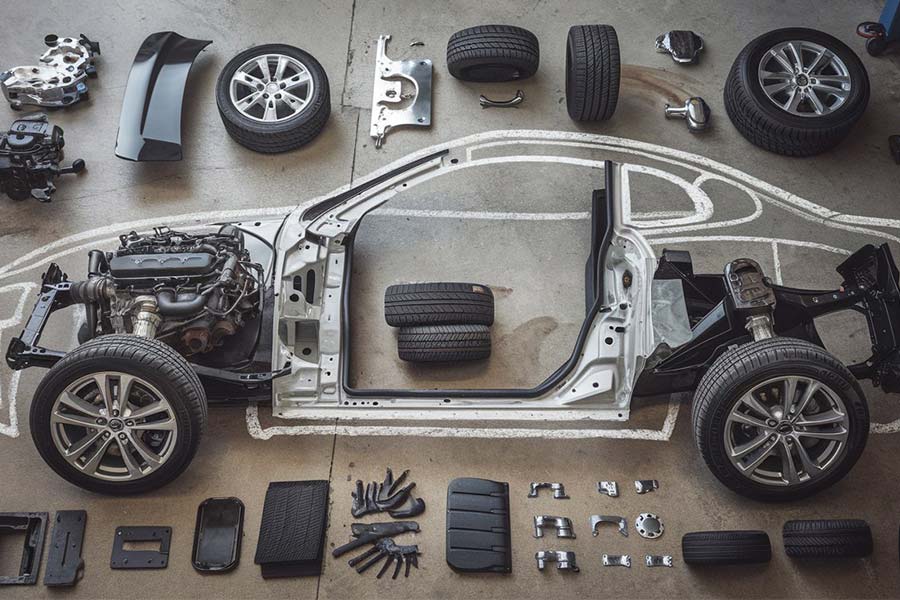
I.Trade policies and regulations
Complete vehicle exports Output:
Complete vehicle exports often face higher trade barriers.Many countries impose high tariffs to protect their domestic automotive industries,such as Indias long-standing high tariffs on imported complete vehicles.
Additionally,strict access regulations,such as vehicle emission standards and safety crash standards,are implemented.Only vehicles that fully comply with these standards are granted access.
Parts exports Output:
Parts exports face relatively looser trade barriers.Most countries encourage parts imports to enhance their domestic automotive supply chains,often imposing lower tariff rates than those for complete vehicles.
II.Transportation methods
Complete vehicle exports Output:
Complete vehicle exports generally useor land transportation.
Sea freight is a common and cost-effective option,especially for large-volume complete vehicle exports.For example,Chinas vehicle exports to Europe,Africa,and other regions typically rely on sea freight to transport complete vehicles to destination ports.
Land transport is mainly suitable for trade with neighboring countries or regions.Road transport enables door-to-door delivery with relatively shorter transit times,but costs may fluctuate due to distance,road conditions,and other factors.
Parts exports Output:
Parts exports,in addition to sea and land transport,often utilize.
Due to their relatively smaller size and lighter weight,air freight can deliver parts more quickly for urgent or high-value items,meeting the urgent needs of manufacturers.For example,critical parts like automotive electronic chips,which involve complex manufacturing processes and long supply cycles,can cause production line shutdowns if shortages occur.
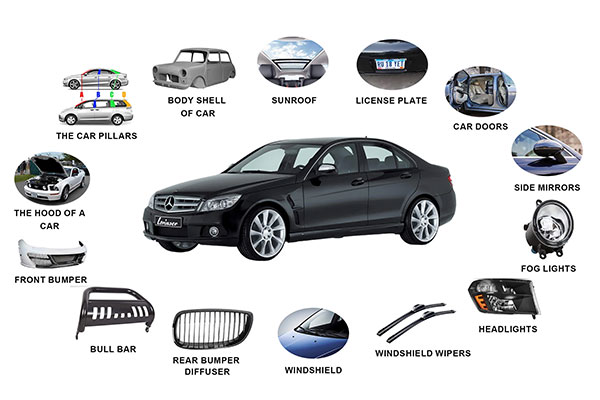
III.Customs clearance procedures
Complexity of declaration elements Output:
- CompleteVehicleExport:Declarationelementsaremorecomplex.Inadditiontobasicinformationsuchasproductname,specifications,quantity,andvalue,keycharacteristicsofthevehiclemustbedetailed,includingbrand,model,chassisnumber,enginemodelanddisplacement,andvehiclepurpose.
- PartsExport:Thedeclarationfocusesontheattributesofthepartsthemselves,suchaspartname,material,specifications,dimensions,andprocessingtechnology.Althoughdeclarationdetailsvaryfordifferentparts,thecomplexityisrelativelylowercomparedtocompletevehicles.
2.Regulatory requirements Output:
- CompleteVehicleExport:Oftenrequiresmoreregulatorydocuments.Commononesincludetheautomobileexportlicense,whichcontrolsthequantityandqualificationsforcompletevehicleexports.Somecountriesmayalsorequireaconformitycertificatetoprovethevehiclemeetstheirsafety,environmental,andperformancestandards.
- PartsExport:Mostordinarypartsexportsdonotrequirespecialregulatorydocuments.However,forcriticalsafetycomponentslikeenginesandtransmissions,orpartsclassifiedashazardous,additionalpermits,inspection,andquarantinecertificatesarenecessary.
Inspection focus Output:
- CompleteVehicleExport:Duringcustomsinspection,thefocusisonverifyingwhetherthevehiclesexteriorisdamaged,whethertheconfigurationmatchesthedeclaration,andconductingrandomperformanceteststoensuretheexportedvehiclesmeetqualitystandardsandmatchthedeclaredinformation.
- PartsExport:Forpartsinspections,theemphasisisondimensionalaccuracy,materialcomposition,andqualityissueslikedefectsordamage.Specialattentionispaidtopackagingprotectionforprecisioncomponents.
Output:
- CompleteVehicleExport:Oftenrequiresmoreregulatorydocuments.Commononesincludetheautomobileexportlicense,whichcontrolsthequantityandqualificationsforcompletevehicleexports.Somecountriesmayalsorequireaconformitycertificatetoprovethevehiclemeetstheirsafety,environmental,andperformancestandards.
- PartsExport:Mostordinarypartsexportsdonotrequirespecialregulatorydocuments.However,forcriticalsafetycomponentslikeenginesandtransmissions,orpartsclassifiedashazardous,additionalpermits,inspection,andquarantinecertificatesarenecessary.
Inspection focus Output:
- CompleteVehicleExport:Duringcustomsinspection,thefocusisonverifyingwhetherthevehiclesexteriorisdamaged,whethertheconfigurationmatchesthedeclaration,andconductingrandomperformanceteststoensuretheexportedvehiclesmeetqualitystandardsandmatchthedeclaredinformation.
- PartsExport:Forpartsinspections,theemphasisisondimensionalaccuracy,materialcomposition,andqualityissueslikedefectsordamage.Specialattentionispaidtopackagingprotectionforprecisioncomponents.
The key to overcoming high export barriers lies in precise regulatory control and efficient process execution.In this process,professionalagency companies are undoubtedly valuable partners for businesses.From document preparation to customs clearance and transportation arrangements,agencies can significantly improve export efficiency,mitigate policy risks,and allow companies to focus on their core business.Specializing in automotive partsfor 20 years,we will be your ideal agency partner!
Was this helpful? Give us a like!
Contact our experts for compliance audits, precise quotes, and one-stop customs support.
Recent Comments (0) 0
Leave a Reply