
Importing Japanese Auto Parts: A 20-Year Expert Guide
or complex compliance issues.
clearance and fund security.
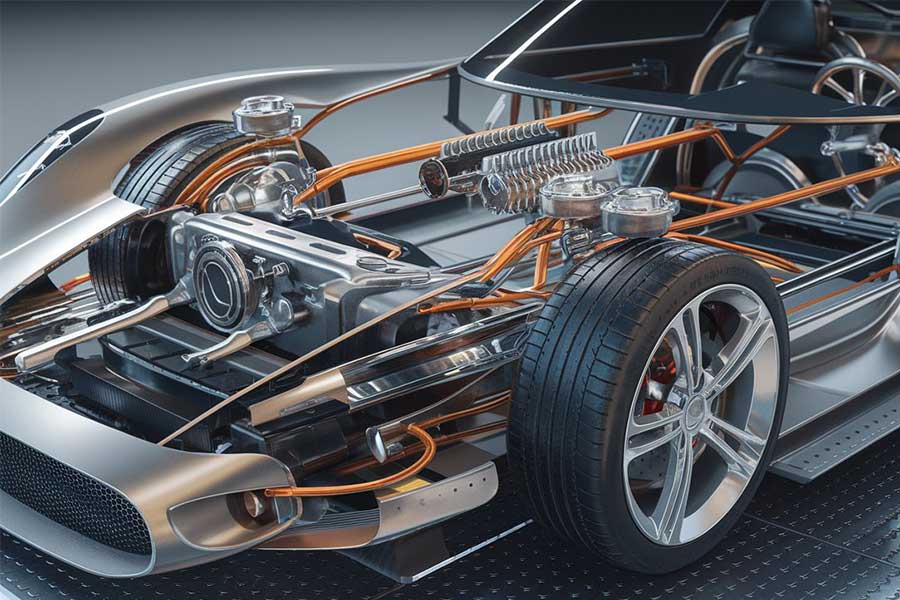
As a key player in the global automotive industry,Japan has consistently maintained its leading position by leveraging its exceptional manufacturing craftsmanship,rigorous quality management systems,and continuous technological innovation.Leading position in the industry.For China’s automotive aftermarket,OEMs,and maintenance enterprises,importing Japanese auto parts is not only a guarantee of quality but also a crucial pathway for technological advancement.This article will systematically analyze the core aspects of importing Japanese auto parts from four dimensions: industry status,import procedures,key control points,and risk management,drawing on 20 years of agency service experience.
I.Advantages and Current Market Status of Japan’s Automotive Parts Industry
1.Technical Barriers and Industrial Chain Advantages
Japan boasts globally top 50 automotive parts companies such as DENSO,AISIN,and JTEKT,holding technological leadership in core areas like engine components,transmission systems,and Electronic Control Units (ECUs).For instance,Japanese firms dominate over 80% of the global market share for CVT transmission steel belts,while their hybrid system patents have established long-term competitive advantages.
2.Quality Control System
The Japanese JIS (Japanese Industrial Standards) certification operates in parallel with the ISO/TS 16949 system,ensuring that the tolerance of accessory products is controlled within ±0.01mm and the failure rate remains below 0.3%.In particular,the zero-defect management under Toyota’s TPS (Toyota Production System) model has become a global benchmark in the automotive parts industry.
3.Export data supports
In 2022,Japan’s total automotive parts exports reached $36.8 billion,with China accounting for 28%,making it the top importing country.Three major categories—engine components,electronic sensors,and braking systems—constituted over 65% of China’s imports from Japan.
II.Comprehensive Analysis of the Entire Process for Importing Japanese Automotive Parts
1.Preliminary market research and qualification preparation
- Requirementpositioning:TodistinguishbetweenOEMgenuineparts(suchasToyotaGenuineParts),OESbrandparts(suchasNGKsparkplugs),orcompatibleparts,itisnecessarytospecifytheapplicablevehiclemodels(forexample,theSouthChinamarket,whereJapanesecarsdominate,focusesonimportedHondaandNissan-specificparts).
- QualificationFiling:Importingenterprisesmustobtainthe"AutomaticImportLicense"(forproductsinvolvingCCCcertificationsuchascarlightsandseatbelts)andcompletethecustomsconsigneeandconsignorregistration.
2.Supplier Screening and Compliance Verification
- Supplierclassification:PrioritizeselectingJAAA(JapanAutoPartsIndustriesAssociation)certifiedmembercompaniesandverifywhethertheyholdOEMauthorization(suchasMitsubishiHeavyIndustries’Tier3supplierqualification).
- Technicaldocumentreview:RequestthesuppliertoprovideJIStestreports,materialcertificates(suchasSUH660heat-resistantsteelcompositionanalysis),andROHSenvironmentalcompliancedeclarations.
3.Key Terms of Trade Contracts
- PricingClause:ItisrecommendedtoadoptCIFShanghai/Tianjintomitigaterisks.Risk(ShippingtimefromJapantoChinaisapproximately7-10days,withfreightcostaround$800/20GPcontainer).
- QualityAssurance:Clearlydefinethewarrantyperiod(typically12months),returnandexchangecriteria(e.g.acceptableappearancedefects≤0.5%),andtheclaimsprocess.
4.Logistics and Customs Clearance Execution
- Packagingspecifications:Precisioncomponentsmustbepackagedinanti-staticmaterials(surfaceresistance≤1×10^6Ω)andshockproofwoodencrates(compliantwithISPM15fumigationstandards).
- Tariffoptimization:UtilizetheRCEPagreementtoapplyfortariffreductionsoncomponentswitharegionalvaluecontentof≥40%(e.g.thetariffratefortransmissionvalvebodiesdecreasesfrom8%to6.5%).
5.Domestic Warehousing and Distribution
- Bondedwarehousestrategy:EstablishaVMIwarehouseinthefreetradezonetoachieveJIT(Just-In-Time)deliveryandreduceinventorycapitaloccupation.
- Traceabilitysystem:Achieveend-to-endtraceabilityfromJapanesefactoriestoterminalrepairshopsviaQRcodes/Barcodes.
III.Five key control points
1.Compliance management
- ProductCertification:DifferentiatebetweenCCCcatalog(e.g.airbagcontrollersrequiringmandatorycertification)andnon-CCCproductdeclarationmethods.
- EnvironmentalStandards:EnsurethattheexhausttreatmentcomponentscomplywiththeChinaVI-bemissionstandards(e.g.thePMlimitforDPFparticulatefiltersis≤3mg/km).
2.Exchange Rate Risk Management
Use forward exchange settlement to lock in the exchange rate (e.g.agreeing on USD/JPY=135 in six months),or utilize cross-border RMB settlement to avoid exchange losses.
3.Optimization of logistics costs
- LCLsolution:Forsmallandmedium-sizedorders,theweeklyYokohama-Qingdaorouteisrecommended,withanLCLrateof$85/CBM.
- EmergencyChannel:IncollaborationwithNipponExpress,wehavelaunchedanexpressairfreightservice(48-hourdelivery)betweenShanghai/Guangzhou.
4.After-sales technical support
Establish a bilingual technical response team (Chinese-Japanese) to handle requirements such as installation guidance (e.g.axial clearance adjustment standards for turbochargers) and quality disputes.
5.Digitalization of the supply chain
Deploy an ERP system to interface with inventory data from Japanese suppliers,enabling safety stock alerts (e.g.Honda Fit spark plugs MOQ=2000 pieces/order).
IV.Risk Warning and Response Strategies
- Qualityfluctuationrisk:ItisrecommendedtoimplementPre-ShipmentInspection(PSI)forhigh-valuecomponents(suchasECUmodules),withasamplingratioofnolessthan5%.
- Riskofpolicychanges:AfterJapanreviseditsForeignExchangeActin2023,attentionmustbepaidtochangesintheexportapprovalprocessforsensorsinvolvingdual-usetechnologies.
- Exchangeratefluctuationrisk:Duringthe15%depreciationoftheJapaneseyenin2022,wepromptlyadvisedclientstoadoptadynamicpricingmechanismtohedgecosts.
- Logisticsdelayrisks:Developalternativerouteplansforthetyphoonseason(July-September),suchasreroutingtotheOsaka-Xiamenroute.
V.Practical Case: AAutomotive battery cooling system imports
A new energy vehicle manufacturer needs to import electric water pumps from Nidec,and our agency services include:
- Technicalalignment:Confirmproductcompatibilitywith800Vhigh-voltageplatformrequirements(operatingtemperaturerange:-40℃to150℃);
- Tariffplanning:Increasedtheregionalvaluecontentto52%throughRCEP’saccumulationrules,resultingintaxsavingsof120,000yuan;
- FastCustomsClearance:WithAEOAdvancedCertification,customsinspectionratesarereducedby70%,andclearancetimeisshortenedto1.5days.
Conclusion
The import of Japanese automotive parts is not only a technology-intensive business but also a systematic project requiring meticulous operation.Choosing an agency with full-chain service capabilities can not only mitigate traditional risks such as customs clearance,taxation,and logistics but also create added value for enterprises through industry resource integration.For companies planning to expand into high-end markets,in-depth collaboration with premium Japanese suppliers will serve as a pivotal lever in building core competitiveness.
Was this helpful? Give us a like!
Contact our experts for compliance audits, precise quotes, and one-stop customs support.
Recent Comments (0) 0
Leave a Reply