
Japan Food Additive Import Clearance Guide | Avoiding MHLW "Designated" Traps
or complex compliance issues.
clearance and fund security.
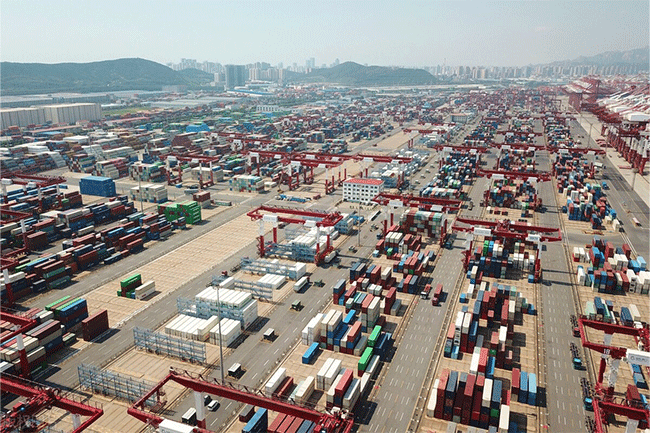
Many purchasing managers who are new to the Japanese market have a deeply ingrained misconception: as long as the product has passed FDA or EFSA certification,exporting to Japan will be a breeze.In reality,under the strict supervision of Japan’s Ministry of Health,Labour and Welfare (MHLW),meeting European and American standards is precisely the biggest "trap".Japan has a unique classification system of "designated additives" and "existing additives".If the ingredients of your product are not on the "existing additives list",even if it is a pure natural extract,it may be deemed an illegal additive and be directly returned.In 90% of cases of imported products being detained,the reason is not due to poor quality,but rather due to regulatory compliance issues.
Why is the Japanese market considered a "Bermuda Triangle" for additives?
Japan’s regulatory approach to food additives is fundamentally different from that of other countries.Instead of focusing on "safety," it prioritizes "whether they are permitted." The core risk lies in the confusion of three concepts: designated additives,existing additives,and natural flavors.Designated additives typically refer to synthetic substances that must undergo strict approval by the Ministry of Health,Labour and Welfare; existing additives are natural substances with a long history of consumption in Japan.Many importers mistakenly believe that "natural = safe = no approval required," only to face regulatory obstacles during customs clearance.
| Additive category | Definition and characteristics | Approval and labeling requirements | Import risk level |
|---|---|---|---|
| Specified additives | Mainly,they are synthetic substances that have not undergone safety evaluation,or newly developed additives. | It must be individually approved by the Ministry of Health,Labour and Welfare,and the name must be displayed on the label. | Extremely high (prohibited without approval) |
| There are already additives | Additives of natural origin that were already on sale in Japan before April 1,1995 (except for a few specified ones). | There is no need for individual approval,but it must be included in the existing list of additives. | China (the list needs to be strictly checked) |
| Natural fragrances/base materials | Animal and plant extracts used in food fragrances are typically employed as processing aids. | Generally,individual approvals are exempted,but the residual limit standards must be met in the final product. | Low (need to confirm the usage restrictions) |
Zero-error customs clearance SOP: From pre-audit of ingredients to declaration upon arrival at the port
Don’t wait until the goods arrive at Yokohama Port to start checking the regulations.A matureThe process must be implemented at the factory production stage.The following are verified standardized operating procedures:
Step 1: Review the component of "dual nationality" Output:
Before signing a procurement contract,it is necessary to require the supplier to provide a complete COA (Certificate of Analysis) and a full ingredient list.After receiving the list,don’t just look at the Chinese or English names.You must check the latest version of the "Existing Additives List" issued by the Japanese Ministry of Health,Labour and Welfare.
- Keyactions:InputtheCASnumbersorEnglishnamesofallingredientsintothedatabaseoftheJapanSocietyofFoodChemistryforcomparison.
- PitfallPoints:Payattentiontothedifferentnamesforthesamesubstance.Forexample,"Zijigong"maybeclassifiedasacoloringagentratherthanageneraladditiveinsomelists.
Step 2: Lock the red line labeled "Use Standard" Output:
Even if the ingredients are legal,your "usage" might be illegal.Japanese regulations have extremely detailed provisions on the objects of additive use (what foods they are used in) and the maximum usage amounts.
- Keyactions:Pleaseconsultthe"StandardsfortheUseofFoodAdditivesinJapan".
- PitfallPoints:Confirmwhethertheadditiveisallowedtobeusedinthefinalfoodcategoryyouareimporting.Forexample,somepreservativesareallowedtobeusedinsoysauce,buttheyarestrictlyprohibitedfrombeingusedinfreshmeat.
Step 3: The importer notifies and files for recordation Output:
Japan implements the "Importer Responsibility System",under which foreign exporters cannot declare directly in Japan.They must find a local Japanese agent who holds a "Food Importer Business Qualification" to handle the declaration process.
- Keyactions:Verifywhethertheagencycompanyholdsan"ImportBusinessLicense"issuedbytheMinistryofHealth,LabourandWelfare.
- PitfallPoints:Checktheagent’strackrecordtoavoidchoosingamiddlemanwhosubcontractsbusinessto"ghostfreightforwarders".
Overlooked "Usage Standards" and Importer Responsibility
There’s an invisible risk that only insiders in the industry are aware of:Residual limits of enzyme preparations and processing aidsMany factories use enzyme preparations (such as amylase and protease) during production to improve efficiency,believing that they do not need to be declared if they do not constitute final ingredients.However,under Japanese regulations,if non-permitted enzyme residues are detected in the final product,or if the enzyme preparation itself is not on the Japanese approval list,it still constitutes a violation.In addition,Japanese customs have intensified their crackdown on "labeling fraud" in recent years.If your additives are used as "nutritional fortifiers," but the label fails to indicate the required content,you will face not only product recalls but also the risk of being added to the corporate blacklist if subject to random inspections.
3 actions to be implemented immediately this afternoon
Don’t treat this article as a piece of dusty information in your bookmarks.To ensure the safe customs clearance of the next batch of goods,please immediately carry out the following inspections:
- Checkthelistofcoreingredients:Takeouttheproductformulasheetoftheproductyouarecurrentlyimportingorplanningtoimport,andcheckeachingredienttoseeifitisonthe"ExistingAdditivesListinJapan".Highlightalltheingredientsthatyou’renotsureabout.
- Reviewthetranslatedlabels:ChecktheexistingJapaneselabelstoconfirmthatthenamesofalladditivesusethecommonnamesapprovedbyJapaneseregulations(ratherthancommercialnames).
- VerifyingAgentQualifications:SendanemailtoyourJapanesecustomsclearanceagent,askingthemtoconfirmwhethertheyhavethequalificationofa"FoodHygieneManager",andinquireabouttheirspecificpre-auditopinionsonyourproducts.
Was this helpful? Give us a like!
Contact our experts for compliance audits, precise quotes, and one-stop customs support.
Recent Comments (0) 0
Leave a Reply