
IRA EV Tax Credits: Navigating Foreign Entity Rules
or complex compliance issues.
clearance and fund security.
I.Background and Policy Adjustments
1.1 Policy Background
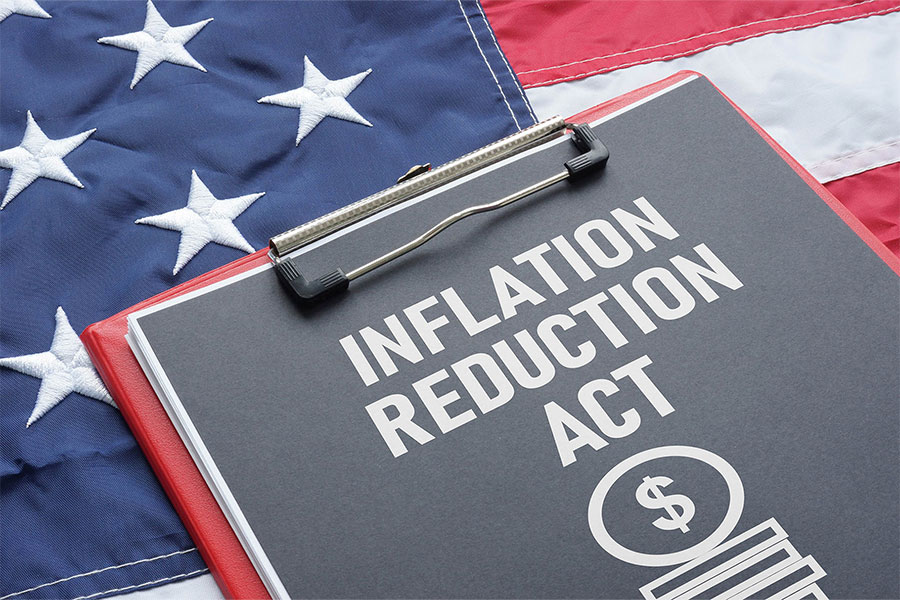
In August 2022,the U.S.released the Inflation Reduction Act (IRA),which provides a federal tax credit of up to $7,500 per electric vehicle assembled in North America.This measure aims to promote the development of the U.S.electric vehicle industry and reduce reliance on foreign critical minerals and components.However,the Act sets strict standards for the sourcing of critical minerals and components in vehicle batteries to ensure supply chain localization and security.
1.2 Guideline Release and Adjustments
On December 1,2023,the U.S.Department of the Treasury,the Internal Revenue Service,and the Department of Energy jointly issued the "Inflation Reduction Act" Guidelines for Foreign Sensitive Entities (hereinafter referred to as the "Guidelines"),which imposed restrictive regulations on the use of products from foreign sensitive entities in the U.S.market.According to the Guidelines,starting from 2024,vehicles containing any battery components manufactured or assembled by foreign sensitive entities (such as China,Russia,North Korea,and Iran) will no longer be eligible for tax credits.By 2025,this regulation will also be extended to key minerals such as lithium,cobalt,and nickel required for battery manufacturing.
On May 3,2024,the U.S.Treasury Department announced adjustments to the final rules on tax credits,easing restrictions on electric vehicle tax credits.According to the new rules,U.S.consumers can receive a maximum tax credit of $7,500 for vehicles containing Chinese graphite and other critical minerals until the end of 2026.This adjustment has brought some flexibility and a transition period to the electric vehicle market,alleviating the short-term pressure on the battery supply chain.
II.Foreign Entities of Concern and Their Definitions
2.1 Definition of Foreign Entities of Concern
According to the Guidelines,a Foreign Entity of Concern includes individuals owned,controlled,governed,or directed by the governments of China,Russia,North Korea,and Iran.The specific definitions are as follows:
? Companies registered in China or in which the Chinese government holds 25% or more of the shares will be considered foreign entities of concern.
? If 25% of a companys board seats,voting rights,or equity is held by an entity of concern,the company will also be deemed an entity of concern.
This definition excludes many companies with close ties to China and other designated countries from U.S.tax incentives,forcing these companies to reassess their supply chains and partnerships.
2.2 Impact of Foreign Entities of Concern
This definition means that many leading global battery manufacturers and mineral suppliers will face challenges,especially those with significant operations or partnerships in these countries.Companies must evaluate every aspect of their supply chains to ensure compliance with the new U.S.regulatory requirements and continue to qualify for tax credits.
III.Detailed Explanation of Tax Credit Policies
3.1 Localization Requirements for Critical Minerals and Components
According to the Inflation Reduction Act released in 2022,electric vehicles must meet the following conditions to qualify for the maximum $7,500 tax credit:
? Battery Component Localization: Starting from 2023,electric vehicles must have over 50% of their battery components and materials manufactured or assembled in North America to qualify for a $3,750 tax credit per vehicle.This proportion will increase to 100% after 2029.
? Critical Mineral Localization: Beginning in 2023,electric vehicles must source 40% of their battery-critical minerals from North America or countries with free trade agreements with the U.S.(e.g.Australia,Bahrain,Canada,Chile,Colombia,Japan) through extraction,processing,or recycling to qualify for an additional $3,750 tax credit.The localization requirement for raw materials will increase by 10% annually,reaching 80% by 2027.
These requirements aim to promote manufacturing and resource extraction in North America,enhancing supply chain security and independence.
3.2 Transition Period for New Rules
On May 3,2024,the U.S.Treasury Department announced new rules allowing cars containing Chinese graphite and other critical minerals to still qualify for tax credits until the end of 2026.This transition period provides companies with more time to adjust their supply chains and upgrade their technologies to meet the more stringent localization requirements in the future.
IV.Corporate Response Measures
4.1 Continuous Monitoring and Research on Regulatory Updates
Battery export enterprises should continuously monitor and research the latest foreign technical regulations,conduct risk assessments,and enhance their ability to respond to foreign technical trade measures.This includes closely following the latest regulations and guidelines issued by the U.S.Treasury Department,IRS,and Department of Energy,and promptly adjusting business strategies to meet new requirements.
4.2 Strengthening Technological Innovation and Self-Inspection
Enterprises should enhance technological innovation,improve R&D capabilities,and ensure their products comply with the latest regulatory requirements.They should conduct self-inspections to verify that exported batteries meet U.S.and other markets regulations regarding critical minerals and component sourcing,avoiding economic losses and market share declines due to non-compliance.
4.3 Participation in International Rulemaking
Enterprises should actively participate in the "Technical Barriers to Trade (TBT) Notification and Comment" and "Specific Trade Concerns (STC)" initiatives of customs,accurately and promptly reporting the technical trade barriers they encounter.By engaging in the formulation of international rules,enterprises can strive for greater international influence,ensuring their interests are represented and safeguarded in global trade.
Was this helpful? Give us a like!
Contact our experts for compliance audits, precise quotes, and one-stop customs support.
Recent Comments (0) 0
Leave a Reply