
Import Cargo Agency Handover Form: The Ultimate Sign-off Procedure to Avoid Cargo Damage and Costs
or complex compliance issues.
clearance and fund security.
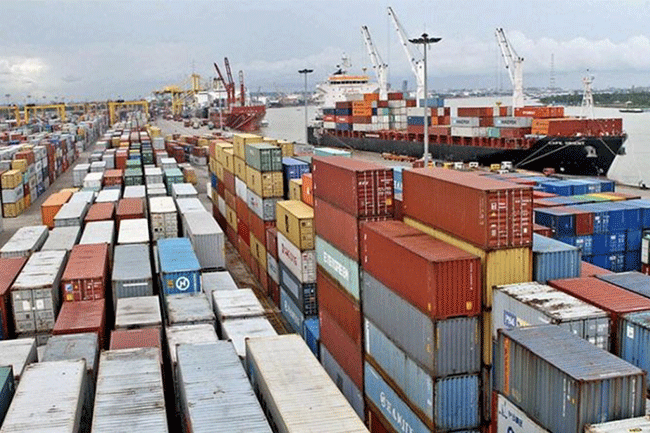
Many import managers breathe a sigh of relief the moment they receive the original bill of lading (B/L),thinking that everything is settled.However,they fail to realize that 90% of cargo damage disputes and hidden cost traps actually occur during the signing of the seemingly insignificant "agent handover note".Once you sign your name on this document,even if the container is filled with scrap metal,the freight forwarder’s legal responsibility will instantly shift to you.This document is not just a simple "receipt",but the last line of defense for risk transfer in the import process.
Why a piece of paper can determine life and death: The power and responsibility game behind the handover note
In import practice,Agent Handover FormThe Handover Note (also known as the Delivery Note or the Goods Handover and Acceptance Note) is a legal document used by freight forwarders to transfer goods or documents to the consignee.Many companies only focus on the terms of the bill of lading,but overlook every word in the handover note.This directly results in enterprises being put in a passive situation where they can’t prove their innocence when cargo damage,shortages,or high demurrage fees occur.
The core issue is that“Responsibility Split Point”The ambiguity of the handover document.If the handover document is not signed in accordance with regulations,the freight forwarder can transfer all the risks of damage caused by port operations and even the loss of documents due to their negligence to the importer.
| Key verification fields | Common risk scenarios | Correct operation procedure |
|---|---|---|
| Cargo/box condition notes | The handover document is either stamped with "Clean on Board" or left blank,but the actual container has holes.After signing the receipt,the freight forwarder will no longer bear responsibility for any cargo damage during transportation. | It is necessary to adhere to the principle of "Chief Mate’s Receipt".If there are any indentations or holes,it must be noted on the handover form as "indentation on the right side of the box" andAttached please find the photosOtherwise,the visa will be denied. |
| Confirm the number of items/weight | The freight forwarder delivered 10 items of cargo,but the bill of lading showed 12.If the recipient does not note "short delivery" upon receipt,any subsequent claims will be deemed to have occurred after delivery. | Implement a "point-to-point" inventory check.If the quantity does not match,the recipient must write a note stating "Actual received X items,Y items are missing" when signing the receipt,and require the freight forwarding operator to sign and confirm it. |
| Payment settlement status | After signing the receipt and handover document,the freight forwarder suddenly charges an "operating fee" or "document fee" and threatens to withhold the D/O documents as a form of coercion. | Before signing the receipt,make sure that all the items are intact and undamaged.Local expenses(THC,DOC,pickup fee)confirmed correct on the bill,or payment agreement reached. |
| The latest tax rebate declaration system in 2025 has achieved full - process electronicization,which is specifically divided into five steps: | Only the delivery order (D/O) was handed over,but the health inspection certificate or tax exemption certificate was forgotten to provide,resulting in the inability to clear customs and pick up the goods. | Contrast with the "Check all the documents on the Document List one by one.All documents must be present; otherwise,the contract will not be signed. |
Import Handover Sheet Signing SOP | 5 Defense Lines from Order to Release
In order to minimize the above-mentioned risks,please immediately implement the following standard operating procedures (SOPs) internally.This is not a suggestion,but a necessary measure to mitigate losses.
Step 1: Pre-inspection and appointment (24 hours before the goods arrive at the port) Output:
Don’t wait for the freight forwarder to call you before passively receiving the information.Take the initiative to contact the freight forwarder and request the informationThe Arrival Notification LetterAnd the cost estimate sheet.
- Checkwhethertheshipname,voyagenumber,andboxnumberareconsistentwiththebilloflading.
- Confirmthatallthedocumentsaccompanyingthevehicle/box(suchasMRF,etc.)arecompleteandaccurate.Checkwhetherallthecopiesarecomplete.
Step 2: Joint on-site inspection of the goods (at the moment of signing the receipt) Output:
If it’s a full container pickup,it must be arrangedThe driver or warehouse supervisor is conducting an inspection at the stacking yardExternal inspectionIf it’s a LCL shipment,someone must be present when the boxes are unloaded at the warehouse.
- WewillfocusoninspectingthecontainersSealnumberWhethercompleteandconsistentwithdocuments.
- Checkwhetherthereareanyobviousdamageorwaterleakagemarksonallsixsidesofthebox.
Step 3: Sign the "Reservation of Opinion" for abnormal situations Output:
This is the most crucial step.If any problems are found,Please don’t reject the visa application directlyInstead of requiring customers to sign for the goods upon delivery (which may result in storage fees if the goods cannot be picked up on time),we adopt the "conditional acceptance" approach.
- Handwrittenintheremarkscolumnofthehandoversheet:"Theboxisdamaged,andtheliabilityforthecargodamageistobedetermined.Fordetails,pleaserefertothejointinspectionreport.".
- Bothpartiesshallsignandstamptheagreement,andeachpartyshallkeepacopyfortheirownreference.
Step 4: Return and archive the documents Output:
The handover form after signing is the core evidence for subsequent claims settlement.
- AftersigningforreceiptWithin30minutesPleasesendthescannedcopyofthesignedandstampeddocumentbacktothecompany’sPurchasingDepartment/FinanceDepartment.
- Putthepaperversionintothecorrespondingimportorderfilebag.
Step 5: Effectiveness Monitoring Output:
The countdown starts from the moment the signing and handover document is receivedFree stacking periodandFree Container Period.
- SettingupearlywarningnodesintheERPsystemcanhelpavoiddemurragechargescausedbyslowinternalgoodsretrieval,whichfreightforwarderswillnotwaive.
The "clean bill of lading" trap that veteran freight forwarders won’t tell you about
Here’s an insider secret that very few people dare to publicly mention:The cleaning clauses on the "Agent Handover Form" do not necessarily indicate that the goods are actually in good condition.
Often,freight forwarders print "Goods in good condition" on the handover documents provided to importers to expedite the circulation process,or because the upstream shipowners have already issued clean bills of lading.However,the risk of land transportation from ports to inland warehouses is extremely high (bumpiness,theft,and robbery).If you only sign your name on the handover documents without adding remarks such as "Inland transportation insurance to take effect" or "Confirm after unboxing",the insurance company will refuse to compensate you if the goods are damaged after unboxing,citing the reason that "the goods were intact at the time of delivery and the responsibility lies with the consignee".
Experts suggest:For high-value goods,it is necessary to add a handwritten note on the delivery note: "The intactness of the outer packaging does not guarantee the intactness of the goods inside.The final assessment of the damage to the goods shall be based on the unboxing report"Please enter the verification code: n".These words could save your insurance claim in court.
There are three self-check actions that you can do this afternoon
Don’t wait until the next batch of goods arrives at the port to think about making changes.Go and check it now!
- Reviewthearchivedhandoverdocumentsfromthepastthreemonths:Checkifthere’sonlyyoursignatureonthedocumentabove,andnosignaturefromthefreightforwarder.Ifthat’sthecase,yourprocessisinviolationofregulations.
- Trainyourwarehousereceivers:Tellthemthatsigningthereceiptisnotjustaformality.Givethemaredpenspecificallyformarkinganyabnormalitiesonthedocuments.
- UpdateERPField:Addacolumncalled"RemarksonAbnormalitiesinHandoverDocuments"tothesystemandrequireoperatorstofillitoutwhenenteringreceiptinformation.Otherwise,theywon’tbeabletoproceedtothenextprocess.
Was this helpful? Give us a like!
Contact our experts for compliance audits, precise quotes, and one-stop customs support.
Recent Comments (0) 0
Leave a Reply