
Practical Checklist for Imported Wine Customs Clearance Agents: Solving the Matching Degree Problem That 80% of People Overlook
or complex compliance issues.
clearance and fund security.
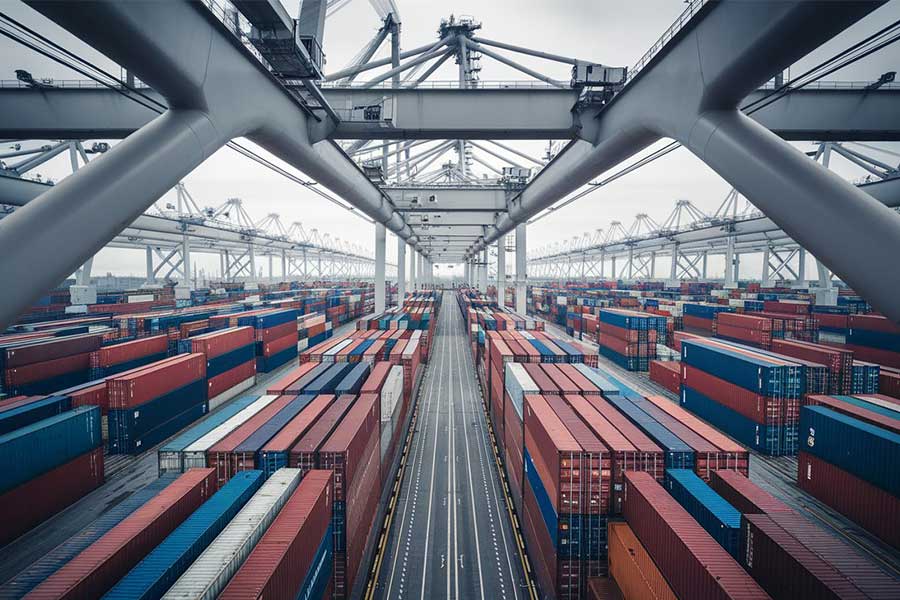
All the necessary documents,including the packing list and invoice,have been prepared.Is that all?Eighty percent of foreign wine importers don’t know that the "complete documentation" you submitted might be considered "inconsistent information" by customs authorities.Last month,a client faced a five-day delay in customs clearance and a 30,000 RMB port storage fee because the "alcohol content" on the wine label differed by 0.1% from the declaration form.
Why does "having all the necessary documents" not guarantee "clearance through customs"?The underlying logic is "documentation chain matching".
The customs clearance supervision of imported foreign wines essentially involves "verifying all documents along the entire supply chain from production to circulation".Customs will not review each piece of information in isolation,but will instead ensure that "all the materials you submit form a logically coherent chain of evidence".For example,the certificate of origin proves that "this bottle of wine comes from the Cognac region of France",the wine label confirms that "the bottle is labeled with ’Cognac’",the health certificate demonstrates that "this bottle of wine meets China’s food safety standards",and the customs declaration form verifies that "the information you declared is consistent with the above materials".Any mismatch in any link will trigger the customs’ "inspection alert".
| Common Misunderstandings | correct operation | Risk consequences |
|---|---|---|
| The wine label only says "750ml",without indicating the tolerance (such as "±5ml"). | According to the requirements of GB 7718-2011,the net content must be marked as "750 milliliters (±5 milliliters)",and it must be consistent with the customs declaration form. | The customs questioned the discrepancy between the goods and the documents,and required a third-party inspection,which resulted in a delay of 3-7 days |
| The certificate of origin only states "France",without specifying the "Cognac" production region. | In accordance with the China-EU Geographical Indications Agreement,the name of the geographical indication production area must be specified | Unable to enjoy the preferential tariffs for cognac (which are 10%-15% lower than the ordinary tariffs) |
| The health certificate has not been translated into Chinese and notarized | All foreign-language materials must be accompanied by a Chinese translation that is stamped with the official seal of the translation company. | The customs rejected the declaration and required additional information,which resulted in a 2-3 day delay |
Imported Liquor Clearance Agency | Practical Steps from Preparation to Verification
Step 1: Prepare the core documents—sort them into three categories: "basic","regulatory",and "auxiliary". Output:
- Basicdocuments:Businessinvoice(mustindicateFOB/CIFprice,currencysystem,andcontractnumber),packinglist(mustindicatethenumberofbottlesperbox,totalnumberofboxes,andgross/netweight).BillofLading(Mustmatch“TransportMode”and“PortofOrigin”onthedeclarationform);
- Supervisiondocuments:OriginalCertificateofOrigin(whichmustincludethegeographicalindicationoftheproductionarea,suchas"Cognac"or"ScotchWhisky"),HealthCertificate(whichmustbeartheofficialstampoftheexportingcountry,theproductiondate,andtheshelflife),andLiquorLabelRegistrationCertificate(issuedbytheGeneralAdministrationofCustoms).The"FoodLabelAuditCertificate";
- Supportingdocuments:Ingredientanalysisreport(provingtheabsenceofprohibitedadditives)andwineryauthorizationletter(requiredwhenimportingonbehalfofothers).
Step 2: Verify Document Chain Matching | 3-Dimensional Self-check to Avoid Pitfalls Output:
- Dataconsistency:Checkwhetherthe"productname","alcoholcontent","netcontent",and"productiondate"inalldocumentsarecompletelyconsistent(forexample,ifthewinelabelsays"40%vol",thecustomsdeclarationmustfillin"40",andthedifferencecannotbemorethan0.1%).
- Logicalreasoning:Checkwhetherthe"origin"and"productionregion"match(forexample,ifthecertificateoforiginstates"France",thewinelabelshouldindicate"Cognac"ratherthan"Scotland");andwhetherthe"shelflife"and"productiondate"arelogicallyconsistent(forexample,iftheproductiondateisJanuary2023andtheshelflifeis10years,thehealthcertificateshouldstate"untilJanuary2033").
- Regulatorycompliance:Verifythatthewinelabeldoesnotcontainanyillegalpromotionalclaims(e.g."tonifyingthekidneysandenhancingvirility"),andthattheingredientlistcomplieswiththerequirementsofGB2760(noprohibitedsweetenersmaybeadded).
Step 3: Coordinate with the customs clearance agent in advance — let the professionals handle the "pre-audit" work. Output:
Output:
- Dataconsistency:Checkwhetherthe"productname","alcoholcontent","netcontent",and"productiondate"inalldocumentsarecompletelyconsistent(forexample,ifthewinelabelsays"40%vol",thecustomsdeclarationmustfillin"40",andthedifferencecannotbemorethan0.1%).
- Logicalreasoning:Checkwhetherthe"origin"and"productionregion"match(forexample,ifthecertificateoforiginstates"France",thewinelabelshouldindicate"Cognac"ratherthan"Scotland");andwhetherthe"shelflife"and"productiondate"arelogicallyconsistent(forexample,iftheproductiondateisJanuary2023andtheshelflifeis10years,thehealthcertificateshouldstate"untilJanuary2033").
- Regulatorycompliance:Verifythatthewinelabeldoesnotcontainanyillegalpromotionalclaims(e.g."tonifyingthekidneysandenhancingvirility"),andthattheingredientlistcomplieswiththerequirementsofGB2760(noprohibitedsweetenersmaybeadded).
Step 3: Coordinate with the customs clearance agent in advance — let the professionals handle the "pre-audit" work. Output:
Don’t wait until the goods arrive at the port to find an agent.It is recommended to send all the necessary documents to the customs clearance agent for "pre-audit" 3 days before the goods are shipped.A professional agent can help you identify "details you might overlook" — for example,if the "oak barrel aging time" of a certain whisky is not specified in the health certificate,while customs requires that "whiskies aged for more than 3 years must be labeled," the agent will alert you to provide the missing information in advance,thus avoiding potential issues during customs clearance.
Hidden advice from a senior customs clearance agent: Include the required documents in the procurement contract
Many importers mistakenly believe that "preparing the necessary documents is a matter for the customs clearance process",but in reality,the risks are already laid down at the time of contract signing.For example,if you sign a contract with a foreign winery and fail to explicitly require that the "certificate of origin must indicate the production region",you might only discover later that the certificate does not contain this information when the goods arrive at the port.In this case,you’ll have to request a supplementary certificate from the foreign supplier,which will take at least 10 days to process.Meanwhile,the storage fees during this period could amount to as much as 5% of the goods’ total value.
My suggestion is:Write the specific requirements for customs clearance documents into the procurement contractFor example: "The seller must provide a certificate of origin that meets the requirements of Chinese customs (marking the geographical indication production area) and a health certificate (including the production date,shelf life,and the official stamp of the exporting country).Otherwise,they will bear the responsibility for customs clearance delays and port storage fees caused by non-compliant documents." In this way,even if the foreign supplier makes a mistake,you can hold them accountable and minimize losses.
3 things you can do this afternoon: Immediately reduce the risk of customs clearance documents
- 1.Takeoutthelatestcustomsclearancedocumentsandconductaself-checkbasedonthreedimensions:"dataconsistency,logicalrationality,andregulatorycompliance".Markanyinconsistenciesthatarefound.
- 2.Senda"ListofCustomsClearanceDocumentRequirements"toforeignsuppliers,specifyingthespecificcontentsofthecertificateoforiginandthehealthcertificate;
- 3.Contactyourcustomsclearanceagentandaskthemtopreparea"Pre-AuditReportoftheDocumentChain"foryou.Doingthisoneweekinadvancecansaveyou90%ofthetroublelateron.
Was this helpful? Give us a like!
Contact our experts for compliance audits, precise quotes, and one-stop customs support.
Recent Comments (0) 0
Leave a Reply