
Safe Air Transport: Lithium Batteries & Power Bank Shipping Guide
or complex compliance issues.
clearance and fund security.
Due to the impact of global warming and the El Ni?o phenomenon,the high - temperature problem this summer has received much attention,especially the transportation safety issue.This article will focus on analyzingthe transportation safety issues of the most common dangerous goods - lithium - battery products (such as power banks),explore the internal and external factors that cause fires,and provide the classification and packaging requirements of lithium batteries.
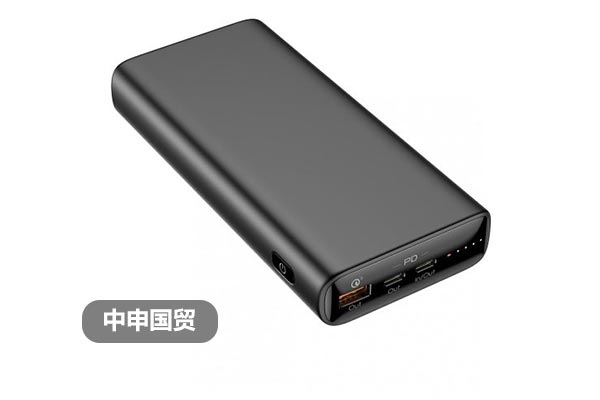
I.Fire - causing Factors of Lithium - battery Products
Lithium - battery products,such as power banks,are common dangerous goods in air - transported luggage,and fire problems occur frequently.
Internal factors: The electrode materials and electrolytes of lithium batteries are flammable.Heating can cause fires and generate gases,increasing the possibility of battery explosions.Defects in the manufacturing process may also lead to lithium - battery safety problems.
External factors: Overcharging,external short - circuit,violent impact,etc.can all cause lithium - battery self - ignition.
II.Classification of Lithium Batteries
Lithium batteries are mainly divided into two categories: lithium - metal batteries and lithium - ion batteries.
In the International Air Cargo Dangerous Goods Regulations,lithium batteries are divided into four UN numbers,and each UN number corresponds to a specific type of lithium battery.

Whether it is a lithium - metal battery or a lithium - ion battery,under normal use,it belongs to the category of dangerous goods and is a Class 9 dangerous good.
III.Packaging of Lithium - battery Products
The packaging of lithium - battery products is a matter of great concern in the lithium - battery transportation industry.The correct selection of packaging is particularly important.
Under normal use,the compliant packaging selection of lithium batteries (taking UN3480 lithium - ion cells/batteries as an example) at the international air - transportation stage should be in accordance with the requirements of the latest version of the Air Cargo Dangerous Goods Regulations IATA DGR (63rd edition).
Packaging requirements for UN3480 lithium-ion cells/batteries
Requirements for the use of lithium - battery packaging in the latest version of the Air Cargo Dangerous Goods Regulations IATA DGR (63rd edition)
| Product Type | Packaging Options (PI 965) |
|---|---|
| Lithium - ion Cells/Batteries (UN3480) | Rated Power: Cells > 20Wh / Batteries > 100Wh 1) Place the cells/batteries in a fully enclosed inner package,and then put them into an outer package: The overall package is a UN package that meets the packaging performance Class I. 2) Net weight of lithium batteries in each package: Not exceeding 35kg on cargo aircraft (transportation on passenger aircraft is prohibited); 3) Cells/batteries shall not be placed in the same outer package with dangerous goods classified as Class 1 (except 1.4S),Division 2.1,Class 3,Division 4.1 Division 5.1; 4) Approved by the authorities of the country of origin,batteries with a mass exceeding 12kg and having a solid outer shell can be placed in a common solid outer package or protective enclosure (such as a fully enclosed box or wooden crate) for transportation |
| Rated Power: Cells ≤ 20Wh / Batteries ≤ 100Wh 1) Place the cells/batteries in a fully enclosed inner package,and then place them in a solid rigid outer package 2) Each complete package must be able to withstand a 1.2 - meter drop test in any direction 3) Net weight of lithium batteries in each package: Not exceeding 10kg on cargo aircraft (transportation on passenger aircraft is prohibited); Cells/batteries shall not be placed in the same outer package with dangerous goods classified as Class 1 (except 1.4S),Division 2.1,Class 3,Division 4.1,Division 5.1 |
Notice: The packaging guidelines PI965 Section II for UN3480 lithium-ion cells/batteries expired on March 31,2022.Starting from April 1,2022,the exemption from hazardous material declaration requirements for meeting PI965 Section II packaging guidelines is no longer applicable.
Was this helpful? Give us a like!
Contact our experts for compliance audits, precise quotes, and one-stop customs support.
Recent Comments (0) 0
Leave a Reply