
Avoiding Pitfalls in Import Air Freight Agency Fees | 5 Verification Points
or complex compliance issues.
clearance and fund security.
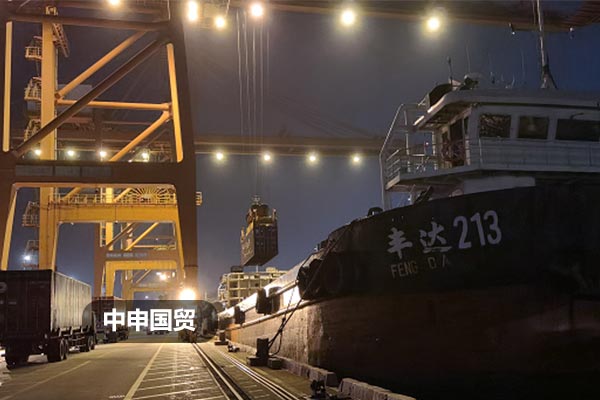
I thought we’d already agreed on itIs the agency service fee the final cost?Last month,when I was reviewing the performance of a client who specializes in precision instruments,I found that they had overpaid nearly 80,000 yuan in "hidden fees" last year.These fees were not tariffs or shipping costs,but rather hidden charges such as manifest entry fees,security upgrade fees,and volume weight fees incorrectly calculated by the agent.What’s worse,these fees were not clearly specified in the contract,leaving the client with no recourse but to swallow the loss.
The "invisible puzzle" of import air freight agency service fees: Four types of costs you might have overlooked
Many companies only recognize the service fees charged by air freight forwarders as "basic agency fees + customs clearance fees",but in reality,the service fees consist of more than 10 sub-items,among which the four categories are the most easily overlooked "hidden costs":
| Common Cognitive Biases | The actual cost structure | Proportion (taking 1,000 kg of goods as an example) |
|---|---|---|
| Service fee = basic agency fee + customs clearance fee | Basic agency fee + fuel surcharge (CAF) + security inspection fee (SEC) + manifest entry fee (AMS/ENS) + remote area surcharge (RDC) | The basic agency fee accounts for 40%,and the other five items account for 60% |
| The fuel surcharge is a fixed percentage | Due to fluctuations in international oil prices,airlines announce their fare adjustments on a monthly basis (for example,the average increase in fares in the first quarter of 2025 reached 8%). | It accounts for 15% to 25% of the service fee. |
| The volume weight is calculated according to the formula "length × width × height / 6000". | Some agents will use the old standard of “/5000”,or add an extra 10% as an “operating coefficient”. | Charge an extra 10%-15% fee |
| "Other expenses" are just a small amount of money | Including pallet fees,label fees,and customs bond fees (for US routes),the total can reach up to 20% of the base fee. | It’s easy to overlook,but the amount is not small |
3 Steps to Determine the Actual Service Fee: Standardized Verification from Quote to Settlement
Step 1: The quotation list needs to be "broken down to the smallest granularity". Output:
After receiving the quotation from the agent,It is necessary to require the splitting of all expense itemsIncluding but not limited to:
- Basicagencyfee(AgentFee):afixedfeecalculatedbasedonweightorinvoiceamount;
- FuelAdjustmentFactor(CAF):Definetheairline(e.g.Cathay,Emirates)andmonthlyrate;
- Securitycheckfee(SEC):Whetheritmeetstherequirementsofthedestinationairport(forexample,airportsintheEuropeanUnionrequirepassengerstopayanadditionalanti-terrorismsecuritycheckfee);
- Manifestentryfee(AMS/ENS):ForUSroutes,anAMSfee(aboutUS$25-35perbooking)isrequired;forEUroutes,anENSfee(about€15-25perbooking)isrequired;
- RemoteAreaSurcharge(RDC):Ifthedeliveryaddressisinaremotearea,thespecificfeeratemustbeclearlystated(forexample,UPS’sremoteareasurchargeis$3.5perkilogram).
Step 2: Ask the agent to provide the "basis for fee calculation". Output:
For floating expenses (such as fuel and volume weight),It is necessary to require the agent to provide written evidence:
- FuelSurcharge:Itisnecessarytoprovidetheairline’s"FuelSurchargeNotice"forthecurrentmonth(suchasDeltaAirLines’CAFadjustmentdocument);
- Volumeweight:Itisrequiredtocalculateaccordingto"length×width×height/6000"(internationalstandard).Iftheagentuses"/5000",theyneedtoprovideaclearexplanationandreducethebaserateaccordingly.
- Customsbondfee(forUSroutes):Ifthevalueofthegoodsexceeds$2,500,abondmustbepurchased,withthefeecalculatedat0.5%to1%ofthegoods’value.Theagentmustprovideaquotefromthebondcompany.
Step 3: Conduct a "Three-Check" during settlement Output:
After receiving the bill,It is necessary to compare the following three items:
- VerifyFeeItems:Checkconsistencywiththequote(nonew"otherfees");
- Checkthecalculationbasis:whetherthefuelcostisconsistentwiththeairline’sdocuments,andwhetherthevolumeandweightarecalculatedaccordingtotheagreedformula;
- Checktheamount:Arethereanycalculationerrors(forexample,thefuelcostfor1000kgis$1.5perkg,sothetotalcostshouldbe$1,500.Didyouaccidentallycalculateitas$1,600)?
Senior Forwarder’s "Bottom Drawer" Advice: 2 Hidden Skills for Fee Negotiation
1.It requires a "fixed + floating" pricing model.: The basic agency fee is fixed,and the floating costs (fuel,exchange rate) are calculated based on actual occurrences.A "floating cap" is also agreed upon (for example,if the fuel cost increase exceeds 10%,the agency will bear the additional cost).
2.Add the "Compensation Clause for Excessive Costs".: It is stipulated in the contract that if the actual cost exceeds 5% of the estimated price,the excess part shall be borne by the agent.This clause can effectively restrain the agent’s "unreasonable charging" behavior.
3 things you can do today: Quickly check your service fee bill
- Findtheairfreightagent’sbillsforthepastthreemonthsandcomparethedetailsinthequotationlisttoseeifthereareany"extracharges".
- Sendanemailtotheagent,requestingthemtoprovidetheairline’sdocumentregardingthemostrecentfuelsurcharge.
- Calculatethevolumeweightofthemostrecentshipmenttoseeifitwascalculatedaccordingtotheformula"length×width×height/6000".
Was this helpful? Give us a like!
Contact our experts for compliance audits, precise quotes, and one-stop customs support.
Recent Comments (0) 0
Leave a Reply