
Control Russia Export Costs: 5 Strategies for Machinery
or complex compliance issues.
clearance and fund security.
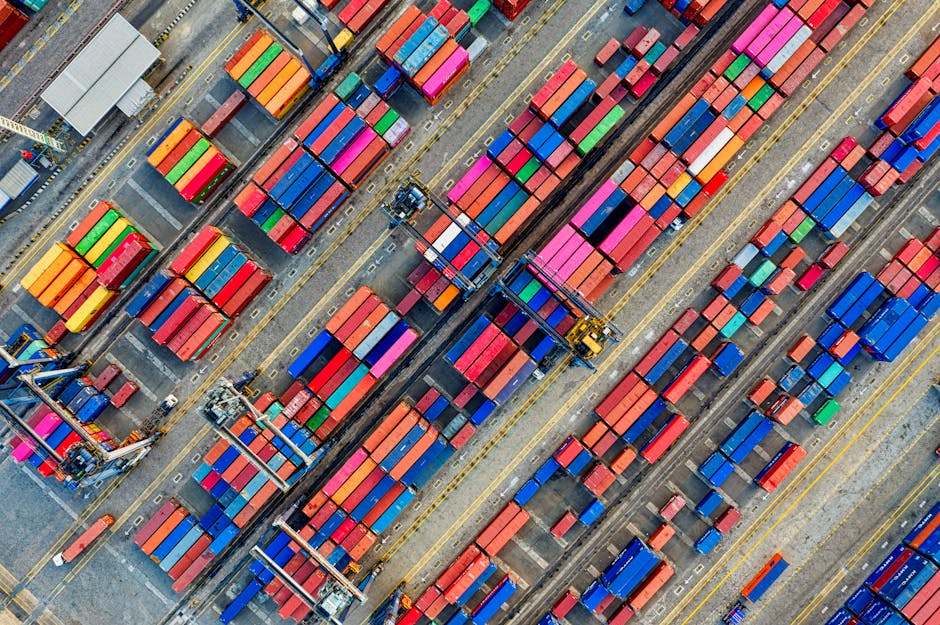
As China-Russia trade continues to heat up,machinery and equipment have become a popular export category.However,complex port regulations and stringent customs clearance requirements often lead to companies paying high port miscellaneous fees (THC,documentation fees,etc.) and demurrage & detention charges.Based on practical experience,this article summarizes five core strategies to help exporters effectively control costs.
Precise Control of Document Compliance to Avoid Document Blockage Risks
Key Issues: Russian Customs is far more sensitive to documents than other markets.A single incorrect commercial invoice or missing EAC certification can trigger inspection and detention.
Solution:
1.Commercial Invoice: Must include Russian product descriptions,accurate HS codes (recommended to cross-check with the Russian Customs database),itemized prices,and total price (must match the contract);
2.Certification documents: Mandatory provision of EAC certification (for machinery safety standards),(CO) and packing list (must indicate gross/net weight and marks);
3.Pre - declaration mechanism: Submit electronic customs declarations (DTD) through a Russian agent 72 hours in advance to shorten on-site review time.
Dual-Backup Logistics Plan to Address Port Congestion Emergencies
Data Support: In 2023,the average detention period at St.Petersburg Port reached 8 days,while detention fees at Vostochny Port increased by 15% due to railway connection issues.
Execution Points:
1.Space Lock + Flexible Clauses: Sign a space guarantee agreement with the shipping company and include a detention fee sharing clause in the contract;
2.Multi-Port Diversion Plan: Prioritize dedicated terminals with 24-hour operations (such as Novorossiysk CTF Terminal) and prepare Vladivostok as a backup port;
3.Winter Special Warning: From November to April,allow a 2-3 day buffer period for de-icing operations at Baltic Sea ports.
Three-Step Pre-Clearance Method for Customs Clearance,Speeding Up the Process by Over 50%
Typical Scenarios: Moscow Customs has a 40% dispute rate on HS codes for lifting machinery,requiring targeted preparation of technical documents.
Operation Process:
1.Pre-Classification Confirmation: Engage a Russian AEO-certified company to apply for an Advance Tariff Ruling from customs;
2.Pre - review of Documents: Upload drawings,technical parameter tables,and other supporting documents via the customs Red Channel electronic system;
3.Deposit Mechanism: For disputed goods,prepay a deposit (Pledge Account) to facilitate cargo release,followed by supplementary appeals.
Zero-Delay Warehouse and Distribution Solution Design
Cost comparison: Storage fees for goods detained for 3 days can reach $200-400 per container,while pre-booking bonded warehouses can save 60% of costs.
Implementation Strategy:
1.Maximize Free Demurrage Period: Select terminals offering 7-day free demurrage (such as Ust-Luga Port) and negotiate with shipping companies for extended free demurrage periods;
2.Bonded warehouse buffer: Establish temporary storage in the Kaliningrad Special Economic Zone to enjoy deferred tariff policies;
3.Truck appointment system: Lock resources 72 hours in advance through the RZD Logistics railway platformResources.
Localized Service Network Construction: The Key to Reducing Hidden Costs
Case evidence: A Jiangsu-based injection molding machine manufacturer reduced port demurrage expenses by 37% year-on-year through cooperation with a local Moscow customs clearance company.
Cooperation model recommendations:
1.Choosing an FCS Certification Agent: Prioritize partnerships with companies authorized by the Federal Customs Service of Russia (FTS);
2.Risk-sharing agreement: Require agents to compensate for demurrage fees caused by documentation errors (must be specified in the contract);
3.Digital monitoring: Access the agents port operating system (e.g.PortNet) to track container status in real-time.
Conclusion: The essence of avoiding port charges and demurrage lies in systematic risk control—establishing standardized processes for document compliance,logistics flexibility,customs clearance anticipation,warehouse coordination,and local collaboration.Exporters are advised to assign dedicated positions to monitor Russian customs policy updates (e.g.the recently implemented e-seal system) and conduct biannual end-to-end stress tests to achieve long-term cost optimization.
Was this helpful? Give us a like!
Contact our experts for compliance audits, precise quotes, and one-stop customs support.
Recent Comments (0) 0
Leave a Reply