
Customs Inspection Guide: Types, Triggers, & Best Practices
or complex compliance issues.
clearance and fund security.
Customs inspection is a common regulatory procedure in international trade,primarily aimed at ensuringthe legality,accuracy,and compliance of goods.Customs inspections effectively prevent smuggling,tax evasion,and non-compliant goods from entering the market,safeguarding national economic and social security.Understanding the methods and strategies for handling customs inspections is particularly important for export enterprises.
I.Main Methods of Customs Inspection
System Interception
Customs uses advanced computer systems to automate the review of declaration information.If the declared Chinese/English product names,HS codes,or declaration elements do not match the systems preset rules,the system will automatically intercept and flag the shipment for further manual inspection.This method primarily relies on data accuracy and system rule settings.
Manual Container Inspection
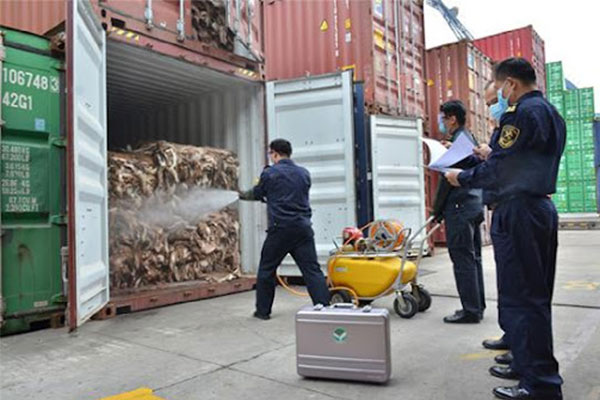
When the system flags suspicious goods,customs officers will conduct manual container inspections.They will physically examine the goods based on the declaration documents to verify the accuracy of the declared information.The main purpose of manual inspection is to confirm whether the actual goods match the declaration.
Review by Pre-Classification Agencies
Previously,pre-classification agencies existed to review goods classifications before export.These agencies helped enterprises confirm HS codes and related declaration elements,reducing inspection risks caused by classification errors.Although the role of these agencies has diminished,enterprises can still use third-party HS code classification companies to ensure declaration accuracy.
II.Triggers for Customs Inspection
Mismatch Between Chinese/English Product Names and HS Codes
This is one of the most common reasons for inspection.If the declared Chinese/English product names do not match the HS codes,the system will automatically intercept and trigger a manual inspection.Enterprises should ensure the accuracy of product names and HS codes during declaration.
Mismatch Between Declaration Elements and Product Names
Declaration elements refer to specifications,models,materials,uses,and other details of the goods.If these details do not match the product names,the system will also intercept the declaration.In such cases,enterprises should carefully verify declaration elements to ensure consistency with product names.
Conflicts in Declaration Information
If there are inconsistencies in the declaration information for the same product across different batches,it may draw customs attention.For example,significant variations in declaration elements for the same product across batches increase the likelihood of inspection.
Directives from Higher Customs Authorities
Sometimes,higher customs authorities issue directives to strictly inspect specific HS codes or goods.In such cases,even accurate declarations may be subject to inspection.
III.Strategies for Handling Customs Inspection
Verify Declaration Information in Advance
Before export,enterprises should communicate with customs brokers or third-party HS code classification companies to confirm the accuracy of declaration information,including Chinese/English product names,HS codes,and declaration elements.Ensuring all information matches the actual goods reduces inspection risks.
Choose Reputable Customs Brokers
Reputable customs brokers can provide professional advice to optimize declaration information and reduce inspection probabilities.For example,based on experience and actual conditions,they may suggest modifying certain declaration elements to meet customs requirements.
Maintain Compliance
Enterprises should ensure all export operations are legal and compliant,avoiding any misdeclaration,evasion of commodity inspection,or fraudulent tax refunds.Compliance not only reduces inspection risks but also builds trust with customs,minimizing penalties.
Adjust Declaration Information Promptly
If a product is frequently inspected,enterprises should analyze the reasons and adjust declaration information accordingly.For example,modifying product names,declaration elements,or HS codes to align with customs requirements.
Prepare Comprehensive Declaration Documents
Enterprises should prepare thorough documentation,including production records,inspection reports,and transaction contracts.Providing detailed documents during inspections helps customs verify information quickly,reducing inspection time.
Maintain Communication with Customs
Enterprises should maintain good communication with customs authorities to stay updated on the latest regulations and requirements.If issues arise during the declaration process,they should proactively contact customs to seek solutions.
Customs inspection is a crucial aspect of international trade,and enterprises should attach great importance to it and take effective measures to reduce inspection risks.By confirming declaration information in advance,selecting competent customs brokers,maintaining compliant operations,adjusting declaration information promptly,preparing thorough documentation,and maintaining communication with customs,enterprises can effectively handle customs inspections and ensure smooth export of goods.
Was this helpful? Give us a like!
Contact our experts for compliance audits, precise quotes, and one-stop customs support.
Recent Comments (0) 0
Leave a Reply