
Mastering German Auto Parts Import: Risks & Strategies
or complex compliance issues.
clearance and fund security.
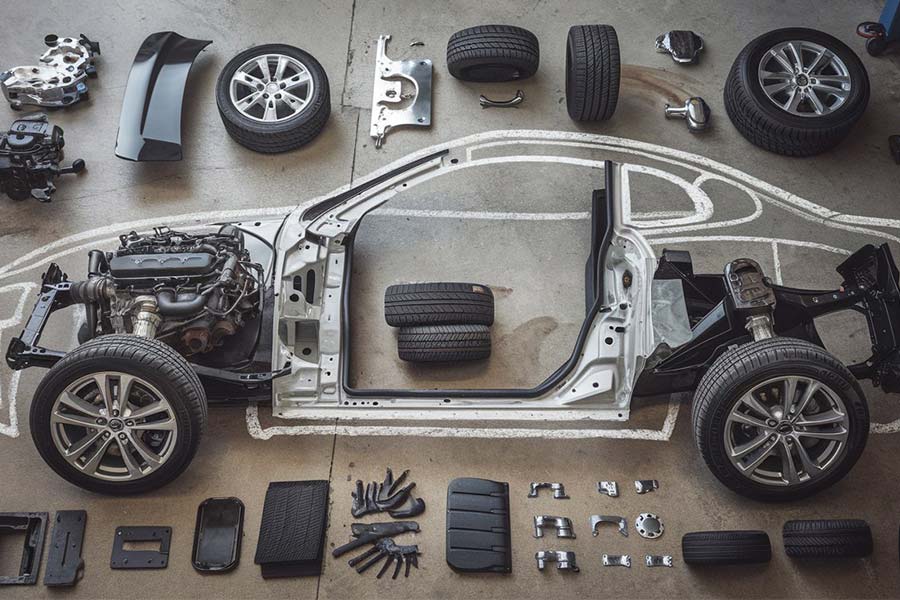
Germany,as a global benchmark in the automotive industry,is renowned for precision manufacturing,technological leadership,and stringent quality standards.For Chinas automotive aftermarket,OEM suppliers,and high-end maintenance enterprises,importing genuine German and OEM parts is a crucial choice for enhancing market competitiveness.As aprofessional agency with 20 years of industry experience,this article will deeply analyze the core processes,potential risks,and practical strategies for German auto parts imports,helping enterprises efficiently complete cross-border procurement.
I.Market Characteristics and Opportunities for German Auto Parts Imports Output:
1.Technical Barriers and Certification Thresholds
The German auto parts supply chain complies with mandatory certification systems such as EU ECE and ISO 16949.Core categories (e.g.engine components,electronic control systems) require TüV test reports or OEM authorization certificates.Importers must clarify applicable regulatory catalogs to avoid customs delays due to missing technical documents.
2.Supply Chain Tiering Characteristics
- Genuineparts(OEM):Mustbepurchasedthroughbrand-authorizedchannels,requiringverificationofsuppliersVDA6.3(GermanAutomotiveIndustryProcessStandard)qualifications.
- Independentbrandparts:SuchasBosch,ZF,andotherTier1suppliers,availablethroughdistributornetworks,withattentiontoregionaldistributionpolicies.
- Remanufacturedparts:Germanenvironmentalregulationsimposestrictrequirementsonremanufacturingprocesses;importsrequireDINCERTCOcertification.
3.Tariffs and Trade Agreement Dynamics
EU tariffs on Chinese auto parts generally range from 4%-10% (depending on HS codes),but some electromechanical products may face anti-dumping duties.Enterprises are advised to leverage RCEP rules of origin for cost optimization,such as tariff reductions through processing in Malaysia.
II.Key nodes analysis of complete import process Output:
Supplier Qualification Review (Core Risk Control)
- FourVerificationElements:
- Businessregistrationinformation(viaGermanChamberofCommerceIHKorCompanyRegister)
- Productionlicenses(e.g.KBAcertificationforemission-relatedcomponents)
- Qualitysystemcertificates(IATF16949astheautomotiveindustrygoldstandard)
- Pastexportrecords(requiringatleast3Chineseclientsbillsofladingandpaymentproofs)
Trade Terms and Logistics Solution Design
- IncotermsSelectionRecommendations:
- Smalltrialorders:PrioritizeDAP(DeliveredatPlace),withGermansuppliersbearingmainfreightandrisks.
- Long-termorders:AdoptFCA(FreeCarrieratGermanfactory)+self-ownedfreightforwardermodelforcostcontrolandlogisticstracking.
- Special Category Transport Requirements:
- Lithiumbatteryparts:RequireUN38.3testreportsandMSDSdocuments;prohibitedinfull(mustbepairedwithor)
- Precisioninstruments:Requiretemperature-controlledcontainersandshockproofpackaging,insuredwithAllRiskscoveragefortransportlosses.
Customs clearance compliance management
- KeyfocusareasofChinaCustoms:
- CertificateofOrigin(requiresEUR.1ordeclarationissuedbyGermanChamberofCommerceornotary)
- CertificateofConformity(COC,provingcomponentscomplywithChineseGBstandards)
- Environmentalcompliance(e.g.REACHSVHCtestreport,RoHS2.0certification)
- HS code classification dispute resolution:
Example: Automotive wiring harness with ECU (HS 8544.30 requires ECU function declaration),incorrect classification may lead to 30% deposit penalty.
III.Twenty years of practical experience: Five risk mitigation strategies Output:
1.Supply chain redundancy design
Establish 1 main supplier + 2 backup suppliers system to avoid supply disruption caused by German industrial strikes (e.g.IG Metall union incidents).
2.Preemptive quality dispute handling
Specify in contracts:
- SGSthird-partyinspectioncanbeinitiatedwithin15workingdaysafterarrival
- ReturnshippingcostsforqualityissuestobebornebyGermanparty
- DisputeresolutionsubjecttoSingaporeInternationalArbitrationCentre(SIAC)rules
3.Application of currency hedging tools
Adopt EUR lock-in + forward exchange settlement combination to lock in 80% payment costs during EUR fluctuation periods (e.g.ECB rate hike cycles).
4.Bonded warehouse distribution model
Utilize comprehensive bonded zone policies of batch release,centralized tax payment to store German components in Suzhou,Chongqing and other bonded warehouses,enabling flexible customs clearance based on end orders.
5.Digital traceability system
Require suppliers to embed RFID chips or QR codes to achieve end-to-end traceability from German factories to Chinese warehouses (reference Audi EPL system).
IV.Future Trends and Directions for Proxy Service Upgrades Output:
1.Surge in component imports
Growing demand for VW MEB platform and BMW i-series related components requires attention to EU Battery Regulations carbon footprint reporting requirements for Chinese importers.
2.German warehouse + China exhibition trade model
Leading agency service providers have established forward warehouses in Duisburg and Hamburg,supporting customers zero-inventory sample procurement and reducing delivery cycles to 7 days.
3.RegTech applications
Use AI systems to automatically capture EU and China customs regulation changes (e.g.EU CSRD reporting requirements) and push real-time compliance alerts.
Conclusion Output:
German auto parts import is not merely a trade activity,but a systematic engineering project involving technical standards,compliance systems and supply chain management.Choosing foreign trade agencies with localized German service capabilities and familiarity with Sino-European regulations will become enterprises core competitiveness for cost control and risk mitigation.In the next three years,as Chinas NEV exports deepen integration with Germanys traditional supply chains,the value of professional agency services will become more prominent.
(Note: Data and policies in this article are updated to Q3 2023.Please refer to latest regulations and contract terms for specific operations.)
Author’s Profile
Specialized in German industrial productsWith 20 years in the field,we have completed cross-border automotive parts projects exceeding 200 million euros.
Was this helpful? Give us a like!
Contact our experts for compliance audits, precise quotes, and one-stop customs support.
Recent Comments (0) 0
Leave a Reply