
Import Clearance Agency Procedures | Practical SOP to Avoid Inspection Risks
or complex compliance issues.
clearance and fund security.
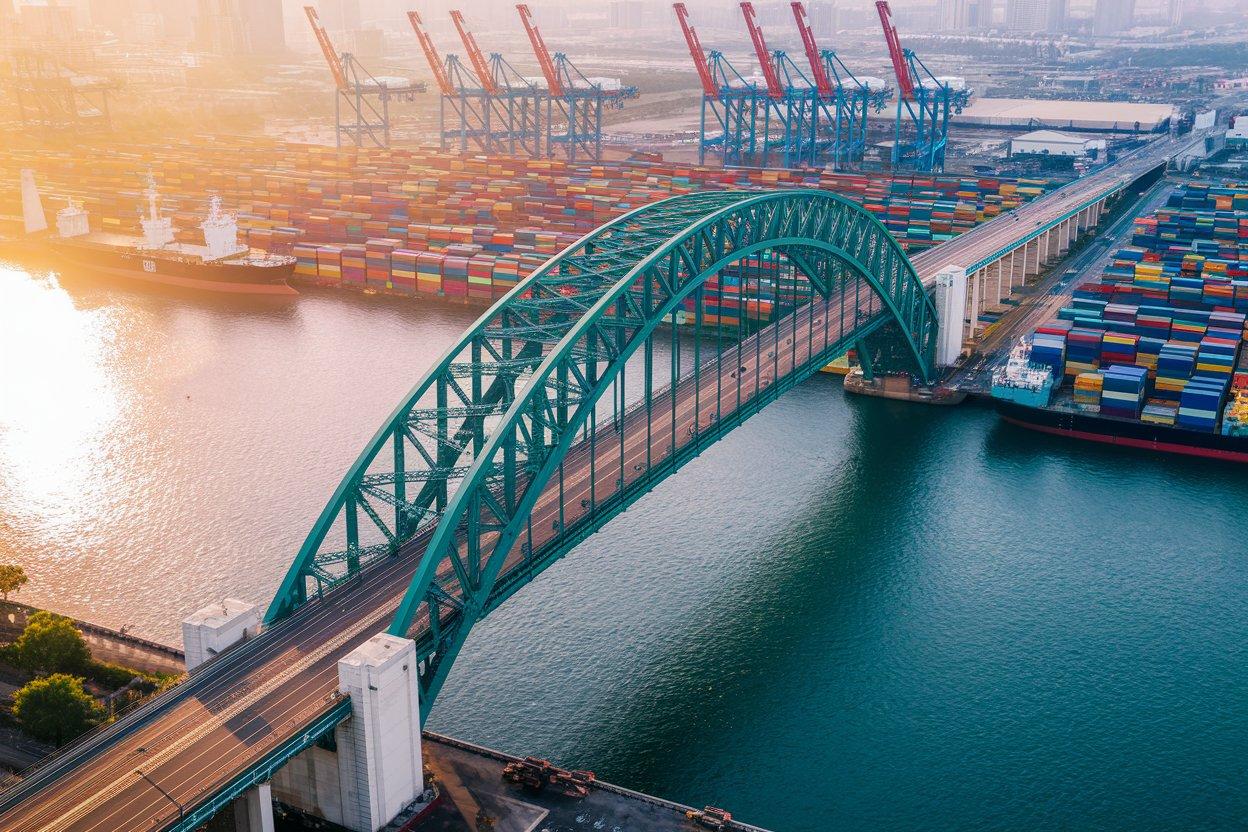
Many business owners have a misconception that as long as they pay enough money,they can hire a "all-powerful" customs declaration agency.This way,there’s absolutely no room for error.In reality,what customs inspectors focus on is "document-cargo consistency," rather than the strength of your agency relationship.If there are discrepancies in the source document data,even the most capable agent can only stare helplessly at the red "control order" in the customs system.Against the backdrop of the full-scale promotion of the "Golden Customs II" system,customs authorities have refined their document logic verification to the second decimal point.The traditional practice of "using connections to clear customs" has long since become obsolete.Only standardized operating procedures hold true in this context.
Core Game of Clearance Mode: Dual-header vs.Single-header Declaration
Before conducting a power of attorney operation,it is first necessary to clarify "who will bear legal responsibility." This is not just a matter of filling in a name,but directly determines the subsequent tax risks and foreign exchange write-off procedures.Many small and medium-sized enterprises,in order to save trouble,randomly choose a "single invoice",which results in unclear ownership of the goods and even triggers tax inspections.
| Declaration mode | Operational logic (operating unit/consumption and use unit) | Taxation and Risk Assumption | Suggested application scenarios |
|---|---|---|---|
| Double header declaration | Business unit: Agency company Consumption and use unit: actual recipient (your company) | Your company undertakesThe customs has identified your company as the actual owner of the goods,and the value-added tax invoices will be issued by the customs to your company,which can be normally deducted. | RecommendedThe vast majority of general trade imports,especially for enterprises that need to offset their input tax with output tax. |
| Single invoice declaration | Business unit: Agency company Consumption and usage unit: Agency company | Agent assumesThe customs authority identifies the agent as the consignor,and the value-added tax invoice is issued to the agent.The agent needs to issue a special value-added tax invoice to your company (involving secondary invoicing). | Agency import business,or your company has noFor now,let’s just focus on the scenarios where there’s no need to deduct input tax. |
| Self-declaration | Operating unit: Your company Consumption and usage unit: Your company | Your company undertakesAll procedures are handled by yourself,with risks controlled by you,and there are no agency fees involved. | Large enterprises,which have professional customs declaration teams and are certified as AEO enterprises with a high credit rating. |
Standardized import customs clearance SOP: from the notification of arrival to the release of goods
The following process is based on the standard operating procedures of the "double header" model,which is currently the most reliable operation path in B2B trade.Please ensure that your agent strictly follows the feedback at this node.
Step 1: Pre-categorization and document review (3-5 days before the ship arrives at the port) Output:
Don’t wait until the ship arrives to look for the HS code.Prepare it in advance.Contract,invoice,packing list,bill of ladingSend the draft to the agent for pre-review.
- Keyactions:Verifywhetherallthe"declarationelements"arecomplete.Forexample,forfabrics,youneedtodeclare"weavingprocess,width,andcompositionratio",etc.Missinganyoftheseitemswillresultintherejectionofthedeclaration.
- Riskpoints:Brandauthorization.Ifthegoodsbearalogo(suchasNikeorApple),itisnecessarytoprovidethecorrespondingauthorizationdocuments.BrandAuthorizationLetterOtherwise,there’sahighchancethatthegoodswillbeinspectedandseized.
Step 2: Change the bill of lading and make the declaration (after the ship arrives at the port) Output:
The agent goes to the shipping agent with the bill of lading to obtain the delivery order (D/O) and sends the electronic data to the customs system.
- SingleWindow:Atpresent,alldeclarationsmustbesubmittedthroughthe"InternationalTradeSingleWindow".
- Reviewingdocumentsatasteadypace:Generally,thecustomscomputerreviewprocess(H2010system)onlytakesafewminutes.Ifit’sa"low-riskfastrelease",youcanproceeddirectlytothetaxpaymentstep;ifit’sa"manualreview",youneedtowaitforthecustomsofficertomanuallyreviewthedocuments(duringthistime,youneedtokeepyourphonelineopen).
Step 3: Pay taxes and undergo inspection Output:
After receiving the tax bill,please make sure to pay the tax within the specified timeframe.Within 15 daysYou need to complete the tax payment (usually the next day),otherwise,you will be subject to a late payment penalty.
- Inspectioninstructions:Ifyoureceiveaninspectioninstruction,theagentneedstocooperatewiththecustomstotransportthegoodstotheinspectionsite.
- Inspectionresults:
- Document-GoodsConsistency:Thecustomsofficersignedandclearedthegoodsforrelease.
- Goods-documentdiscrepancies:TheywillbedealtwithbytheCustomsAnti-SmugglingBureau,orhavetheirdeclarationsmodifiedorbefined(thisistheworst-casescenario).
Step 4: Pick up the goods and file the documents Output:
After the customs clearance,pick up the goods and transport them to the factory.Remember to be careful about this.The bottom copy of the customs declaration formIt is a document for subsequent tax deduction and foreign exchange cancellation,and must be archived and kept for at least three years.
Expert Insight: The Overlooked "Price Questioning" Unspoken Rules
As a veteran in this industry,I’ve seen too many cases where transactions got stuck due to issues with the "transaction price".Many purchasing managers try to save taxes,or foreign suppliers aim to reduce their VAT payments,by underreporting the value of the goods on invoices.Not only does the customs authority have an internal risk price database,but they’ve now also integrated big data price comparison tools into their system.
Here is oneNon-insiders don’t know about itdetails:RoyaltiesIf the equipment you import requires subsequent payments of patent fees or technology fees to foreign parties,these costs must be included in the customs value and declared to the customs.Many companies consider this as a "service fee" and believe it doesn’t require customs duties,which is a typical violation of regulations.Currently,customs inspections have extended beyond simply checking the price of goods to include the retroactive collection of "royalty payments".Once a 10-year back-check is initiated,the fines typically amount to 3-5 times the tax amount.If you have such hidden payments,it’s essential to voluntarily disclose them during the declaration process and take advantage of the "self-declaration and self-payment" policy to strive for lenient regulatory treatment and compliance.
Take action immediately: optimize your customs clearance process
After reading this article,don’t just bookmark it.Please implement the following three points this afternoon:
- Reviewtheagencyagreement:Checkyourcurrentcustomsdeclarationentrustmentagreement:isit"Dual-header"or"Single-header"?Ifit’ssingle-headerandyouneedtodeducttaxes,contacttheagenttomodifyitimmediately.
- Establishalistofdeclarationelements:AskyourproductmanagerorR&Dteamtopreparethe"DeclarationElementsForm"forthecompany’stop10importedproducts.Don’tkeepaskingsuppliers,"Isthisfabricknittedorwoven?"everytime.
- Reviewandchecktherecords:Retrievetheinspectionrecordsofthepastyear.Iftheinspectionrateexceeds5%,itindicatesthattherearesystemicrisksinthestandardizationofyourdocumentsortheclassificationofHScodes,andyouneedtoimmediatelyreplaceyourprofessionalcustomsdeclarationagencyorconductinternalcompliancerectification.
Was this helpful? Give us a like!
Contact our experts for compliance audits, precise quotes, and one-stop customs support.
Recent Comments (0) 0
Leave a Reply