
Import Customs Clearance Agency Planning: A Guide to Evolving from "Passive Operations" to "Proactive Risk Management"
or complex compliance issues.
clearance and fund security.
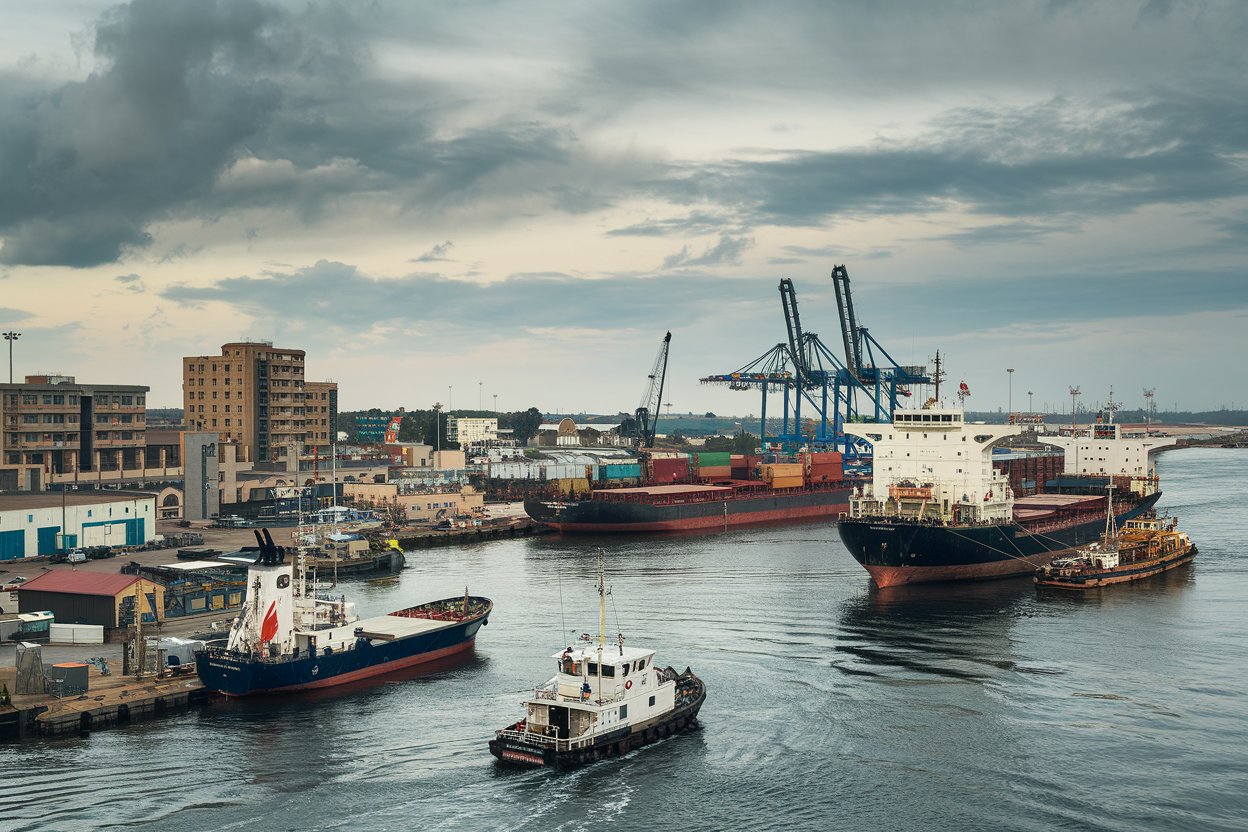
Many business owners believe that finding aAn agent is just responsible for running errands and handing over documents when the goods arrive at the port.If you think so,you’re actually giving up control of the supply chain.A truly "meticulous" agent’s planning should not start when the ship docks,but rather at the moment the goods leave the factory.This way,you can avoid the risks of inspection,rejection of documents,and additional taxes.In today’s increasingly stringent customs big data risk control environment,The outcome of customs clearance is often predetermined before the goods leave the port.
Why can "meticulous" planning determine the outcome of success or failure?
Import customs clearance is not just about paying taxes and obtaining release—it’s a systematic game involving HS code classification,ensuring price logic is consistent,and meeting regulatory requirements.An unplanned import process often results in goods being stranded at the port,incurring high demurrage fees,or even facing administrative penalties from customs due to inaccurate declarations.A meticulous agent’s planning strategy focuses on proactively managing risks.Through pre-audits and simulated declarations,uncertainties are nipped in the bud before they become actual problems.
| Comparison dimension | Traditional "errand-running" type agents | A meticulous "planning-oriented" agent |
|---|---|---|
| The timing of intervention | After the goods arrive at the port,we will start the operation only after confirming the second-leg bill of lading | They get involved either before the signing of the trade contract or during the production of the goods |
| HS Code Classification | Directly use the code provided by the factory without reviewing it again | Conduct pre-classification based on the Chinese Customs Tariff and the Classification Decision,and confirm the supervision conditions |
| Price Declaration | Just declare the amount on the invoice without worrying about the logical risks | Compare the historical customs clearance data of the same brand and model to assess the risk of price disputes |
| Documentation Processing | We only notified the client to make amendments after discovering that the documents didn’t match the requirements | Prepare the "Document Review Checklist" in advance and require clients to make corrections before shipping the goods |
| Exception handling | When encountering an inspection that requires passive waiting,assist in communication | Anticipate and deploy surveillance measures,prepare the situation statement in advance,and reduce the inspection rate |
The four-step practical SOP for import customs clearance planning
To achieve the transition from passive order acceptance to proactive planning,procurement and logistics managers must require agents to implement the following standard operating procedures (SOPs).This is not just the agents’ responsibility,but also an extension of the enterprise’s internal risk control measures.
Step 1: Pre-classification of HS codes and confirmation of regulatory requirements Output:
This is the cornerstone of all planning.An incorrect HS code can lead to tax evasion (suspected tax evasion) or overpayment of taxes (waste of costs),and even result in the goods being unable to be imported due to licensing issues.
- Providesamplesorparameters:Providetheagentwithadetailedproductmanual,ingredientlist,andworkingprinciplediagram.
- Obtainpre-categorizationopinions:Itisrequiredthattheagentprovideawrittenclassificationproposalandspecifythecorrespondingcodeforeachitem.supervisionconditions(e.g.A:InboundGoodsClearanceForm,3:CCCCertification).
- CertificateSelf-check:Verifywhetherthefactoryhasthecorrespondingregulatorycertificates(suchasenergyefficiencylabelsandmechanicalandelectricalcertificates).Ifnot,itisnecessarytoimmediatelyfindanalternativesolutionormodifythetradeterms.
Step 2: "Translation" and verification of declaration elements Output:
The "declaration elements" in the customs system are often more complex than those on commercial invoices.Many companies simply submit the Description from the invoice to the customs,only to have the declaration rejected due to incomplete elements.
- Breakdownofelements:Confirmthemandatoryitemssuchasbrand,model,origin,usage,principle,andingredientratio,etc.
- DocumentConsistency:Ensurethatthecontract,invoice,packinglist,andbillofladingareallaccurateandconsistent.Weight,numberofitems,andproductnameIt’scompletelyconsistent,accuratedowntothepunctuationmarks.
- LogicalConsistency:Bevigilantagainsttheriskof"under-declaringprices".Ifthedeclaredpriceislowerthantheinternationalmarketpriceorthepriceinthecustomsriskdatabase,youmustprepareinadvancePriceExplanationLetterSupportingmaterialssuchaspaymentvouchersandinsurancepolicies.
Step 3: Advance screening of regulatory conditions related to certifications Output:
Many old mechanical and electrical equipment or chemical products involve legal inspection and appraisal.
- Applicationfor"DestinationInspection":Forlarge-scaleproductionlines,itismorecost-effectivetoconductunboxinginspectionsatthefactoryratherthanattheport,whichhelpssaveonliftingandtransportationcosts.
- FumigationandPackaging:Ifit’swoodenpackaging,youmustensurethatithasanIPPCmarktoavoidthegoodsbeingdestroyeduponarrivalattheport.
Step 4: Simulate the logistics route and delivery time Output:
- Portselection:Avoidportswithseverecongestion,orchooseportswithspecificrouteadvantages(suchastheinspectionratedifferencesbetweenShanghaiPortandNingboPort).
- HolidayContingencyPlan:WhentheNationalDayandSpringFestivalholidaysarrive,youneedtocalculatethe"closingtime"inadvancetoensurethatthegoodscanbeclearedthroughcustomsbeforetheholidaysorarrangedforbondedwarehousestorageaftertheholidays.
Expert Insight: The Overlooked "Price Questioning Logic"
As a consultant who has been working in this industry for 15 years,I want to tell you a public secret: the customs valuation center has been fully operationalBig data risk parametersMany companies think that as long as the invoice and contract amounts match,it’s enough.But this is a big mistake.
The customs system maintains a vast "price risk database" internally.If your import unit price is significantly lower than the normal export price of the product in the country of origin,or lower than the recent average import price of similar enterprises,the system will automatically trigger an alert.Price inquiry (price negotiation).
A meticulous customs broker will conduct a "stress test" using internal data channels before filing a declaration.If any abnormal prices are detected,we will advise clients to either provide a "Relationship-Based Pricing Statement" or a "Used Equipment Depreciation Report",or adjust the declared price within a reasonable range.It’s not advisable to challenge the customs’ big data algorithms,as this will only lead to lengthy inspections and port detention fees.
Act now: You can conduct a self-inspection of customs clearance this afternoon
Don’t wait until the next batch of goods has already been loaded onto the ship before you remember to check them.Please immediately carry out the following actions:
- CheckthemostrecentoneSingle:Takeoutthelastcustomsdeclarationformandcheckifthe"DeclarationElements"columniscomplete.Aretherevaguephraseslike"seeattached"?
- EstablishCoreDocumentTemplates:Incollaborationwithyourlegalandfinancedepartments,developasetofstandardtemplatesfor"CommercialInvoices"and"PackingLists",andmandatethatforeignsuppliersprovidethesedocumentsinthisformat,eliminatinganyunauthorizedmodifications.
- InterviewCurrentAgents:Callyourcustomsclearanceagentandaskthemaquestion:"Haveyoueverencounteredcustomsinspectionsforproductslikeours?Whatarethemainitemsinspected?Whatpreventivemeasuresdoyouhaveinplace?"Iftheycan’tanswerthesequestions,considerswitchingtoanotheragent.
Was this helpful? Give us a like!
Contact our experts for compliance audits, precise quotes, and one-stop customs support.
Recent Comments (0) 0
Leave a Reply