
Mitigate Dual Customs Clearance Risks for Export Success
or complex compliance issues.
clearance and fund security.
In export business,"door-to-door clearance" may sound appealing,but upon closer examination,you might find it’s not exactly a "calm sea." When problems arise,are you ready to face the challenges?
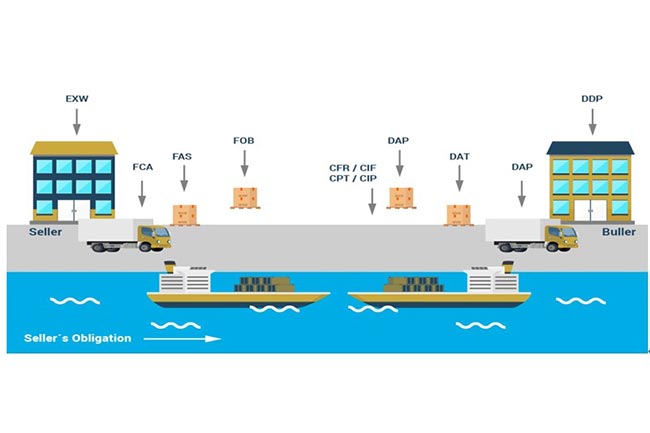
Risks and charm of double - clearance door - to - door
"Door-to-door clearance" seems like a worry-free solution for many export enterprises: simply sign a contract with a freight forwarder and wait for the goods to arrive.However,in reality,this model conceals numerous potential risks.Why is this model so popular,yet fraught with so many risks?
Common risk factors
"Door-to-door DDP" (Delivered Duty Paid),as one of the products promoted by many freight forwarding companies,offers convenience to shippers and extremely high profits to forwarders.However,such a model that combines both convenience and high profits inevitably comes with significant risks.Common risks include multiple handovers by forwarders,cargo inspections,low-cost services,and potential fraudulent activities.
a.Multiple transfers by the freight forwarder,unclear cargo status
Due to the characteristics of the double - clearance door - to - door mode,the goods may pass through the hands of multiple freight forwarders.This multi - transfer mode makes the status of the goods vague and uncontrollable.When problems occur to the goods,such as delay or loss,it is difficult for the consignor to determine the responsible party.In addition,since the freight forwarder may refuse to provide transportation and customs declaration documents,the consignor will face great difficulties in tracking the cargo status.
b.Risks of consolidated container transportation
Many goods shipped under the DDP (Delivered Duty Paid) door-to-door model are exported through consolidated container transportation.This means multiple shipments may be packed in the same container.If one batch of goods is inspected,all goods in the entire container could be affected,even if the other shipments are fully compliant.This "collective punishment" risk may expose cargo owners to significant financial losses.
c.Low - price services may hide traps
Some small freight forwarding companies may adopt a low - price strategy to attract customers.However,low prices may hide greater risks.Once the freight forwarder receives the goods and freight,it may disappear,resulting in the consignor being unable to track the cargo status or even losing the goods.In addition,since the goods in the double - clearance door - to - door mode are often more sensitive,the freight forwarder in this case may be more daring and unscrupulous.
d.Lack of effective legal protection
Due to the particularity of the double - clearance door - to - door mode,the legal relationship between the consignor and the freight forwarder may become more vague and complex.In case of disputes,due to the lack of clear contract terms and effective documentary evidence,it may be difficult for the consignor to claim their rights.This makes it a huge obstacle for the consignor to seek reasonable compensation.
Primary steps after problems occur
When adopting the "Double Clearance to Door" mode for freight transportation,if issues such as delays,loss,or damage to the goods arise,the cargo owner should promptly take a series of actions to ensure their rights and interests are protected.Below are the steps the cargo owner should prioritize after encountering problems:
a.Confirm the cargo status as soon as possible
First of all,the consignor must quickly understand the current status of the goods.This includes communicating with the freight forwarder to obtain the latest cargo information,or querying the location and status of the goods through other means such as the port or carriers website.For goods that have been lost or damaged,the consignor should collect relevant evidence in a timely manner,such as photos,eyewitnesses,etc.
b.Collect and preserve all relevant documents
In order to protect their rights,the consignor needs to preserve all documents and evidence related to the goods transportation.This includes the contract with the freight forwarder,the goods transportation and customs declaration documents,the value certificate of the goods,and any communication records during the goods transportation process.These documents and evidence will play a key role in possible subsequent legal disputes.
c.Communicate with the freight forwarder
After confirming the goods problem,the consignor should communicate with the freight forwarder as soon as possible.First of all,clarify the position and attitude of the freight forwarder towards this problem,and find out whether they are willing to take responsibility.At the same time,you can also understand the solutions proposed by the freight forwarder to see if they are in line with the interests of the consignor.
d.Assess the losses
Determining the actual losses of the goods is very important.This includes the value of the goods,additional costs caused by delay or loss,and other potential losses.This information will provide a basis for the consignor in compensation negotiations with the freight forwarder or other parties.
e.Consider legal channels
If the communication with the freight forwarder does not reach a satisfactory solution,the consignor should consider seeking legal channels to protect their rights.This may involve suing in court or seeking other dispute resolution mechanisms,such as mediation or arbitration.
f.Prevent future risks
While solving the current problem,the consignor should also learn lessons from it and consider how to prevent similar risks in the future.This may include cooperating with more reputable freight forwarders,adding more specific terms in the contract to protect the rights of the consignor,or considering other safer ways of goods transportation.
How to prevent risks
Although risks cannot be completely avoided,there are some key measures that can help you reduce potential problems.Choosing a reputable freight forwarder,clearly stipulating liability for compensation in the contract,regularly following up on the cargo status and retaining all relevant records are all important steps to ensure the safe arrival of goods at the destination.
The double - clearance door - to - door does provide convenience for export enterprises,but it also brings potential risks.Only by fully understanding these risks and taking appropriate preventive measures can export enterprises ensure the safe and smooth arrival of goods at the destination.
Was this helpful? Give us a like!
Contact our experts for compliance audits, precise quotes, and one-stop customs support.
Recent Comments (0) 0
Leave a Reply