
Import Goods Tax Valuation Demystified: Insights from a Palm Liquid Oil Case
or complex compliance issues.
clearance and fund security.
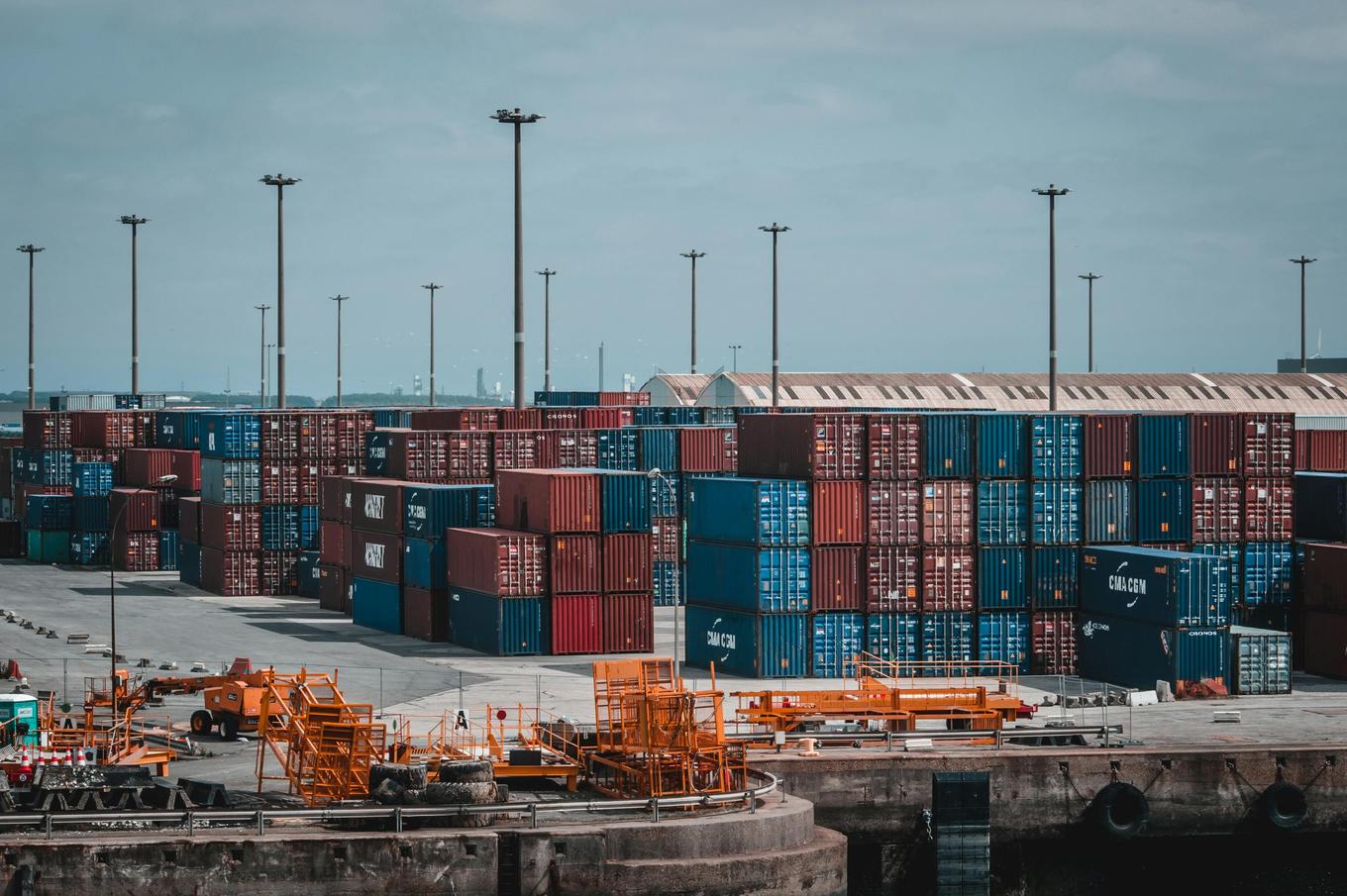
Today I’d like to chat with you about the topic of the dutiable value of imported goods.To be honest,it sounds pretty technical,but in real life plenty of companies have wrestled with it—especially when declaring prices and accidentally stepping on a landmine.I recently came across a case about importing palm olein that felt pretty representative,so I’ll use it to peel back the layers and help you dodge the pitfalls.
Case Background: A Small Price Difference Triggers a Tax-Recovery Storm
Here’s the story: A company imported two shipments of palm olein.When customs reviewed the declarations,they noticed the declared price was noticeably lower than that of the same-specification products imported by other firms during the same period.Pulling up the documents,they saw the contract clearly stated CNF USD 1,000/mt,yet the declaration read CNF USD 995/mt—a gap of USD 5/mt.The company explained that a “l(fā)ate-shipment penalty” applied: the penalty rate was 0.5 %,so USD 5/mt was deducted,and the amount actually paid to the foreign supplier was USD 995/mt; therefore they declared the sum actually paid.In the end,customs,in accordance with the Customs DeterminationThe Measures for the Taxable Price of Goods (General Administration of Customs Order No.213,as amended by Order No.273) stipulate that the tax is to be made up by directly valuing the amount before the deduction.Once this happens,companies will probably scratch their heads: why can’t the deduction be subtracted?Isn’t that the real payment?
How is the taxable price determined?Don’t just look at the actual payment.
Actually,the taxable price of imported goods isn’t simply whatever you paid.It’s built on the transaction value,plus the freight,related charges,and insurance incurred before the goods are unloaded at the first point of entry into China.“Transaction value” means the total amount the buyer actually paid or will pay the seller for delivery to a Chinese purchaser,covering both direct and indirect payments,and it must be adjusted under the relevant laws.In short,Customs looks at the substance of the whole deal; you can’t just shave the price because the invoice shows a discount.It’s like getting a markdown at the store—you still pay tax on the original price.Customs’ logic is to keep things fair and stop under-invoicing to dodge duty.
Which transportation costs must be included?All three conditions are indispensable.
Let’s talk about transport charges next—they’re the heavyweight item in the dutiable value.Which ones must be included?Per Article 35 of the Measures,you count whatever the buyer actually pays or is bound to pay.If that figure can’t be pinned down,Customs will plug in the normal transport cost for the same period.Three boxes have to be ticked: (1) the charge must relate to transport; (2) it must be incurred before the goods are unloaded inside China; and (3) the buyer must actually foot the bill.Examples?Bunker adjustment surcharges,pilotage,towage,mooring/unmooring dues,demurrage that accrues before unloading,even storage en route—if they meet the tests,they go straight into the dutiable value.Why?Because they are,in essence,unavoidable costs of getting the goods to the frontier; leave them out and you’ve under-declared the cargo’s worth.
Which transportation expenses are deductible?Seize these opportunities
Of course,not every freight charge has to be stuffed in.Some are deductible—for instance,if the buyer temporarily warehouses the goods at the export location for operational convenience,that warehousing fee has nothing to do with the transport leg and doesn’t need to be included.AlsoThe cost of return transport or inland waterway transport,if listed separately,or if you can allocate it according to objective criteria and provide supporting evidence,may also be excluded.Among these,the return cost of the China-Europe Railway Express refers to the transport charges incurred after the imported goods are unloaded during the return leg of the containerized rail intermodal services operating between China and Europe or Belt and Road countries; inland waterway transport refers toThe cost of continuing to transport the goods by water after they arrive at the port.These deduction opportunities are quite practical; companies should pay close attention to contracts and documents and plan ahead.
Can a deduction be made for delayed shipment?In essence,it is compensation for breach of contract.
Now back to that deduction issue: can the demurrage deduction for delayed shipment actually be reduced?This is a common clause in bulk-commodity trades; the contract spells out exactly how late vessel dates are penalized and how the penalty is withheld.In essence,it is damages for the seller’s breach—compensation paid to the buyer because the goods were not loaded on time.When the amount is deducted on the invoice,it looks as though the price has dropped,but customs does not see it that way.It is neither an adjustment to the transaction price nor a transport-related charge,so it cannot be excluded from the dutiable value.In the case of that company,the intention was to declare the amount actually paid,but it overlooked this essential point and ended up with a post-clearance duty bill.Put bluntly,when customs examines the documents it scrutinizes the trade term,the price clause,the shipment clause,and every line on the invoice; it will not allow a reduction without close scrutiny.
Case Takeaway: Strengthen Compliance,Proactively Disclose to Mitigate Risk
What’s the takeaway from this case?If a sea-freight surcharge is transport-related and incurred before unloading,it must be included in the dutiable value.Some charges have long settlement cycles and pass through many hands,especially when a freight forwarder is involved,so they’re easy to miss.Customs reviews all trade documents from every angle,right down to the line items for penalties.Companies therefore need to strengthen day-to-day compliance; for taxable costs that are settled later,they can make a timely supplementary declaration through proactive disclosure.Don’t wait until Customs comes knocking—by then you’ll be paying the duty plus a fine,and the loss outweighs any gain.
All in all,the dutiable value of imports can be as complicated as you make it—or as straightforward as you let it be.The trick is to grasp the rules,scrutinize every document,and consult a pro ahead of time.If you ever run into a similar situation,don’t panic; feel free to share your experience and let’s talk it through together!
Was this helpful? Give us a like!
Contact our experts for compliance audits, precise quotes, and one-stop customs support.
Recent Comments (0) 0
Leave a Reply