
Air Freight Cost Calculation: A Complete Guide
or complex compliance issues.
clearance and fund security.
withUnlike land transportation,air transportation is carried out by aircraft or other means.Since the purchase,operation,and maintenance costs of aircraft are much higher than those of cars,air transportation is more expensive than other transportation methods but is faster and more convenient.So,how to calculate the cost of air transportation?How to calculate the air freight price
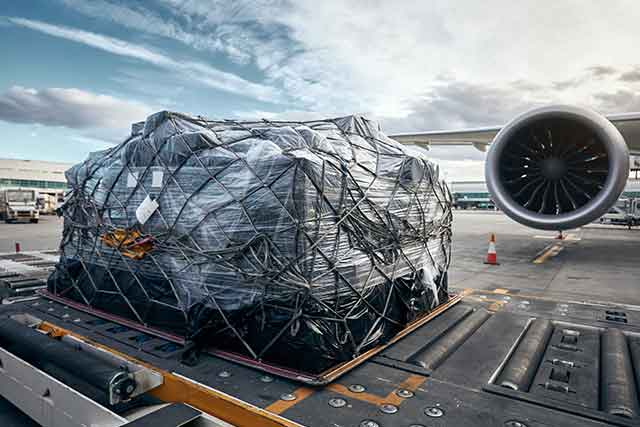
If an airline is chosen,the air transportation costs mainly include freight and miscellaneous fees.Usually,there are five weight - based pricing levels: above 45 kg,100 kg,300 kg,500 kg,and 1000 kg.If there is no corresponding freight level,the airline will calculate the air freight price according to the TACT price.In addition to weight,there are also volume requirements.Light and large goods are calculated by volume.Various fees mainly include warehousing fees,fuel surcharges,various cargo insurances,and transshipment fees.Therefore,different air freight services at Shanghai International Airport offer different air transportation quotes for the same route,the same goods,and different airlines.
Domestic heavy goods: Heavy goods refer to goods with a weight of more than 1 kg per 6000 cubic centimeters or more than 166.67 kg per 1CBM (cubic meter).Internationally: Goods with a weight of more than 1 kg per 166 cubic centimeters or more than 1 kg per 166 cubic inches.The chargeable weight of heavy goods is their actual weight (gross weight).The gross weight of goods is in kilograms,and the minimum charging unit is 0.5 kg or 1 pound (determined by each airline).When the weight is less than 0.5 kg,it is calculated as 0.5 kg; when the minimum unit is 1 kg,if it is less than 1 kg,it is calculated as 1 kg.
Lightweight goods (also known as foam goods,commonly referred to as light goods) A: Actual weight B: Volume weight.If A > B,it is a heavy good,and vice versa.Domestically: Lightweight goods refer to goods with a weight of less than 1 kg per 6000 cubic inches or less than 166.67 kg per 1CBM (cubic meter).Internationally: Goods with a weight of less than 1 kg per 366 cubic inches or less than 1 pound per 166 cubic inches.Lightweight goods are charged according to their dimensional weight,and the calculation method is as follows: Measure the longest,widest,and highest parts of the goods regardless of their geometric shape,in centimeters,meters,or inches.Volume weight (kg) = length (cm) × width (cm) × height (cm) ÷ 6000.= cargo volume (cubic meters) × 167 kg.= cargo volume (cubic inches) ÷ 366.
Bulky cargo (also known as foam cargo,commonly referred to as lightweight cargo) A: Actual weight B: Volumetric weight.If A > B,it is heavy cargo,and vice versa.Domestic: Lightweight cargo refers to goods with a volume of 000 cubic inches and a weight of less than 1 kg,or goods with a weight of less than 166.67 kg per CBM (cubic meter).International: Goods weighing less than 1 kg per 366 cubic inches or less than 1 pound per 166 cubic inches.Lightweight cargo is charged based on its dimensional weight,calculated as follows: Measure the longest,widest,and highest parts of the cargo regardless of its geometric shape,in centimeters,meters,or inches.Volumetric weight (kg) = Length (cm) × Width (cm) × Height (cm) ÷ 6000 = Cargo volume (cubic meters) × 167 kg = Cargo volume (cubic inches) ÷ 366
Here is the information regarding "Zhongshen International Trade.
Was this helpful? Give us a like!
Contact our experts for compliance audits, precise quotes, and one-stop customs support.
Recent Comments (0) 0
Leave a Reply