
Importing Kitchenware from Japan, a Complete Analysis of the Ins and Outs
or complex compliance issues.
clearance and fund security.
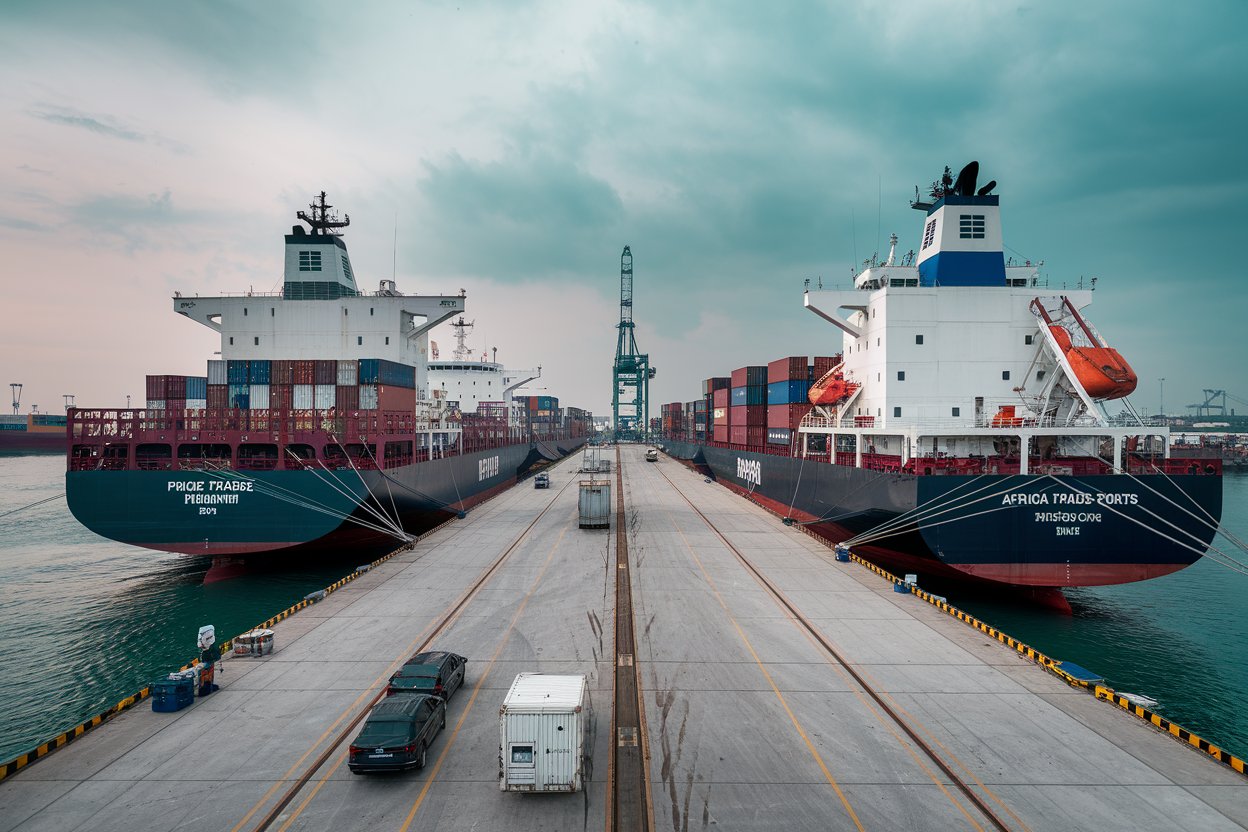
Importing Japanese Kitchenware: Embarking on a New Trade Journey
In today’s globalized business environment,importing kitchenware from Japan holds great business opportunities.Whether it’s their exquisite craftsmanship,innovative designs,or good quality reputation,they attract the attention of many merchants.However,the import process is not always smooth,involving document handling,logistics arrangements,market regulations,and among other aspects.Below is a comprehensive analysis for you.
Professional document processing and logistics arrangement
- DocumentationProcessing
When importing kitchenware from Japan,the accuracy and timely processing of documents are crucial.First is the commercial invoice,which details key information such as the description,quantity,and value of the goods,and is an important basis for customs taxation.The invoice must clearly state detailed parameters such as the brand,model,and material of the product to ensure it matches the actual goods.
The packing list is also indispensable,as it clearly states the specific contents of the goods in each package,facilitating customs inspection and inventory during the logistics process.At the same time,the bill of lading,as the document of title,requires strict adherence to procedures in its creation and circulation.Our company,with 20 years of trade experience,has a professional documentation team that can handle various documents accurately and efficiently,ensuring a smooth customs declaration process and avoiding delays and fines due to documentation issues.
Logistics is the key link in the import process.From Japan to China,is a more common mode of transport because of its relatively low cost,suitable for large-volume cargo.When choosing a shipping company,it is necessary to consider its route coverage,schedule stability,and service quality.For example,some well-known shipping companies have dense routes in major Japanese ports such as Tokyo and Osaka,which can ensure that goods are shipped and arrive in a timely manner.
For small-batch goods with tighter time constraints,is a better choice.However,air freight costs are higher,and the pros and cons need to be weighed according to the value and urgency of the goods.In the logistics process,our company has established long-term stable cooperative relationships with major shipping companies and airlines,which can secure more favorable freight rates and more flexible space arrangements for clients.At the same time,we also provide door-to-door logistics services,picking up goods from the Japanese supplier’s warehouse and delivering them to the client’s designated location in China,tracking the cargo’s status throughout the process,saving clients worry and effort.
Russian Market: VTB’s Foreign Exchange Settlement Advantages Shine Through
If the imported Japanese kitchenware is planned for sale in the Russian market,our company has a unique advantage in VTB settlement convenience.The demand for high-quality kitchenware in the Russian market has been growing in recent years,and Japanese products are deeply loved by Russian consumers for their unique characteristics.
- AnalysisofForeignExchangeSettlementProcess
In international trade,settlement of exchange is the process where an exporter sells the foreign currency obtained from exporting goods to a designated foreign exchange bank at the day’s exchange rate,and the bank receives the foreign currency and exchanges it for RMB for the exporter.For business with Russia,settling through VTB Bank has many advantages.VTB Bank is an important financial institution in Russia,with close ties to many domestic enterprises and financial systems in Russia.
From an operational perspective,after the goods are exported to Russia and delivered,the client submits the relevant trade documents to us.Leveraging our cooperative relationship with VTB Bank,we assist clients in completing settlement procedures at VTB Bank.Compared to other banks,VTB Bank’s process for handling Russia-related trade settlement is more streamlined and faster,which can effectively shorten the capital recovery cycle and reduce the risks brought by exchange rate fluctuations.For example,in the past,clients might have needed 5-7 working days to settle through other banks,but with VTB Bank,it can generally be completed in 3-5 working days,greatly improving the efficiency of capital use.
When selling Japanese kitchenware in the Russian market,it is also necessary to understand the local trade regulations.Russia has strict standards for the quality and safety of imported goods.For example,kitchenware may need to comply with Russian hygiene standards,safety certifications,etc.Although we do not directly handle certification,we will assist clients in understanding the required certifications and provide relevant guidance to ensure the products can successfully enter the Russian market.
Southeast Asian Market: Detailed Explanation of Import and Export Processes and Solutions
- ImportProcess
To import Japanese kitchenware into the Southeast Asian market,the first step is market research to understand the demand characteristics,consumer habits,and market competition for kitchenware in different Southeast Asian countries.For example,Thai consumers may prefer kitchenware with bright colors and local styles,while Singaporean consumers favor high-quality,minimalist designs.
After determining the market demand,a purchase contract is signed with the Japanese supplier.The contract should specify key terms such as the specifications,quantity,price,delivery date,and payment method of the goods.Before the goods are shipped,relevant export procedures must be handled,including local customs declaration in Japan.After the goods arrive at the destination port in Southeast Asia,they enter theStep.
import customs declaration stage.Basic documents such as the commercial invoice,packing list,and bill of lading need to be provided.At the same time,depending on the requirements of different countries,a certificate,quality inspection certificate,etc.may also be required.For example,Indonesia may require a certificate of origin for some kitchenware to determine eligibility for relevant preferential tariff policies.
For the Southeast Asian market,our company provides one-stop solutions.In terms of logistics,considering the numerous and widely distributed ports in the Southeast Asian region,we will choose the most suitable transport routes and ports based on the destination of the goods.For some landlocked countries,such as Laos and Cambodia,we will also arrange for land transport to ensure the goods can be smoothly delivered to the client.
In document handling,we are familiar with the trade regulations and customs declaration requirements of various Southeast Asian countries and can prepare accurate documents in advance to avoid customs clearance delays due to discrepancies.At the same time,we also provide market consulting services to clients,helping them analyze market trends,formulate reasonable pricing strategies,and expand sales channels,thereby assisting clients in achieving success in the Southeast Asian market.
Challenges and Opportunities in the Current International Trade Landscape
- Challenges
The current international trade situation is complex and ever-changing,and importing Japanese kitchenware faces some challenges.The rise of trade protectionism has led some countries to set up higher tariff or non-tariff barriers.For example,some countries may impose anti-dumping investigations on imported kitchenware,increase import tariffs,and raise import costs.
Exchange rate fluctuations are also a major challenge.The exchange rates between the Japanese yen,the Chinese yuan,and other major currencies fluctuate frequently,which may lead to significant exchange rate differences between the signing of the contract and the actual settlement,affecting the company’s profits.In addition,the ongoing impact of the global pandemic has disrupted logistics supply chains,causing drastic fluctuations in sea freight prices and tight space,increasing logistics costs and transport risks.
However,there are also many opportunities.With the gradual recovery of the global economy,consumer demand for high-quality kitchenware is constantly growing,and Japanese kitchenware is expected to gain a larger market share due to its excellent quality.At the same time,the entry into force of the Regional Comprehensive Economic Partnership (RCEP) has created a more favorable environment for trade within the region,including Japan and Southeast Asian countries.After the implementation of RCEP,tariffs are gradually reduced,and trade facilitation is improved,which helps to reduce import costs and improve trade efficiency.For example,kitchenware imported from Japan to some Southeast Asian countries can enjoy lower tariffs if it meets the RCEP rules of origin,enhancing the product’s competitiveness in the local market.
Product Certification Services: Assisting with Smooth Customs Clearance and Market Sales
Although our company does not directly handle certification,we will assist clients in understanding the required certifications during the process of importing kitchenware from Japan.Different markets have different certification requirements for kitchenware.In the Southeast Asian market,such as Singapore,which is heavily influenced by EU standards,some kitchenware may need to comply with CE certification-related standards to ensure product safety and quality.
In the Russian market,as mentioned earlier,it is necessary to comply with local Russian hygiene,safety,and other certification requirements.We will provide clients with detailed certification guidance,informing them about the certification process,certification bodies,and required materials,to help them successfully complete the certification work and ensure the products can be cleared through customs and legally sold in the target market.
In conclusion,importing kitchenware from Japan,whether in document handling,logistics arrangements,responding to the regulations and settlement in different markets,or grasping the opportunities and challenges in the current international trade situation,requires professional knowledge and extensive experience.We at ,with our own professional capabilities and advantages,will sincerely provide you with high-quality importService,empowering your success in import trade.
Was this helpful? Give us a like!
Contact our experts for compliance audits, precise quotes, and one-stop customs support.
Recent Comments (0) 0
Leave a Reply