
Argentina Import Practice | Resolving SIRA Foreign Exchange Controls & Clearance Deadlocks
or complex compliance issues.
clearance and fund security.
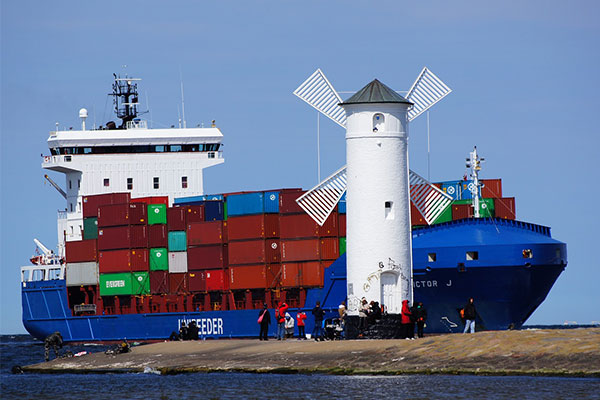
With the Argentine Central Bank (BCRA) comprehensively strengthening its SIRA (Import Monitoring System) policy,the traditional "agent import" model is undergoing an unprecedented compliance test.In the current foreign exchange control environment of Argentina,operations such as "paying after the goods arrive at the port" or "arbitrarily changing the declared amount" will directly lead to the goods being detained by customs indefinitely,and even result in exporters being blacklisted.For purchasing managers,importing from Argentina is no longer a simple logistics issue,but a delicate battle involving "foreign exchange quotas" and "document consistency".
Why do your Argentine orders always get stuck at the payment stage?
Many importers mistakenly believe that the difficulty of importing from Argentina lies in the long shipping routes,but the real pain point is actually.The blockage of the "foreign exchange channel".The Argentine government,in order to protect its foreign exchange reserves,requires that all imports must obtain SIRA approval before shipment.This means that if you fail to handle the SIRA classification during the contract signing stage,your Argentine supplier will not be able to purchase foreign exchange from the bank to pay you for the goods,even if they have obtained the bill of lading.
The core logic is that Argentine importers must obtain an "exchange rate channel" approval from AFIP (the Federal Public Revenue Administration),and this approval must be accompanied by a commercial invoice.The information on the bill of lading must match exactly.Any slight discrepancy (even punctuation or differences in the HS code version) will result in the system automatically blocking the transaction.
| Control Dimensions | Old model (before 2022) | The mandatory requirements under the new SIRA regulations | Risk Level |
|---|---|---|---|
| Application deadline | Applicating before or even after the goods arrive at the port | It is necessary to obtain an SIRA license before shipping the goods (which will result in a significant extension of the lead time). | Extremely high (cannot be shipped without permission) |
| Payment schedule | Please make payment upon seeing the copy of the bill of lading,or we can arrange TT payment flexibly | Strictly execute according to the "payment date" and "amount" approved by SIRA | High (both early payment and late payment are violations of the rules) |
| Consistency of documents | Allow for minor errors,or resolve them through a guarantee letter | The amount on the commercial invoice must be 100% consistent with the amount specified in the SIRA application. | Medium (Bank direct refusal of payment) |
| Tariffs and quotas d> | Regular payment of customs duties | Some products are subject to the STAT (Statistical Tax) or require non-automatic licenses. | Medium (Uncontrollable costs) |
Argentina’s Import Standard Operating Procedures (SOP)
In order to avoid the "exchange lock" risk brought by the SIRA system,it is recommended to adopt the following proven agency import operation process.The core of this process is to advance the compliance actions to the contract signing stage.
Step 1: Exporter Compliance Screening (UIR Registration) Output:
Before signing a contract,it is necessary to require the Argentine supplier to provide their registration status in the UIR (Unified Importer Registry).If the supplier is listed in the "Bad Credit Record" (such as having been involved in fraudulent invoicing),SIRA will not be approved,no matter how perfect your documents are.
Step 2: Precisely identify the type of SIRA license Output:
According to the product’s HS code,confirm whether it belongs to the "automatic license" or the "non-automatic license".
- AutomaticLicense(LA):Itistypicallyusedforgeneralconsumergoods,andthesystemautomaticallyapprovestheapplication,whichtakesapproximately24-48hours.
- Non-automaticlicense(LNA):Forsensitiveproducts(suchassometextilesandelectronicproducts),manualapprovalbytheMinistryofCommerceisrequired,whichmaytake30-60days.
Step 3: Production and review of "mirrored" documents Output:
This is the most crucial step.The data filled out by Argentine importers when applying for SIRA must be completely consistent with the commercial invoices and packing lists provided by you.
- Thepricetermsarelockedin:IntheSIRAapplication,theFOB/CIFamountmustbedetermined.Thesubsequentinvoiceamountcannotexceedthisamount.
- Brandandmodeldeclaration:BesuretoconfirmthatthebranddescriptionontheinvoicecomplieswithArgentinetrademarklaw(toavoidseizureduetoinfringement).
- ShipmentDate:SIRAhasanexpirationdate.Theshipmentmustbecompletedandthebillofladingsubmittedwithinthevalidityperiod.
Step 4: Closed-loop between delivery and the "proof of payment" Output:
After the goods are loaded onto the ship,the Argentine importer needs to upload the original bill of lading or the shipping document data into the system.At this point,the bank will pay the goods according to the amount approved by SIRA on a specified date.As the exporter,you need to closely track the payment progress of the other party and keep the Swift MT103 message as a necessary document for customs clearance.
Senior forwarder’s "Exchange Rate Conversion" warning
There’s an invisible pitfall that most outsiders rarely notice:The difference between the customs valuation and the exchange rateWhen calculating tariffs,Argentine customs do not necessarily use the official exchange rate of the day.Sometimes,they will refer to the "shadow exchange rate" or historical exchange rates for valuation.If the amount on your invoice is too low (to help clients avoid taxes),customs will not only impose a fine,but also reassess the tax base based on the highest price of similar products,resulting in importers having to pay huge additional tariffs and value-added taxes.
In addition,for agricultural products (such as beef,soybeans,and wine),Argentina has extremely strict phytosanitary and veterinary inspection requirements (SENASA).Many importers only focus on SIRA,but neglect that the fumigation certificate for wooden packaging (IPPC) must bear a specific logo approved by Argentina,which results in the goods being forcibly returned at the port.Remember,in Argentina,The cost of compliance will always be lower than the cost of trial and error..
Immediate Action List
After reading this article,we recommend that you immediately take the following actions this afternoon to identify and address potential risks:
- ChecktheHScode:Output:RetrievetheHScodeoftheArgentineproductsyouarecurrentlyimportingorplantoimport,andconfirmwhetheryouneedan"Non-AutomaticLicense"(LNA).Ifso,adjustyourinventorypreparationperiodimmediately.
- Reviewthecontractterms:CheckwhetherthereisadisclaimerclauseinthecontractsignedwiththeArgentineclientregarding"thedelayindeliverycausedbythenon-approvaloftheSIRAlicense",andneverassumeallthepolicyrisksbyyourself.
- Pre-reviewofdocuments:Letthefreightforwarderorcustomsbrokerreviewthecommercialinvoicetemplateinadvancetoensurethatthebrand,model,andotherdetailsarecorrect.ThedescriptionoftheproductcomplieswiththelatestcustomsstandardsinArgentina.
Was this helpful? Give us a like!
Contact our experts for compliance audits, precise quotes, and one-stop customs support.
Recent Comments (0) 0
Leave a Reply