
2026 I/E Agency Clearance Full Process | 5 Practical Nodes from Compliance to Cost Reduction
or complex compliance issues.
clearance and fund security.
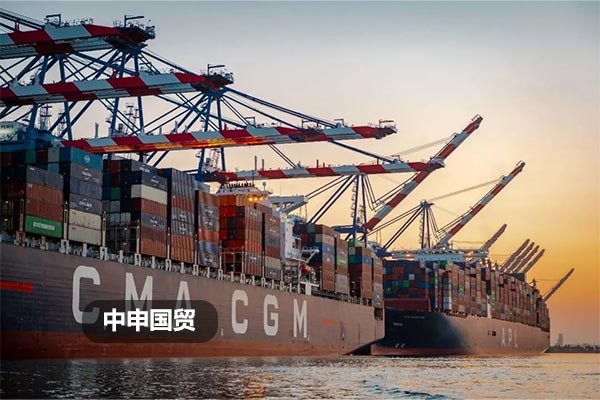
In 2026,the tariff concessions of the Regional Comprehensive Economic Partnership (RCEP) will enter a critical stage,and the European Union’s carbon border adjustment mechanism (CBAM) will be officially implemented.Traditional imports will face higher costs due to these measures.The customs clearance model is facing the dual challenges of "compliance accuracy" and "cost efficiency" — 90% of enterprises are still paying hidden costs for "pseudo-compliance".For example,a Dongguan electronics factory had to pay a fine for failing to meet the CBAM carbon footprint requirements due to its agent’s lack of advance warning,which affected its first batch of products.The components were stranded in the Port of Rotterdam for 17 days,incurring an additional port storage fee of €23,000.
Underlying logic of clearance agents: Compliance ≠ Compliance,Cost ≠ Cost
| Common misconceptions in the industry | The underlying logic and correct operation |
|---|---|
| Choosing a low-cost agent = reducing costs | The proportion of hidden costs reaches 30%,including port congestion fees (15%),order modification fees (10%),and compliance-related supplementary payments (5%).It is necessary to evaluate the agent’s "port resource integration capabilities" (such as their own customs declaration agencies or cooperative docks). |
| All documents are in order = Smooth customs clearance | In 2026,the customs AI document review system will increase the requirement for "document logical consistency" by 40%.It is necessary to dynamically match regulatory requirements (such as the Regional Comprehensive Economic Partnership Agreement (RCEP)).’s “Direct Transport Rules”) |
| Clearing time = Agency capability | The core variables are the port congestion index (such as the congestion rate of 35% in Shenzhen Yantian Port during the peak season) and the customs control rate (the control rate of sensitive goods exceeding 60%).Agents need to have "emergency channel" resources. |
5 steps to build “Compliance + Cost Reduction” clearance agency system
Step 1: Three-dimensional evaluation screened by the agent Output:
- Qualificationpenetration:Itisrequiredthattheagentprovidethe"RegistrationCertificateoftheDeclarationEnterprise"andthe"CustomsCreditRatingReport"ofthepastyear(AA-classenterprisesenjoya25%improvementincustomsclearanceefficiency).
- Portresources:Verifyitsabilitytodirectlyconnecttothemanifestsystematthetargetports(suchasShanghaiYangshanPortandGuangzhouNanshaPort)(reducingtheinspectionrateofdirectlyconnectedenterprisesby18%).
- HiddenCostModel:Requiretheagenttoprovideadashboardofhistoricaldatafor"detentionfees/ordermodificationfees/inspectionfees"(agentswithhighdatatransparencycanreducehiddencostsby15-20%).
Step 2: AI-based verification of pre-processed documents Output:
- Usethe"SingleWindow"AIverificationtoolrecommendedbytheGeneralAdministrationofCustomstoconductapre-inspectionofinvoices,packinglists,andcertificatesoforiginfor"logicalconsistency"(whichcanreducemanualerrorsindocumentreviewby80%).
- ForCBAMproducts(suchassteelandaluminumproducts),uploadthe"ProductCarbonFootprintAccountingReport"totheEUcustomssystem72hoursinadvance
Step 3: Dynamic Model of Tariff Planning Output:
- Atthebeginningofeachmonth,thetariffconcessiontableofRCEPmembercountriesisupdated,andtheHScodesare"dynamicallyclassified"(forexample,afurniturecompanyreducesitstarifffrom8%to3%byadjustingthematerialdescription).
- Evaluatethetariffarbitrageopportunitiesofroutessuchas"HongKongre-export"and"ASEANassembly"(incombinationwiththerequirementsofthe"regionalvaluecontent"intherulesoforigin).
Step 4: Dual-track contingency plans for risk nodes Output:
- Obtainthe"congestionindex"oftheportsevendaysinadvance(itcanbecheckedthroughtoolssuchas"PortCircle"),andifthecongestionrateexceeds30%,initiatethe"transferofcustomsclearancetootherports"contingencyplan.
- For"high-riskproducts"(suchaselectronicproducts,Thecompanyneedstoreducethecustomsclearanceratefrom60%to20%,andforthis,itrequirestheagenttoprovidea"CustomsPre-ClassificationOpinion"(whichcanreducethecustomsclearanceratefrom60%to20%).
Step 5: Review the cost of post-customs clearance Output:
- Exportthedeclarationformdataeveryquarter,calculatetheproportionof"detentionfees/changeorderfees/inspectionfees",andsignan"implicitcostcappingagreement"withtheagent(theagentwillbeartheoverage).
- Includethecustomsclearancetimedata(suchasthelengthoftimefromdeclarationtorelease)intheagent’sKPIassessment(foreverydayofdelay,a1%servicefeewillbededucted)
The "post-customs clearance" value that 90% of enterprises overlook: data assets and supply chain optimization
Output:
- Usethe"SingleWindow"AIverificationtoolrecommendedbytheGeneralAdministrationofCustomstoconductapre-inspectionofinvoices,packinglists,andcertificatesoforiginfor"logicalconsistency"(whichcanreducemanualerrorsindocumentreviewby80%).
- ForCBAMproducts(suchassteelandaluminumproducts),uploadthe"ProductCarbonFootprintAccountingReport"totheEUcustomssystem72hoursinadvance
Step 3: Dynamic Model of Tariff Planning Output:
- Atthebeginningofeachmonth,thetariffconcessiontableofRCEPmembercountriesisupdated,andtheHScodesare"dynamicallyclassified"(forexample,afurniturecompanyreducesitstarifffrom8%to3%byadjustingthematerialdescription).
- Evaluatethetariffarbitrageopportunitiesofroutessuchas"HongKongre-export"and"ASEANassembly"(incombinationwiththerequirementsofthe"regionalvaluecontent"intherulesoforigin).
Step 4: Dual-track contingency plans for risk nodes Output:
- Obtainthe"congestionindex"oftheportsevendaysinadvance(itcanbecheckedthroughtoolssuchas"PortCircle"),andifthecongestionrateexceeds30%,initiatethe"transferofcustomsclearancetootherports"contingencyplan.
- For"high-riskproducts"(suchaselectronicproducts,Thecompanyneedstoreducethecustomsclearanceratefrom60%to20%,andforthis,itrequirestheagenttoprovidea"CustomsPre-ClassificationOpinion"(whichcanreducethecustomsclearanceratefrom60%to20%).
Step 5: Review the cost of post-customs clearance Output:
- Exportthedeclarationformdataeveryquarter,calculatetheproportionof"detentionfees/changeorderfees/inspectionfees",andsignan"implicitcostcappingagreement"withtheagent(theagentwillbeartheoverage).
- Includethecustomsclearancetimedata(suchasthelengthoftimefromdeclarationtorelease)intheagent’sKPIassessment(foreverydayofdelay,a1%servicefeewillbededucted)
The "post-customs clearance" value that 90% of enterprises overlook: data assets and supply chain optimization
Output:
- Obtainthe"congestionindex"oftheportsevendaysinadvance(itcanbecheckedthroughtoolssuchas"PortCircle"),andifthecongestionrateexceeds30%,initiatethe"transferofcustomsclearancetootherports"contingencyplan.
- For"high-riskproducts"(suchaselectronicproducts,Thecompanyneedstoreducethecustomsclearanceratefrom60%to20%,andforthis,itrequirestheagenttoprovidea"CustomsPre-ClassificationOpinion"(whichcanreducethecustomsclearanceratefrom60%to20%).
Step 5: Review the cost of post-customs clearance Output:
- Exportthedeclarationformdataeveryquarter,calculatetheproportionof"detentionfees/changeorderfees/inspectionfees",andsignan"implicitcostcappingagreement"withtheagent(theagentwillbeartheoverage).
- Includethecustomsclearancetimedata(suchasthelengthoftimefromdeclarationtorelease)intheagent’sKPIassessment(foreverydayofdelay,a1%servicefeewillbededucted)
The "post-customs clearance" value that 90% of enterprises overlook: data assets and supply chain optimization
Customs clearance data is not a "one-time document" —— A company in HangzhouBy analyzing the "port congestion patterns" of over 100,000 customs declarations,the company reduced the procurement cycle for the South China-Europe route from 45 days to 28 days.In another case,an electronics factory in Shenzhen used RCEP certificate of origin data to optimize the procurement structure of raw materials in its Southeast Asian factories,resulting in an annual cost reduction of 1.2 million yuan.
It is recommended that enterprises: ① Require agents to provide a "declaration data dashboard" (including dimensions such as HS codes,tariffs,and port efficiency); ② Integrate the customs clearance agent network into a pivot for their "global supply chain layout" (e.g.expanding into Southeast Asia markets through Hong Kong-based agents).
Today,there are three optimization actions that can be taken by customs clearance agents
- Exportthecustomsdeclarationsofthepastthreemonthsandcalculatetheproportionof"detentionfees/changeorderfees/inspectionfees".Iftheproportionexceeds5%,immediatelyrequiretheagenttoprovidearectificationplan
- Asktheexistingagentforthe"HeatMapofPortResources"(markingtheclearanceefficiency,inspectionrate,andcooperativedocksateachport),andcompareitwiththeindustrybenchmarkvalues.
- Conductaself-checkofthreecoreproductsusingtheRCEPrulesoforigin:Iftheregionalvaluecontent≥40%,immediatelyapplyforanewversionofthecertificateoforigin(whichcanenjoya3-5%tariffreduction).
Was this helpful? Give us a like!
Contact our experts for compliance audits, precise quotes, and one-stop customs support.
Recent Comments (0) 0
Leave a Reply