
A Practical Guide to the Entire Process of Machine Import and Export Agency in South Korea: Five Key Nodes for Compliance, Cost Reduction, and Risk Management
or complex compliance issues.
clearance and fund security.
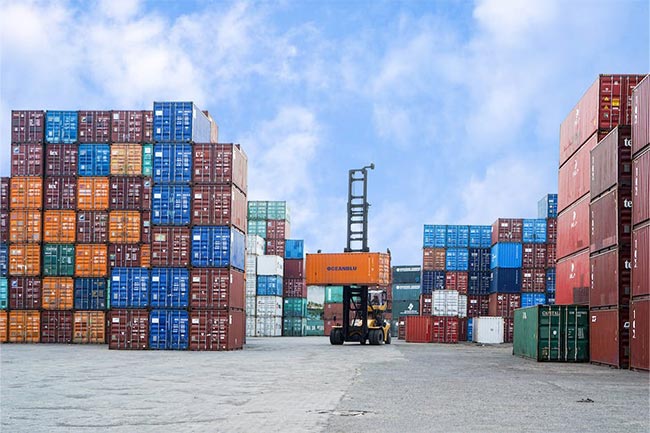
In 2026,the trade volume of mechanical and electrical products between China and South Korea exceeded $87 billion,and the export volume of South Korea’s high-tech machines such as precision machine tools and semiconductor equipment increased by 15% annually.However,90% of buyers are still struggling when choosing an agency company.KC’s certification blind spotandLogistics Delivery Time Traps—— The cost of re-applying for certification due to choosing the wrong agent can devour 3% of the procurement budget.
Korean machineThe three hidden costs and compliance logic of XXX
| Confirm whether the customs affairs robot system is equipped | Traditional agency | New type of digital agent |
|---|---|---|
| The processing time for KC certification | 7-15 business days | 3-5 working days (directly connected to the South Korean KATS system) |
| Logistics cost transparency | Vague quotes,with hidden fees accounting for 12-18% of the total cost. | Itemized quotation,with additional fees ≤5% |
| After-sales compliance maintenance | Only the documents after customs clearance will be provided | Includes a one-year reminder service for updates to South Korean technical regulations |
5 Steps to Identify a Reliable Agent and Implement the Entire Process
Step 1: Qualification screening of the agency company (3 hard indicators) Output:
- VerifythequalificationsofmembersoftheKoreaInternationalTradeAssociation(KITA)andrequirethemtoprovidealistofelectricalandmechanicalproductagencycasesinthepasttwoyears.
- ConfirmwhetheritisavailableKC’sCertificationAgentAuthorization(VerifyonKoreaInstituteofIndustrialTechnologywebsite)
- Requestthelast12months’Customscompliancerecord(Priorityfornoseizuresoramendmentrecords)
Step 2: Establish a single document system (fully compliant with Chinese and Korean regulations) Output:
Output:
Korea side needs to prepare:Business invoice (including the HS code accurate to 8 digits),FORM K (Applicable for RCEP),KC certification (Safety/EMC/Energy Efficiency).
For the Chinese side,the following needs to be added: Electrical and Mechanical Certificate (O Certificate) (if it involves dual-use items),Pre-recorded script,Device manual (in Chinese,English,and Korean).
Step 3: Dynamic optimization of logistics solutions Output:
Compare Incheon-Qingdao/Shanghai/Shenzhen routes+ Customs bonded area temporary storagePlan:
| Port portfolio | Timeliness (days) | Comprehensive cost (USD/TEU) | Applicable scenarios |
|---|---|---|---|
| Incheon - Qingdao | 5-7 | 1200-1500 | North China enterprises,with equipment volumes ≤ 30CBM |
| Incheon - Shanghai | 7-9 | 1000-1300 | For enterprises in East China,LCL shipments are required. |
| Incheon - Shenzhen | 9-12 | 900-1200 | South China enterprises,full container transportation |
Step 4: Simulate the customs clearance risks (using reverse thinking) Output:
Simulate 3 high-risk scenarios early:
1.The equipment parameters do not match the certification certificate → Request the agent to provide the certificatePre-inspection Report(Available from KOTRA);
2.The customs authority questions the HS code classification → PrepareDevice operation principle video + CAD drawingsAuxiliary explanation;
3.Overstay in the port (free storage for 5 days at Incheon Port) → Sign the contractOvertime Fee Cap Agreement(Calculated at USD 200/day·TEU).
Step 5: After-sales service and compliance continuation Output:
---1-year Korean technical regulation tracking service(e.g.Korea implementing new energy efficiency labels from 2025),and retainCompliance Report for Equipment Installation and Commissioning(for subsequent equipment resale or export).
2 invisible risks that 90% of enterprises overlook
1.The update of the South Korea’s export control list: Every month,we check the "Strategic Materials Export Control List" issued by the Ministry of Trade,Industry and Energy (MOTIE) of South Korea.Some precision instruments require additional applications for export.Export License(e.g.semiconductor lithography);
2.The hidden costs of foreign exchange settlement: The exchange rate difference between USD and KRW in the settlement between Chinese and Korean agents.It is recommended to require the agents to provide it.The original bank water billAvoid being exploited by exchange rate differences (there have been cases where companies ended up paying an extra 8% in costs due to exchange rate disparities).
There are three actions that can be initiated today.
- Downloadthe"KCCertificationClassificationGuide"fromtheKoreaAgencyforTechnologyandStandards(KATS),andcheckthecertificationtypeagainsttheequipmentlist
- RequestitfromtheexistingagentDetailedlogisticsbillsforthepastsixmonthsComparethecoststructureusingthetableinthetext
- BecomeacorporatememberoftheKoreaInternationalTradeAssociation(KITA)toaccessthelatestreportsonSino-Koreanmechanicalandelectricaltradedata
Was this helpful? Give us a like!
Contact our experts for compliance audits, precise quotes, and one-stop customs support.
Recent Comments (0) 0
Leave a Reply