
Compliance Checklist for Importing Spanish Wine as an Agent: Avoid the 3 Hidden Traps That 90% of Experienced Traders Fall Into
or complex compliance issues.
clearance and fund security.
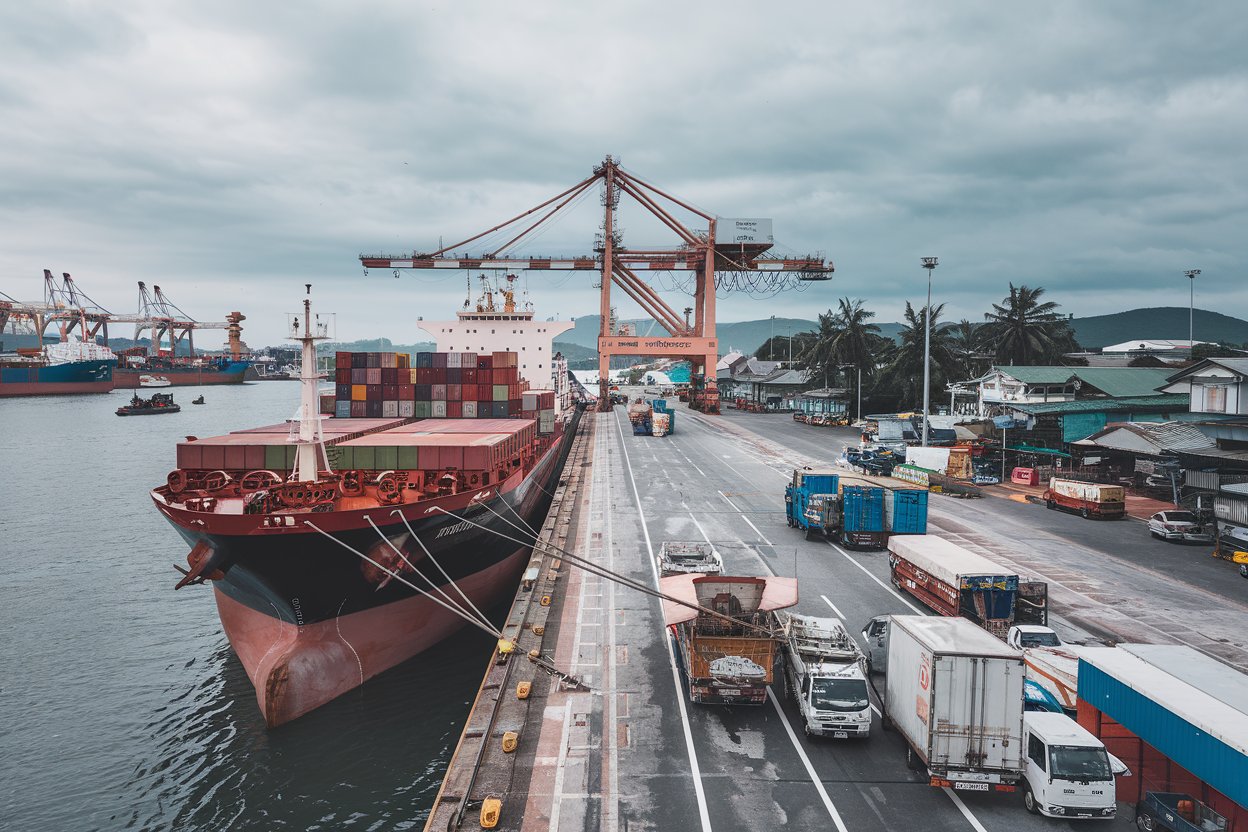
It’s doneIs a health certificate enough to solve everything?Last month,a client who had been importing Spanish red wine for five years had his entire shipment detained at the customs for 18 days—it wasn’t because of any issues with the documentation,but rather.The linkage verification between the filling date and the transportation temperatureThe shipment failed to pass inspection,resulting in the commodity inspection authority determining that "the stability of the wine’s taste was questionable".In the end,it took three times the normal customs clearance cost to get the shipment released.Ninety percent of experienced importers believe that "having all the necessary documents means compliance",but they overlook the "implicit connection between the physical properties of the wine and regulatory requirements" in red wine imports—this is precisely the most common pitfall in declaring Spanish red wine for customs clearance.
The "invisible compliance chain" of Spanish wine imports: it’s not just about having all the necessary documents,but about ensuring a coherent and logical process from start to finish.
Spanish red wine is classified as a "sensitive food product" (according to the Food Safety Law of the People’s Republic of China).According to Article 10 of the "Measures for Food Safety Management",the compliance logic is not "satisfaction of a single document",but a closed-loop verification of "documents + physical attributes + processes".For example,EU Regulation 178/2002 requires that "the transport temperature of red wine after filling must be controlled (12-18°C)".Meanwhile,the Chinese commodity inspection authority will further verify whether the "filling date to arrival time at the port" is within 60 days (45 days for sparkling wine) - the interaction of these two data directly determines whether the "stability of taste" meets the standards of GB/T 15037-2006 "Wine".
| Common Cognitive Biases | Correct compliance logic | Risk consequences |
|---|---|---|
| All necessary documents (certificate of origin,health certificate) are in place = Compliance | A logical closed-loop system consisting of shipping documents,temperature recording during transportation,and the filling date | The customs detains the goods for 15-30 days,and the cost of the reinspection by the commodity inspection department exceeds three times.The taste of the red wine decreases by 15%-30% |
| It’s enough if the translation of the tags is accurate. | Label must include "EC registration number,importer record number,temperature storage tips" | The label rectification fee is 0.5-1 yuan per bottle,and the re-inspection takes 7-10 days.We will miss the peak sales season if we don’t fix the problem in time |
| After customs clearance,you can store it wherever you want | It needs to be stored in the temperature-controlled warehouse registered with the customs and the temperature records should be kept for six months | The goods were recalled or destroyed due to failing the random inspection by the commodity inspection authority,resulting in a loss of 80% of the total value of the goods. |
The Practical Process of Declaring and Importing Spanish Wine as an Agent: 5 Steps to Ensure Full Compliance
Step 1: Pre-inspection Front-loading—Checking Linkage of Temperature & Date Output:
- RequestitfromtheSpanishwineryFillingdatecertificate(Mustmark"DD/MM/YYYY",andstampwithwineryofficialseal);
- RequirethelogisticscompanytoprovideTransportationtemperaturerecordsthroughouttheentireprocessProcessandFrequentlyAskedQuestionsforExportingMiningMachinerytoSoutheastAsia|ShanghaiImport/ExportAgentThecontainersmusthavetemperaturecontrolinstrumentdata.temperaturereportstampedbytheairlineisrequired);
- Checktwopiecesofdata:thetimefrombottlingtoarrivalattheportshouldbe≤60days(forsparklingwine,≤45days),andthetransportationtemperatureshouldalwaysbebetween12°Cand18°C.Iftheserequirementsarenotmet,requestthewinerytoadjustthebottlingtimeorreplacethetemperature-controlledcontainersinadvance.
Step 2: Document Preparation—Beyond Basic Certificates,"Related Certificates" Needed Output:
- Basiccertificates:CertificateofOrigin(FormEUR.1,withtheindicationof"Spain"),HealthCertificate(issuedbytheSpanishMinistryofAgriculture,FisheriesandFood,includingthefactory’sECregistrationnumber),CustomsDeclarationForm(HScode22041000/22042100,etc.);
- Relatedcertificate:ECRegistrationNumberCertificatefortheFillingFactory(mustmatchthecodeonthehealthcertificate),ChinaFoodConsigneeRegistrationCertificate(numbermustbereflectedonthelabel);
- Specialcertificate:OrganicredwineneedstobeaccompaniedbyanadditionalcertificateTheEUOrganicCertificationCertificate(withinvalidity)+ChinaOrganicConversionCertificate(issuedbyaninstitutionrecognizedbyGACC).
Step 3: Label Compliance - It’s not about translation,but rather "regulatory adaptation". Output:
- Mandatorylabelingitems:productname(mustbewrittenas"wine",not"redwine"),countryoforigin(Spain),fillingdate,alcoholcontent(%vol),netcontent(ml),importer’snameandaddress(mustbeconsistentwiththeconsignee’sregisteredinformation);
- HiddenMandatoryItems:Temperaturestoragetips(e.g."Storeinacooldarkplaceat12-18℃",compliantwithGB/T15037-2006);
- MisconceptionAlert:Don’tuse"SpanishOriginalImport"toreplace"CountryofOrigin:Spain"—Customsauthoritiesconsider"OriginalImport"asamarketingtermandrequireclearindicationofthecountryoforigin.
Step 4: Customs Clearance Process— "Inspection First,Declaration Later" Output:
Output:
- Basiccertificates:CertificateofOrigin(FormEUR.1,withtheindicationof"Spain"),HealthCertificate(issuedbytheSpanishMinistryofAgriculture,FisheriesandFood,includingthefactory’sECregistrationnumber),CustomsDeclarationForm(HScode22041000/22042100,etc.);
- Relatedcertificate:ECRegistrationNumberCertificatefortheFillingFactory(mustmatchthecodeonthehealthcertificate),ChinaFoodConsigneeRegistrationCertificate(numbermustbereflectedonthelabel);
- Specialcertificate:OrganicredwineneedstobeaccompaniedbyanadditionalcertificateTheEUOrganicCertificationCertificate(withinvalidity)+ChinaOrganicConversionCertificate(issuedbyaninstitutionrecognizedbyGACC).
Step 3: Label Compliance - It’s not about translation,but rather "regulatory adaptation". Output:
- Mandatorylabelingitems:productname(mustbewrittenas"wine",not"redwine"),countryoforigin(Spain),fillingdate,alcoholcontent(%vol),netcontent(ml),importer’snameandaddress(mustbeconsistentwiththeconsignee’sregisteredinformation);
- HiddenMandatoryItems:Temperaturestoragetips(e.g."Storeinacooldarkplaceat12-18℃",compliantwithGB/T15037-2006);
- MisconceptionAlert:Don’tuse"SpanishOriginalImport"toreplace"CountryofOrigin:Spain"—Customsauthoritiesconsider"OriginalImport"asamarketingtermandrequireclearindicationofthecountryoforigin.
Step 4: Customs Clearance Process— "Inspection First,Declaration Later" Output:
Output:
The import of Spanish red wine requires going through the following procedures:“Commodity Inspection Front-loading”Process (different from the "post-declaration commodity inspection" for general food products),specific steps:
- Afterthegoodsarriveattheport,submitthe"InspectionApplicationFormforImportedGoods"tothecommodityinspectionbureauattheportofentry,togetherwiththetransportationtemperaturerecordsandtheproofofthefillingdate;
- Commodityinspectionsampling(sampling3-5bottlesperbatch),thetestingitemsinclude:alcoholcontent,sugarcontent,sulfurdioxide(≤250mg/L),andheavymetals(lead≤0.2mg/L);
- Afterpassingtheinspectionbythecommodityinspectionauthority,theimportershalldeclarethegoodstothecustomswiththe"InspectionandQuarantineCertificateforImportedGoods",andpaythecustomsduty(14%),value-addedtax(13%),andconsumptiontax(10%).
Step 5: Warehousing Connection - After customs clearance,it’s not about "storing goods at random",but about "storing them in compliance with regulations". Output:
- Aftercustomsclearance,thegoodsneedtobetransferredtoanotheraccount.Atemperature-controlledwarehouseregisteredwiththecustomsauthority(temperature12-18℃,humidity60%-70%);
- ThewarehouseneedstoprovideTemperaturemonitoringrecords(every2hours,keptfor6months)—commodityinspectionwillrandomlycheck;ifrecordsaremissing,"storageconditionsdonotmeetrequirements"maybejudged;
- Forbulkredwine(incontainertanks),itisnecessarytoconfirmthatthewarehousehasthenecessarystoragefacilities.Asepticfillingequipment(compliantwithGB14881-2013),otherwiseitcannotbesplitforsale.
The "long-term compliance mindset" of wine importers: from "avoiding pitfalls" to "proactive planning"
Top Spanish wine importers I’ve met will alwaysWhen signing the purchase contractjoin "compliance clauses": e.g.requiring winery to promise "bottling date + transport temperature comply with Chinese regulations"; if these cause delays,winery bears 50% of costs; additionally,Conduct a pre-audit of the labels 30 days in advance(Submitting label samples to the commodity inspection bureau) saves at least 10 days compared to "changing the labels after arrival at the port".There’s another point that’s easily overlooked: the "vintage" labeling on Spanish red wine - if it’s a "non-vintage wine",it needs to be marked with "NV" (Non-Vintage),otherwise the customs will consider it "false vintage".This is a mandatory requirement in EU regulations,but many importers don’t pay attention to it.
3 things you can do this afternoon: Avoid a disaster with the next batch of goods
- 1.RetrievethetransportationtemperaturerecordsofthelatestbatchofSpanishredwineandcheckwhetherthe"fillingdatetoarrivaltime"is≤60days;
- 2.Checktheexistinglabels:Arethere"TemperatureStorageReminder"and"ImporterRegistrationNumber"?
- 3.SendanemailtotheSpanishwinery,askingthemtoprovideitwhenplacingthenextorder.ECRegistrationNumberCertificatefortheFillingFactory——Addthistothecontractannex.
Was this helpful? Give us a like!
Contact our experts for compliance audits, precise quotes, and one-stop customs support.
Recent Comments (0) 0
Leave a Reply