
US Chip Export Ban: TSMC AI Chip Restrictions Explained
or complex compliance issues.
clearance and fund security.
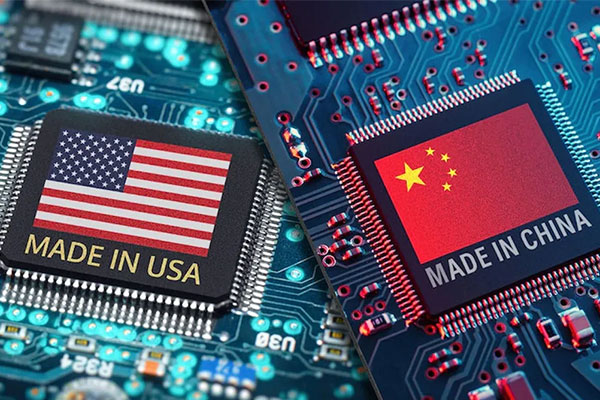
According to a recent report by Reuters,the US government has ordered TSMC,the world’s leading semiconductor manufacturer,to stop exporting high-end chips used in artificial intelligence (AI) applications to Chinese customers starting from November 11,2024.These chips mainly include products with a 7-nanometer process or more advanced process,which are widely used in AI accelerators and graphics processing units (GPUs) and play a crucial role in enhancing China’s computing capabilities in the field of AI.
This ban represents the latest U.S.effort to tighten high-tech export controls against China.Weeks prior,TSMC notified the U.S.Commerce Department that its chips were found in a Chinese tech giants AI processor,potentially violating export regulations.Earlier still,Tech Insights teardown analysis of the processor revealed TSMC-manufactured chips,prompting heightened scrutiny from the Bureau of Industry and Security (BIS) and stricter restrictions.
TSMC stated that it strictly complies with all applicable laws and regulations,including export control regulations.The Taiwan authorities also responded to the matter,stating that TSMC will fully comply with all relevant regulations to ensure no violation of international trade rules.
Is-Informed Letter: A New Tool for the U.S.to Accelerate Export Controls
The U.S.has adopted a special administrative measure—the is-informed letter—to impose export restrictions on TSMC.This letter allows the U.S.government to bypass lengthy rule-making procedures and swiftly implement new export licensing requirements for specific companies.According to Section 1758 of the Export Control Reform Act (ECRA),the Bureau of Industry and Security (BIS) is authorized to impose temporary control measures on specific technologies and transactions through is-informed letters before formal rules are enacted.At the operational level,the Export Administration Regulations (EAR) detail how BIS can require items previously exempt from licensing to obtain export licenses by sending is-informed letters.
The impact of is-informed letters should not be underestimated.Once a company receives such a letter,it means its specific business activities require additional licensing.These activities may involve national security,military applications,or other areas deemed by the U.S.government to require special attention.Each is-informed letter specifies the scope of licensing requirements,review criteria,and application procedures.
It is worth noting that ignoring the requirements of an is-informed letter carries severe consequences.Companies that proceed with transactions mentioned in the letter without authorization will be deemed in violation of the EAR and may face administrative penalties or even criminal sanctions.This mechanism enables the U.S.government to respond promptly to emergencies,effectively control the export of sensitive technologies,and prevent their use in ways that threaten U.S.national security.
Case Study: Restrictions on Nvidia and AMD
The effectiveness of the is-informed letter mechanism was demonstrated in 2022 when the U.S.Department of Commerces BIS issued such letters to Nvidia and AMD,restricting their exports of advanced computing chips to China.Additionally,semiconductor equipment manufacturers like GlobalFoundries,Applied Materials,and KLA faced similar restrictions to prevent them from supplying advanced chip manufacturing equipment to China.
In addition,the BIS Guidance to Industry on BIS Actions Identifying Transaction Parties of Diversion Risk,issued in July 2024,further details the various ways in which the BIS informs enterprises and universities of potential transfer risk involving transaction parties through "Supplier List" letters,Project Guardian requests,"Red Flag" letters,and "Notification Letters".These measures aim to prevent sensitive technologies,especially high-priority list (CHPL) items,from being transferred to restricted countries such as Russia via third countries.
Profound Impact on Chinas Semiconductor and AI Industries
The export restrictions on TSMC signify unprecedented geopolitical pressure on the global semiconductor industry.As one of the worlds largest semiconductor consumers,Chinas development in AI and high-performance computing relies on advanced chip supplies.TSMC,as a leading global semiconductor foundry,holds a critical position in the market for high-end manufacturing processes.U.S.restrictions on TSMC will make it even harder for China to access the most advanced chips,further weakening its competitiveness in AI.
Since October 2022,BIS has created Footnote 4 to the Entity List,including many Chinese AI chip and GPU companies like Huawei.These companies are already barred from using leading global foundries like TSMC for chip manufacturing.The new ban extends to all Chinese advanced computing chip design companies not on the Entity List,imposing a blanket prohibition.This means even companies like Baidus Kunlunxin,not explicitly listed,may be unable to obtain 7nm and more advanced AI chips from TSMC.This one-size-fits-all policy affects nearly all Chinese companies designing advanced AI chips,further limiting Chinas progress in high-end semiconductors.
Chinas Response and Future Outlook
In response to the EUs decision to impose high anti-subsidy tariffs on Chinese electric vehicles,Chinas Ministry of Commerce filed an appeal with the WTO on October 29,arguing that the EUs move lacks legal and factual basis,violates WTO rules,and is a typical act of trade protectionism abusing trade remedies.China will firmly defend the legitimate rights of its companies and the healthy development of the EV industry through the WTO dispute settlement mechanism.
Statements from TSMC and Taiwan authorities reflect Chinas firm stance against U.S.technological restrictions.Moving forward,U.S.-China competition in semiconductors and AI will intensify,posing greater challenges to the stability and security of global tech supply chains.
Industry experts note that as the U.S.government continues to tighten export controls on Chinese technology,China may accelerate independent R&D and supply chain localization to reduce reliance on foreign technology.Simultaneously,China may seek cooperation with other countries and regions to build a more diversified supply chain system,enhancing its resilience in global tech competition.
Conclusion
The U.S.governments use of the is-informed letter mechanism to swiftly impose export restrictions on TSMC signals a stricter export control policy toward China in high-tech sectors.This not only directly impacts Chinas semiconductor and AI industries but also poses new challenges to the stability of global semiconductor supply chains.Amid escalating global tech competition,the U.S.-China rivalry in semiconductors and AI will profoundly shape the future global tech landscape and international trade relations.Companies and governments worldwide must closely monitor these developments and proactively adapt to potential policy changes to safeguard their competitiveness and stability in the global tech and trade systems.
Was this helpful? Give us a like!
Contact our experts for compliance audits, precise quotes, and one-stop customs support.
Recent Comments (0) 0
Leave a Reply