
Turkey Imposes Steep Tariffs on Chinese Cars for Local Growth
or complex compliance issues.
clearance and fund security.
On June 8,2024,Turkey announced a new presidential decree imposing an additional 40% tariff on cars imported from China,with a minimum additional tariff of $7,000 per vehicle.The new measure will come into effect on July 7.The move aims to increase the market share of domestically produced vehicles and reduce the current account deficit.
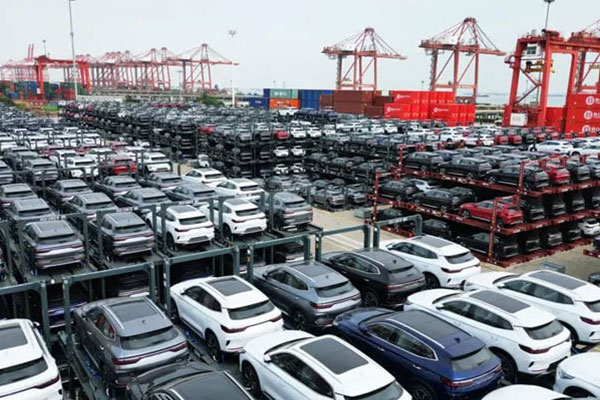
The Turkish Ministry of Commerce stated in a declaration that the new tariff policy aims to ensure consumer safety,protect public health,safeguard the market share of domestic production,encourage domestic investment,and reduce the current account deficit.This is not the first time Turkey has imposed additional tariffs on Chinese vehicles.In March 2023,Turkey already imposed an additional 40% tariff on electric vehicles imported from China,raising the total tariff to 50%.
According to a previous decree issued by the Turkish Ministry of Trade,all enterprises importing electric vehicles must establish at least 140 authorized service stations in Turkey and set up dedicated call centers for each brand.These regulations demonstrate the Turkish governments firm determination to protect its domestic automotive industry and promote local employment.
A report released by Landi Law Firm pointed out that Turkeys restrictions on Chinese electric vehicle imports will have a certain impact on Chinese EV brands.These brands may need to reassess their strategies in the Turkish market,consider establishing more local service networks,or seek other partners and channels.Although Chinese vehicle sales in Turkey are not high,they show a rapid growth trend,especially in the EV market,where Chinese brands account for nearly half of the market share,creating significant competitive pressure on local Turkish companies.
As Turkeys first electric vehicle manufacturer,Togg was formed by a consortium of five domestic automotive suppliers and one telecom company,aiming to capture 30% of Turkeys EV market share.Togg plans to invest 220 billion Turkish lira (approximately $24 billion) in the EV sector over the next 13 years,producing 175,000 vehicles annually across five models.The Turkish governments strategy is clearly aimed at protecting domestic industries and reducing the trade deficit.
The Turkish government is actively promotingthe development of the automotive industry,introducing a series of preferential policies,including tax exemptions and purchase subsidies,to encourage the adoption of new energy vehicles.At the same time,the government plans to significantly expand EV charging infrastructure.According to a report by the Turkish Ministry of Industry and Technology,Turkey is expected to have 1 million public charging points and 900,000 home charging points by 2030 to address the issue of inadequate charging infrastructure.
According to data from the Turkish Automobile Distribution and Mobility Association,Turkey’s total market for cars and light commercial vehicles reached 1.233 million units in 2023,an increase of 57.4% year-on-year.Among these,sales of pure electric vehicles reached 66,000 units,accounting for 6.8% of total sales,compared with just 1.2% in 2022.The Turkish energy market regulator expects that by 2025,the number of electric vehicles in Turkey will increase by about 180,000.Research institute BMI forecasts that by 2032,the share of electric vehicles in Turkey’s domestic car sales will reach 30.4%.
The rapid development of Turkey’s electric vehicle market is attributed to the promotion of domestic brand TOGG and the market participation of emerging enterprises such as Tesla.Turkey’s first pure electric smart SUV model,TOGG T10X,has been officially launched,marking Turkey as the first country in the Middle East with the ability to independently develop and produce new energy vehicles.The government expects that by 2025,TOGG series models will largely meet domestic market demand and be exported overseas,with total production expected to exceed one million units by 2030.
In the first four months of this year,Chinese automakers saw rapid sales growth in the Turkish market.Chery sold 21,000 units,ranking sixth; MG sold over 7,000 units,ranking fifteenth; and BYD sold 862 units.Cui Dongshu,Secretary-General of the China Passenger Car Association,stated that Turkeys tariff policy will slow the expansion of Chinese brands to some extent.However,since Turkeys industrial sector is underdeveloped and foreign brands dominate the market,Chinese automakers should be able to overcome these challenges.
Cui Dongshu believes that Turkeys increased tariffs on Chinese vehicles are mainly due to its large trade deficit,economic downturn,and the need to promote its domestic EV industry.Despite this,Chinese automakers remain competitive in the Turkish market and can adapt their strategies to the new market environment.
Was this helpful? Give us a like!
Contact our experts for compliance audits, precise quotes, and one-stop customs support.
Recent Comments (0) 0
Leave a Reply