
PV Equipment Export Customs Classification Guide: Common Pitfalls and Practical Tips
or complex compliance issues.
clearance and fund security.
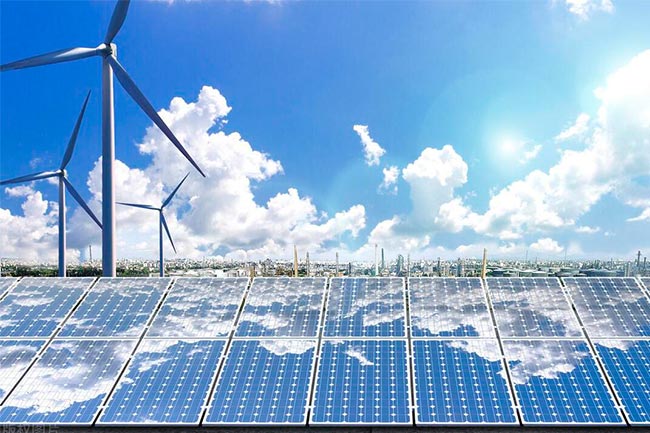
In international trade,The export declaration for equipment always makes one take a closer look,especially when it comes to customs classification.Photovoltaic equipment is usually composed of multiple solar cell panels,storage batteries,electronic controllers,etc.and can directly supply power to electric motors or electrolytic cells.Correct classification not only affects customs clearance efficiency but also relates to tax rebates and costs.Today,let’s talk about the key points of classification for photovoltaic equipment and common components to help you avoid common pitfalls and make exporting smoother.
Classification Principles for Photovoltaic Equipment and Components
Photovoltaic equipment is classified by DC or AC type,with DC being classified under 85017 and AC under 85018.If common components are declared separately,they must be classified according to their actual state,following the principle of specific listing priority:
- Ironbrackets:classifiedunder7308.
- Photovoltaicinverters:classifiedunder8504.
- Storagebatteries:classifiedunder8507.
- Controlequipment:classifiedunder8537.
- Solarphotovoltaicpanels:classifiedunder8541.
- Partsofphotovoltaicequipmentnotspecificallylisted:classifiedunder8503.
These classifications are based on the product’s function,use,composition,and working principle.Ensuring the declaration matches the actual product can save a lot of trouble.
Detailed Explanation of Common Misconceptions
Classification errors can easily lead to overpayment of customs duties or problems with tax rebates.Here are two typical pitfalls to watch out for:
The classification trap for solar panel brackets Output:
Solar panel brackets are classified according to their actual state.If they are a complete set of unassembled parts (including columns,beams,rails,and connectors) that become a fixed structure after installation,they are classified by material—iron ones are generally classified under 7308.Among them,even if the rails are drilled,as long as they are used for assembling the bracket,they are considered part of the set and are also classified under 7308.
However,if only a single profile is declared (e.g.drilled but not welded),and the degree of processing does not exceed the scope of heading 7216,it must be classified under 7216.Don’t underestimate this difference: therate difference between 7308 and 7216 is 13%.Choosing the wrong code can lead to significant losses.
The boundary issue for solar photovoltaic panels Output:
A solar photovoltaic panel (solar cell) is a silicon barrier layer photovoltaic cell that converts sunlight into electrical energy,usually classified under 8541,including cells mounted in modules or assembled into panels.However,if it is already equipped with components (such as a diode to control the current) and can directly supply power to an electric motor or electrolytic cell,no matter how simple the components,it must be classified under 8501.
Operational Advice: Standardized Declaration to Avoid Risks
When declaring,carefully verify the function,use,composition,and working principle according to the actual state of the goods.It is recommended to attach product manuals,installation drawings,and other materials to help customs review quickly and improve clearance efficiency.Consulting with a customs declaration expert in advance can save a lot of hassle.
Conclusion
Although there are details to the classification of photovoltaic equipment,mastering these key points can make your exports go smoothly.International trade is ever-changing; being flexible can bring pleasant surprises.I hope this sharing makes your declarations easier and your business more prosperous!
Was this helpful? Give us a like!
Contact our experts for compliance audits, precise quotes, and one-stop customs support.
Recent Comments (0) 0
Leave a Reply